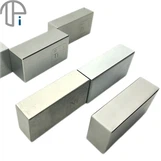
As a supplier of high - quality Titanium Discs, I am often asked about the various coating options available for these versatile components. Titanium discs are widely used in numerous industries, including aerospace, medical, automotive, and marine, due to their excellent strength - to - weight ratio, corrosion resistance, and biocompatibility. However, depending on the specific application, additional coatings can enhance their performance even further. In this blog post, I'll explore some of the most common coating options for titanium discs.
1. Ceramic Coatings
Ceramic coatings are a popular choice for titanium discs, especially in high - temperature and wear - resistant applications. These coatings are typically composed of metal oxides, carbides, or nitrides, which provide a hard, protective layer on the surface of the titanium disc.
One of the key advantages of ceramic coatings is their high hardness. For example, titanium nitride (TiN) coatings have a hardness of up to 2500 HV, which significantly improves the wear resistance of the titanium disc. This makes them ideal for use in cutting tools, where high wear resistance is essential to maintain sharp edges and prolong tool life.
Another benefit of ceramic coatings is their excellent thermal stability. Some ceramic coatings can withstand temperatures of up to 1000°C without significant degradation, making them suitable for use in high - temperature environments such as aerospace engines. The ceramic coating acts as a thermal barrier, protecting the titanium disc from the extreme heat and reducing the risk of thermal deformation.
Ceramic coatings also offer good corrosion resistance. Many ceramic materials are chemically inert, which means they are resistant to a wide range of corrosive substances, including acids, alkalis, and salts. This makes ceramic - coated titanium discs suitable for use in marine and chemical processing applications, where they are exposed to harsh corrosive environments.
You can find a wide range of Titanium Disk products on our website, which can be customized with different ceramic coatings according to your specific requirements.


2. Polymer Coatings
Polymer coatings are another option for titanium discs, offering a variety of benefits depending on the type of polymer used. These coatings are typically applied in liquid form and then cured to form a solid, protective layer on the surface of the disc.
One of the main advantages of polymer coatings is their flexibility. Unlike ceramic coatings, which are brittle and prone to cracking under stress, polymer coatings can deform without breaking, making them suitable for applications where the titanium disc may be subjected to bending or flexing.
Polymer coatings also offer excellent chemical resistance. Many polymers are resistant to a wide range of chemicals, including solvents, fuels, and lubricants. This makes polymer - coated titanium discs suitable for use in automotive and industrial applications, where they may come into contact with various chemicals.
In addition, polymer coatings can provide good electrical insulation. This is important in applications where the titanium disc needs to be electrically isolated, such as in electronic devices. The polymer coating acts as an insulator, preventing the flow of electricity and reducing the risk of electrical short - circuits.
Our Gr.1 Titanium Disc Plate can be coated with different types of polymers to meet your specific needs. Whether you need a flexible coating for a bending application or a chemically resistant coating for a harsh environment, we can provide the right solution.
3. Diamond - Like Carbon (DLC) Coatings
Diamond - like carbon (DLC) coatings are a relatively new type of coating for titanium discs, offering a unique combination of properties. DLC coatings are composed of a mixture of diamond - like and graphite - like carbon atoms, which gives them many of the desirable properties of diamond, such as high hardness and low friction.
One of the main advantages of DLC coatings is their extremely low friction coefficient. A DLC - coated titanium disc can have a friction coefficient as low as 0.05, which is significantly lower than that of an uncoated titanium disc. This makes DLC - coated titanium discs ideal for use in applications where low friction is essential, such as in bearings and sliding components.
DLC coatings also offer excellent wear resistance. The high hardness of the DLC coating, combined with its low friction coefficient, makes it highly resistant to wear and abrasion. This can significantly prolong the service life of the titanium disc, reducing maintenance costs and downtime.
In addition, DLC coatings are biocompatible, which makes them suitable for use in medical applications. They can be used to coat titanium discs used in medical implants, such as joint replacements, to improve their wear resistance and reduce the risk of tissue inflammation.
More information about Titanium Disc products with DLC coatings can be found on our website. We have extensive experience in applying DLC coatings to titanium discs, ensuring high - quality and reliable performance.
4. Oxide Coatings
Oxide coatings can be formed on the surface of titanium discs through a process called oxidation. When titanium is exposed to oxygen at high temperatures, a thin layer of titanium oxide (TiO₂) forms on its surface. This oxide layer provides several benefits.
One of the primary advantages of oxide coatings is their natural corrosion resistance. Titanium oxide is a stable compound that forms a protective barrier against corrosion. The oxide layer prevents oxygen and other corrosive agents from reaching the underlying titanium, reducing the risk of corrosion.
Oxide coatings also enhance the biocompatibility of titanium discs. In medical applications, the titanium oxide layer can promote cell adhesion and growth, making the titanium disc more suitable for use in implants. The biocompatible nature of the oxide - coated titanium disc helps to reduce the body's immune response and improve the long - term stability of the implant.
The color of the oxide coating can also be controlled through the oxidation process. Different colors can be achieved by varying the thickness of the oxide layer, which can be useful for aesthetic or identification purposes.
5. Nitride Coatings
Nitride coatings, such as titanium nitride (TiN), chromium nitride (CrN), and aluminum titanium nitride (AlTiN), are widely used on titanium discs. These coatings are typically applied using physical vapor deposition (PVD) or chemical vapor deposition (CVD) techniques.
TiN coatings are one of the most common nitride coatings. They have a bright gold color, which is not only aesthetically pleasing but also provides good wear and corrosion resistance. TiN - coated titanium discs are often used in decorative applications, as well as in cutting tools and molds.
CrN coatings offer excellent corrosion resistance, especially in harsh environments. They are also harder than TiN coatings in some cases, providing better wear resistance. CrN - coated titanium discs are suitable for use in applications where high corrosion and wear resistance are required, such as in the automotive and aerospace industries.
AlTiN coatings are a newer type of nitride coating that combines the properties of aluminum and titanium. They have a higher hardness and better thermal stability than TiN and CrN coatings, making them suitable for use in high - speed cutting and high - temperature applications.
Considerations When Choosing a Coating
When choosing a coating for a titanium disc, several factors need to be considered.
Firstly, the application of the titanium disc is the most important factor. If the disc is used in a high - temperature environment, a ceramic or DLC coating may be more suitable due to their high thermal stability. If low friction is required, a DLC coating would be a good choice. For applications where chemical resistance is crucial, a polymer or ceramic coating may be preferred.
Secondly, the cost of the coating needs to be taken into account. Some coatings, such as DLC coatings, can be relatively expensive to apply due to the complex deposition process. On the other hand, oxide coatings can be formed through a relatively simple oxidation process, which is more cost - effective.
Finally, the compatibility of the coating with the titanium substrate also needs to be considered. The coating should adhere well to the titanium disc and not cause any adverse reactions, such as delamination or corrosion at the interface.
Conclusion
In conclusion, there are several coating options available for titanium discs, each with its own unique set of properties and benefits. Whether you need a high - temperature resistant coating, a low - friction coating, or a corrosion - resistant coating, there is a suitable coating solution for your application.
As a leading supplier of Titanium Disc, we have the expertise and experience to provide you with high - quality coated titanium discs. We can help you choose the right coating for your specific needs and ensure that the coating is applied correctly to achieve the best performance.
If you are interested in our titanium disc products or would like to discuss your coating requirements, please feel free to contact us. We look forward to working with you to meet your needs and provide you with the best solutions.
References
- "Titanium and Titanium Alloys: Fundamentals and Applications" by J. C. Williams and E. W. Collins
- "Surface Engineering for Corrosion and Wear Resistance" by W. G. S. Houlker
- "Coating Technology for Metals" by R. A. House