

Titanium Plate
Baoji Top Titanium Industry Co., Ltd. was founded in 2010 and over the years has accumulated a registered capital of over 14 million USD. The company is located in Baoji China, also known as the Titanium Valley of China due being Chinas pioneer for Titanium in China. The company grounds cover independent land of 17000 square meters and a facility area of 13000 square meters. Baoji Top Titanium Industry Co., Ltd. main products are pure titanium and titanium alloy bars (round, flat, square), thick tubes, stepped shafts, special-shaped pipes, and cylindrical forgings.
Through continues efforts in improving, advancing and developing its Titanium manufacturing process, Baoji Top Titanium Industry Co., Ltd. has established itself as a professional manufacturer of titanium products for aerospace, petrochemical, and deep-sea equipment here in China and is committed to become the largest Titanium manufacturer for radial forged products in China as well as a supplier for advanced high-tech equipment in industries such as marine, aerospace etc.
At present, the company has over 22 utility models and 4 invention patents, among which the invention and processing method patent for titanium alloy thick-walled pipes is currently in the leading position in China.
Why Choose Us
24-hours online
Many services operate continuously at all times with complete shift staff.
Advanced equipment
The company has more than 100 sets of advanced equipment, including the introduction of Austria GFM SX45, SX25 and SX16 three radial forging production lines.CNC radial and axial ring rolling machine,high-temperature trolley-type heating furnace, automatic mixing system, automatic welding system, etc.
Technical support
The company has over 22 utility models and 4 invention patents, among which the invention and processing method patent for titanium alloy thick-walled pipes is currently in the leading position.
Professional team
The company has 340 employees,65 technicians and 8 professors.The company has always relied on employees with the experience, know-how and attention to detail to meet its customers requirements.
-
 High-quality Chinese-made Titanium Alloy Cutting Board: "...High-quality Chinese-made titanium alloy cutting board: Tuo Ti brand cutting boardAdd to Inquiry
 -
 B265 Ti PlateTitanium plate is an unalloyed, medium strength titanium products, it has excellent corrosionAdd to Inquiry
 -
 B265 Ti SheetTitanium plate is an unalloyed, medium strength titanium products, it has excellent corrosionAdd to Inquiry
 -
 B265 Ti StripTitanium strip has good corrosion resistant, weldability, strength, ductility and formability. ItAdd to Inquiry
 -
 Titanium Target PlateTitanium targets are mainly used in electronic and information industries, such as integratedAdd to Inquiry
 -
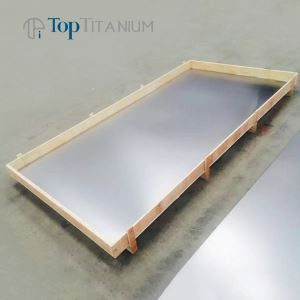 Titanium Plate for Chemical IndustryBecause titanium has excellent corrosion resistance, mechanical properties and process properties,Add to Inquiry
 -
 Titanium Plate for CarTitanium alloys have low density, strong corrosion resistance, high specific stiffness and specificAdd to Inquiry
 -
 Titanium Plate for ArchitectureTitanium has high strength and excellent welding performance, and has a small density and excellentAdd to Inquiry
 -
 ASTM B265 Titanium PlateTitanium plate has good corrosion resistant, weldability, strength, ductility and formability. ItAdd to Inquiry
 -
 ASTM B265 Titanium SheetTitanium sheet has good corrosion resistant, weldability, strength, ductility and formability. ItAdd to Inquiry
 -
 ASTM B265 Titanium StripTitanium strip has good corrosion resistant, weldability, strength, ductility and formability. ItAdd to Inquiry
 -
 Titanium Strip in CoilTitanium strip has good corrosion resistant, weldability, strength, ductility and formability. ItAdd to Inquiry


What Is Titanium Plate
Titanium plates are blocks of pure form titanium metal that are thicker than 0.25 inches and are prepared to be used in secondary fabrication processes.
Benefits of Titanium Plate

high strength and corrosion resistance
Titanium plate is known for its high strength and excellent corrosion resistance, making it an ideal choice for applications where durability is essential. The metal is highly resistant to corrosion in a wide range of environments, including seawater, acids, and alkalis. This makes it a popular choice for marine and chemical processing applications, where exposure to harsh environments is common.

Lightweight and durable
Another key benefit of titanium plate is its lightweight and durable nature. The metal has a low density, which makes it significantly lighter than steel while still maintaining high strength. This makes it an ideal choice for applications where weight reduction is critical, such as in the aerospace industry. Additionally, titanium plate is highly durable and can withstand extreme temperatures, making it an ideal choice for applications where high performance is essential.

Biocompatibility
Titanium plate is also biocompatible, which means that it is not rejected by the body's immune system. This makes it an ideal choice for medical implants, including dental implants and joint replacements. In addition to its biocompatibility, titanium is also highly resistant to corrosion and wear, which makes it an ideal choice for long-term implant applications.

Cost-effective
Despite its many benefits, titanium plate is also a cost-effective choice for many applications. While it may be more expensive than some other materials, such as steel or aluminum, its long-term durability and resistance to corrosion can provide significant cost savings over time. Additionally, the lightweight nature of titanium can also help reduce transportation and handling costs.
Types of Titanium Plate
Titanium Sheet
Titanium Plate
Titanium Strip
Titanium Coils
Titanium Foils
Titanium Flats
Titanium Clad Plate
Titanium Plain Sheet
Titanium Rolling Sheet
Titanium Rolling Plate
Titanium Flat Shim
Titanium Flat Sheet
Titanium Shim Sheet
Titanium Rolls
Titanium Blank (Circle)
Titanium sheared
Titanium annealed
Titanium soft annealed
Titanium descaled
Titanium tread plate
Titanium Checker Plate
Difference:Thickness greater than 0.15 mm and less than 6.35mm is called a Titanium Sheet.
Thickness greater than 6.35 mm is called a Titanium Plate.
Thickness less than 0.15mm is called a SB 265 Titanium Foil.
Process of Titanium Plate
Melting
Titanium ore is smelted at high temperatures to produce titanium sponge.
Consolidation
This sponge is then compacted and transformed into an ingot using processes like vacuum arc remelting or electron beam melting.
Hot rolling
The ingot is then heated and rolled under high pressure to produce a slab. This slab is further processed and reduced to the desired thickness.
Cold rolling
For thinner sheets, the slab undergoes further rolling at room temperature until it reaches the required dimensions.
Heat treatment
Post rolling, the sheet or plate may be heat-treated to achieve desired mechanical properties.
Surface finishing
Finally, the sheet or plate is finished, which might include pickling to remove oxide layers or polishing to achieve a smoother surface.
Titanium Machining Tips
If you keep some core principles in mind about the metal and your machinery, you should be able to cut titanium without too much headache. Some aspects are known to be difficult, so you'll need to pay special attention to these factors.


Keep temperatures down
Since titanium doesn't conduct heat well, most of the energy generated during the cutting process goes into the tool. This heat can have several adverse effects, the most notable of which is causing premature tool failure. It can dull your tool and cause rubbing, generating even more heat and continuing the cycle. Depending on the materials you're using, this could also be a fire risk. The dulling of your tools can be expensive for you and damaging to the piece of work.
Poor heat dissipation can also lead to strain hardening, in which the edges of your workpiece harden and become tougher to cut. This hardening affects the speed at which you need to be cutting and can lead to faster tool degradation. Using a generous amount of coolant can help bring down temperatures.
Make your surface stable
One effective way to put added strain on your tool is to expose it to shock and jarring changes in force. It is common for the tool to experience this when it enters and exits the material. Instead of inserting the tool directly into the metal, gently arc it inward to ease it into the cut. This arc lets you gradually increase the pressure and makes the entry less jarring on your tool and less likely to tear the material. This path should follow thick-to-thin milling, as well as move in the same direction, clockwise or counterclockwise, as the tool.
For a similar result at the end of your cut, consider a chamfer. A chamfer is a sloped groove in the material. It lets the tool lose depth gradually instead of abruptly, which helps ease the transition for the tool with less force.
Watch your tools
A sharp tool is necessary for efficient cutting, and titanium can wear your tools very quickly. Inspect them frequently and replace them if they start to wear. A dull tool will add heat and consequently wear out even faster.
Leave your tool a lot of room
By using a tool with a smaller diameter, you create more exposure to air and coolant. Doing this allows the cut edge to spend more time cooling down. It also isn't exposed to the tool and its heat for as long. This method is an effective way to control the temperature by giving the metal time to breathe in between cuts.
Reduce galling
Titanium alloys to other materials readily, which can cause galling and rewelding of the edges while cutting. Keeping the heat down, using sharp tools and using lubricant can help reduce this effect.
Control chipping
Edge chips occur when the metal pieces being cut off compress and adhere to the edge of the cutting tool. As more pieces build up on the cutting tool, they negatively impact performance and can result in a more quickly damaged tool and a poor cut. Using a sharp tool and lubricant can help reduce chipping.
certificate


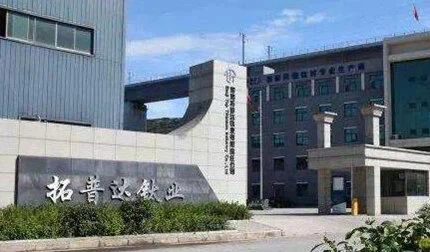
Factory And Equipment Pictures
Baoji Top Titanium Industry Co., Ltd. was founded in 2010 and over the years has accumulated a registered capital of over 14 million USD. The company is located in Baoji China, also known as the Titanium Valley of China due being Chinas pioneer for Titanium in China. The company grounds cover independent land of 17000 square meters and a facility area of 13000 square meters. Baoji Top Titanium Industry Co., Ltd. main products are pure titanium and titanium alloy bars (round, flat, square), thick tubes, stepped shafts, special-shaped pipes, and cylindrical forgings.




FAQ
Q: What is titanium plate used for?
Q: Can titanium plates be left in the body safely?
Q: How long do titanium plates last?
Q: Does bone grow around titanium?
Q: Are titanium plates OK for MRI?
Q: Can plates and screws cause pain years later?
Q: Does titanium set off metal detectors?
The majority of metal detectors used by the TSA work by creating an electromagnetic field, which sets off an alarm when it detects any nearby magnetic metals. In most cases, modern dental implants are primarily made from titanium, a non-magnetic metal.
Q: Can your body reject screws years later?
Q: Do plates and screws make bones stronger?
Q: Can titanium implants cause blood clots?
Q: Does cold weather affect metal in the body?
Q: How long does it take for titanium to fuse to bone?
Q: How long do titanium bone implants last?
Q: Can you feel plates and screws?
Q: How do you know if your body is rejecting titanium screws?
Q: Is titanium expensive?
Q: Does titanium show up on xray?
Q: What are the signs that a surgical screw is coming loose?
Q: Does bone grow back after screw removal?
Q: Why don't we use titanium more?
We're well-known as one of the leading titanium plate manufacturers and suppliers in China for our quality products and customized service. Please feel free to buy titanium plate in stock here from our factory. Contact us for quotation.
titanium sheet for chemical industry, B265 Ti Sheet, ASTM B265 Titanium Strip