

Titanium Forging
15 Years Titanium Alloy Material and Products Manufacturer
Top Titanium is a company that integrates a full industrial chain, Founded in 2010 with a registered capital of 130 million RMB, Titanium bar, Titanium forgings, and Titanium CNC machined parts are our main products,specializing in research and development, production, sales, and trade of advanced titanium equipment and titanium alloys.
-
 Ti6AI4V Titanium BlockTitanium blocks are the ninth most abundant element in the earth’s crust and the seventh mostAdd to Inquiry
-
 Titanium DiscGrades:CP titanium(Grade1-Grade4) for medical & titanium alloys(Grade5 Ti6Al4V) for aerospace andAdd to Inquiry
-
 Titanium Block For MedicialGrade 5 (Ti-6Al-4V) and Grade 23 (Ti-6Al-4V ELI)Application:Implants and Surgical instrumentshighAdd to Inquiry
-
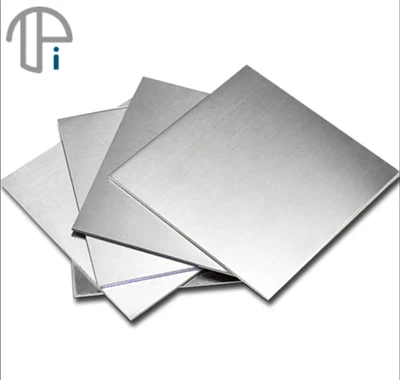 Titanium Alloy BlockTitanium block can be found in a multitude of thicknesses and widths. it are easily cast andAdd to Inquiry
-
 TC4 Titanium Alloy Forging PieceIn key fields such as aerospace, high-end equipment manufacturing, national defense and militaryAdd to Inquiry
-
 ASME Titanium FlangeProduct:ASME Titanium FlangeStandard :ASME,DINGrade:GR1, GR2, GR5, GR7, GR9, GR12Size: DN 15 ~ DNAdd to Inquiry
-
 ANSI 16.5 Titanium FlangeProduct:ANSI16.5 Titanium FlangeStandards:ASTMSpecification:thickness(1mm-500mm)×OuterAdd to Inquiry
-
 Titanium Flange ChemicalProduct :Titanium FlangeStandard:ASME,ISO,GB/TApplication:Chemical industry,Aerospace field,MedicalAdd to Inquiry
-
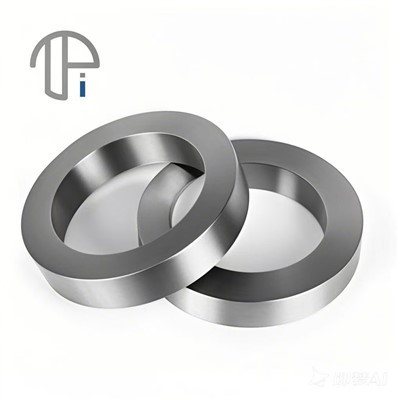 Machining Titanium Forged RingGr5 ASTM B381 Titanium and Titanium alloy Forged RingProductname: ASTM B381 Forged TitaniumAdd to Inquiry
-
 Gr2 Titanium DiscCustom made 99.99% Titanium pure metal material Ti sputter target for sale. The surface is cleanAdd to Inquiry
-
 Titanium End CapTitanium end cap has a series of advantages, such as excellent corrosion resistance, small density,Add to Inquiry
-
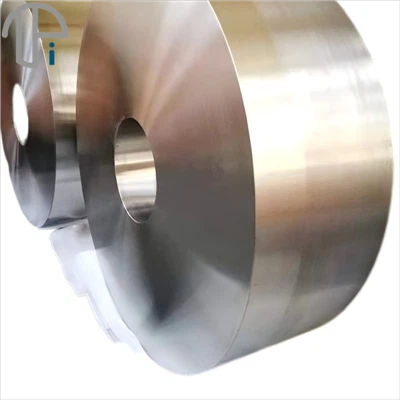 Gr5 Titanium RingGr5 titanium ring have low weight, excellent high strength and nonmagnetic features, low density,Add to Inquiry


What Is Titanium Forging
Titanium alloy forging is an important metal processing technology. It heats the titanium alloy to an appropriate temperature and applies deformation force through external force to make it plastically deform under high temperature. This process can not only improve the density and mechanical properties of the titanium alloy, but also form a fine grain structure to improve its fatigue resistance and corrosion resistance, thereby meeting the needs of various complex engineering applications.
The application range of titanium alloy forging technology is very wide, covering aerospace, automobile, shipbuilding, chemical industry, medical equipment and other fields. In the aerospace field, titanium alloy forging can be used to manufacture lightweight, high-strength engine blades and aviation structural parts to improve the performance and safety of aircraft. In the field of medical equipment, titanium alloy forging can produce corrosion-resistant and biocompatible artificial bones and joints for surgical repair and prosthetic manufacturing.
The key technologies of titanium alloy forging include: alloy selection, pretreatment, heating, forging deformation, heat treatment and mechanical property testing. Among them, alloy selection is crucial. Different alloy compositions and ratios can give titanium alloys different mechanical properties and corrosion resistance to meet various engineering needs.
Titanium alloy forging has good processing performance Various parts and components of complex shapes can be prepared by hot forging or hot isostatic pressing. Titanium alloy has good plasticity at high temperature and can adapt well to the deformation requirements during forging, thus realizing the precise forming of complex parts.
In summary, titanium alloy forging is an important metal processing technology. It is widely used in aerospace, automobile, shipbuilding, chemical industry, medical equipment and other fields. Through reasonable material selection and processing technology, titanium alloy forging can produce high-strength, light weight and corrosion-resistant parts and components to meet various engineering needs. With the continuous innovation of technology, titanium alloy forging technology will develop further, providing more possibilities for the development of various fields.
1. Excellent mechanical properties
The mechanical properties of titanium alloy forgings are one of their most significant features. In high temperature and high pressure environments, titanium alloy forgings have excellent tensile strength, yield strength and fatigue strength. In addition, titanium alloy forgings also have good oxidation resistance and corrosion resistance, making them widely used in high-temperature, high-pressure, and high-corrosion environments such as aerospace, chemical industry, and petroleum.
2. Unique process performance
The production process of titanium alloy forgings has unique process properties. Due to the high melting point and low thermal conductivity of titanium alloys, special heat treatment processes are required during the forging process. In addition, during the processing of titanium alloy forgings, care must be taken to prevent contact with oxygen, nitrogen and other gases to avoid chemical reactions that may affect the quality of the forgings.
3. Wide range of applications
Titanium alloy forgings are widely used in many fields due to their excellent mechanical properties and process properties. For example, in the aerospace field, titanium alloy forgings can be used to make engine parts, missile casings and other components; in the chemical industry, titanium alloy forgings can be used to make reactors, pipelines and other equipment; in the petroleum field, titanium alloy forgings can be used to make drill bits. , drill pipe and other tools.

Low thermal expansion
Titanium forgings have a low coefficient of thermal expansion, meaning they do not expand or contract significantly when heated or cooled. This property makes titanium forgings highly resistant to thermal stress and thermal fatigue, making them ideal for use in high-temperature environments.
Excellent fatigue strength
Titanium forgings have exceptional fatigue strength, which means they can withstand repeated loading and unloading without succumbing to fatigue damage. This property makes titanium forgings ideal for use in high-stress applications, such as aircraft landing gear and structural components.
Formability
Titanium is a highly malleable material that can be forged into a wide variety of shapes and sizes. This makes it a popular choice for custom applications where specific shapes and sizes are required.
Magnetic resistant
Titanium forgings are non-magnetic, which makes them ideal for use in applications where magnetic interference could damage electronic devices or sensitive equipment. This property also makes titanium forgings ideal for use in the medical industry, where non-magnetic materials are critical for MRI and other diagnostic technologies.
Types of Titanium Forging
Forging is a plastic forming process, that is, using the plasticity of metal to make the blank material obtain a certain shape and structural properties under the impact or pressure of the tool.


Free forging
Free forging is generally carried out between two flat dies or molds without a cavity. The tools used in free forging are simple in shape, flexible, short in the manufacturing cycle, and low in cost.
01
Open die forging
The blank is deformed between two molds with cavities, the forging is confined in the cavity, and the excess metal flows out from the narrow gap between the two molds, forming burrs around the forging. Under the resistance of the mold and surrounding burrs, the metal is forced to be pressed into the shape of the mold cavity.
02
Closed die forging
In the closed die forging process, no transverse burrs perpendicular to the direction of die movement are formed. The cavity of the closed forging die has two functions: one is for forming the blank, and the other is for guiding.
03
Extrusion die forging
It refers to using the extrusion method for die forging, which includes forward extrusion die forging and reverse extrusion die forging. Extrusion die forging can manufacture all kinds of hollow and solid parts and can obtain forgings with high geometrical precision and denser internal structure.
04
Multi-directional die forging
Multi-directional die forging is performed on a multi-directional die forging machine. In multi-directional die forging, the slider acts alternately and jointly on the workpiece from the vertical and horizontal directions, and one or more perforation punches are used to make the metal flow outward from the center of the cavity to achieve the purpose of filling the cavity.
05
Partial die forging
In order to forge large integral forgings on the existing hydraulic pressure, partial die forging methods, such as segment die forging, pad die forging, etc. can be used. The feature of the partial die forging method is to process the forging piece by piece, processing one part at a time, so the required equipment tonnage can be very small. Generally speaking, this method can be used to process extra-large forgings on medium hydraulic presses.
06
Isothermal forging
Before forging, the mold is heated to the forging temperature of the blank, and the temperature of the mold and the blank remains the same throughout the forging process so that a large amount of deformation can be obtained under the action of a small deformation force.
07

Titanium has an allotropic transformation in the solid state. Below 882.5°C, it is a close-packed hexagonal lattice, called α-titanium; above 882.5°C, it is a body-centered cubic lattice, called β-titanium. α-titanium has high strength and good heat resistance, but poor plasticity, large deformation resistance, and more difficult plastic forming. β-titanium has poor heat resistance, but good process plasticity and good deformation processability.
Titanium Forging FAQs

01.Is titanium good for forging?
02.At what temperature can you forge titanium?
03. What metals Cannot be forged?
04.What is the strongest metal that can be forged?
05.Is Damascus steel stronger than titanium?
06.What happens if you mix titanium and steel?
We're well-known as one of the leading titanium forging manufacturers and suppliers in China for our quality products and customized service. Please feel free to buy titanium forging in stock here from our factory. Contact us for quotation.
B348 Titanium Bar, Gr1 titanium pipe, Forged Titanium Stepped Shaft