

As a dedicated supplier of B348 Titanium Bar, I often encounter inquiries from customers about the cold - working capabilities of this remarkable material. Cold - working is a crucial process in the metalworking industry, as it can enhance the mechanical properties of metals without the need for high - temperature treatments. In this blog post, I will delve into the question of whether B348 Titanium Bar can be cold - worked, exploring the science behind it, the benefits, limitations, and practical considerations.
Understanding B348 Titanium Bar
Before discussing cold - working, it's essential to understand what B348 Titanium Bar is. B348 is a specification for wrought titanium and titanium alloy bars and billets. Titanium is a well - known metal for its exceptional strength - to - weight ratio, corrosion resistance, and biocompatibility. B348 titanium bars are used in a wide range of industries, including aerospace, medical, and chemical processing.
The composition of B348 titanium bars can vary depending on the specific alloy. Common alloying elements include aluminum, vanadium, and tin, which can significantly influence the material's properties. These alloys are designed to meet different performance requirements, such as high strength, good ductility, or excellent corrosion resistance.
The Basics of Cold - Working
Cold - working is a metalworking process in which metal is deformed at room temperature or slightly above it. This process includes operations such as rolling, drawing, forging, and bending. When a metal is cold - worked, its crystal structure is altered, which leads to an increase in strength and hardness. This phenomenon is known as strain hardening.
The cold - working process involves applying stress to the metal, causing dislocations in its crystal lattice. As the dislocations move and interact with each other, they become entangled, making it more difficult for further deformation to occur. This results in an increase in the material's yield strength and ultimate tensile strength.
Can B348 Titanium Bar be Cold - Worked?
The answer is yes, B348 Titanium Bar can be cold - worked, but with certain limitations. Titanium, in general, has a relatively high strength and low ductility compared to some other metals, such as aluminum or copper. This means that it requires more force to deform and is more prone to cracking during cold - working.
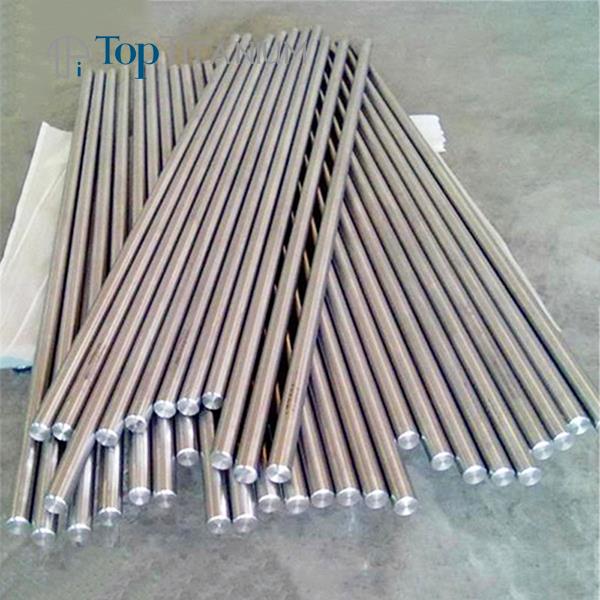

The cold - workability of B348 titanium bars depends on several factors:
Alloy Composition
Different titanium alloys have different cold - workability characteristics. For example, some alloys with higher amounts of alloying elements may be more difficult to cold - work due to their increased strength and reduced ductility. On the other hand, alloys with lower alloy content may be more amenable to cold - working.
Initial Microstructure
The initial microstructure of the B348 titanium bar also plays a crucial role. A fine - grained microstructure generally provides better cold - workability compared to a coarse - grained one. Heat treatment processes can be used to control the microstructure and improve the material's cold - workability.
Cold - Working Conditions
The success of cold - working B348 titanium bars also depends on the specific cold - working conditions. Factors such as the amount of deformation per pass, the speed of deformation, and the lubrication used can all affect the process. For example, excessive deformation in a single pass can lead to cracking, while proper lubrication can reduce friction and prevent surface damage.
Benefits of Cold - Working B348 Titanium Bar
Despite the challenges, cold - working B348 titanium bars offers several benefits:
Improved Strength
As mentioned earlier, cold - working increases the strength of the material through strain hardening. This can make the B348 titanium bars more suitable for applications where high strength is required, such as in aerospace components.
Enhanced Surface Finish
Cold - working can also improve the surface finish of the titanium bars. The deformation process can smooth out surface irregularities, resulting in a more uniform and aesthetically pleasing surface.
Dimensional Accuracy
Cold - working processes can be used to achieve precise dimensions and tight tolerances. This is particularly important in applications where accurate fit and function are critical, such as in medical implants.
Limitations and Challenges
While cold - working B348 titanium bars has its advantages, there are also some limitations and challenges:
Limited Ductility
As titanium has relatively low ductility, cold - working can quickly reach the material's limit of deformation. Exceeding this limit can result in cracking or fracturing of the bar.
Residual Stress
Cold - working introduces residual stress into the material. These residual stresses can cause distortion over time, especially if the material is subjected to further processing or service conditions. Heat treatment may be required to relieve these residual stresses.
Tool Wear
The high strength of titanium means that cold - working tools are subjected to significant wear. This can increase the cost of the cold - working process and require frequent tool replacement.
Practical Considerations for Cold - Working B348 Titanium Bar
If you are considering cold - working B348 titanium bars, here are some practical considerations:
Pre - Treatment
Before cold - working, it may be necessary to perform pre - treatment processes, such as annealing, to improve the material's ductility and reduce the risk of cracking.
Process Control
Close control of the cold - working process is essential. This includes monitoring the amount of deformation per pass, the speed of deformation, and the temperature of the material.
Post - Treatment
After cold - working, post - treatment processes, such as stress relieving or heat treatment, may be required to optimize the material's properties and relieve residual stresses.
Comparison with Other Titanium Bars
When comparing the cold - workability of B348 titanium bars with other titanium bars, such as Ti 1023 Titanium Bar and Gr12 Titanium Round Bar, there are some differences.
Ti 1023 titanium bars are known for their high strength and good fracture toughness. They can be cold - worked, but due to their high strength, they may require more force and careful process control.
Gr12 titanium round bars, on the other hand, have a good combination of strength and corrosion resistance. They are generally more ductile than some high - strength titanium alloys, which makes them relatively easier to cold - work.
Conclusion
In conclusion, B348 Titanium Bar can be cold - worked, but it requires careful consideration of the alloy composition, initial microstructure, and cold - working conditions. While cold - working offers benefits such as improved strength, enhanced surface finish, and dimensional accuracy, it also presents challenges such as limited ductility, residual stress, and tool wear.
As a supplier of B348 Titanium Bar, I am committed to providing high - quality products and technical support to our customers. If you are interested in cold - working B348 titanium bars for your specific application, I encourage you to contact me for further discussion. We can work together to determine the best approach to meet your requirements and ensure the success of your project.
References
- ASM Handbook, Volume 2: Properties and Selection: Nonferrous Alloys and Special - Purpose Materials.
- Titanium: A Technical Guide, Second Edition by J. R. Davis.
- Metal Forming: Processes and Applications by G. E. Dieter.


