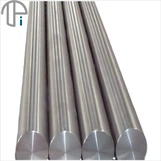
As a supplier of Gr2 Titanium Bars, I've had the privilege of witnessing the diverse applications and remarkable properties of this material. One crucial aspect that often comes under scrutiny is its aging behavior. In this blog, we'll delve deep into what the aging behavior of Gr2 Titanium Bar entails, exploring its significance, influencing factors, and implications for various industries.
Understanding Gr2 Titanium Bar
Before we dive into the aging behavior, let's briefly introduce Gr2 Titanium Bar. Grade 2 titanium is an unalloyed titanium known for its excellent corrosion resistance, good formability, and moderate strength. It is widely used in various industries, including chemical processing, marine, and aerospace. The Ti Gr1 Round Titanium Bars share some similarities with Gr2, but Gr2 offers a slightly higher strength level while maintaining its corrosion - resistant properties.
What is Aging in Titanium?
Aging in the context of titanium refers to the process where the material's microstructure and properties change over time, either at room temperature or elevated temperatures. This change is often driven by the diffusion of atoms within the titanium lattice. For Gr2 Titanium Bar, aging can have both positive and negative impacts on its mechanical and chemical properties.
Factors Influencing the Aging Behavior of Gr2 Titanium Bar
Temperature
Temperature plays a significant role in the aging process of Gr2 Titanium Bar. At room temperature, the aging process is extremely slow. However, when the bar is exposed to elevated temperatures, the diffusion rate of atoms increases significantly. For example, at temperatures above 300°C, the atoms in the titanium lattice start to move more freely, which can lead to the formation of new phases or the coarsening of existing ones. This can affect the strength, ductility, and corrosion resistance of the bar. In aerospace applications, where Titanium Bar for Aerospace is often exposed to high - temperature environments during flight, understanding the aging behavior at elevated temperatures is crucial.
Time
The duration of exposure also affects the aging behavior. Longer exposure times allow for more extensive atomic diffusion and phase changes. Even at relatively low temperatures, given enough time, the microstructure of Gr2 Titanium Bar can change. For instance, in a chemical processing plant where the bar is constantly in contact with corrosive substances, over a long period, the aging process can gradually degrade the corrosion - resistant layer, leading to increased susceptibility to corrosion.
Stress
Mechanical stress can also influence the aging behavior of Gr2 Titanium Bar. When the bar is under stress, the atomic diffusion is enhanced along the stress - induced paths. This can accelerate the aging process and cause premature failure in some cases. For example, in a marine application where the bar is used in a structure that experiences cyclic loading, the combination of stress and aging can lead to fatigue cracking.
Effects of Aging on Gr2 Titanium Bar Properties
Mechanical Properties
- Strength: Aging can either increase or decrease the strength of Gr2 Titanium Bar. In some cases, the formation of new phases during aging can act as obstacles to dislocation movement, thereby increasing the strength. However, if the aging process leads to the coarsening of grains, the strength may decrease. For example, in a high - temperature aging scenario, the grains may grow larger, reducing the number of grain boundaries that impede dislocation movement.
- Ductility: Generally, as the strength increases due to aging, the ductility of the bar decreases. The formation of hard phases can make the material more brittle, reducing its ability to deform plastically. This is a critical consideration in applications where the bar needs to undergo some degree of deformation without fracturing.
Chemical Properties
- Corrosion Resistance: Aging can have a complex effect on the corrosion resistance of Gr2 Titanium Bar. In some cases, the formation of a more stable oxide layer during aging can enhance the corrosion resistance. However, if the aging process causes the breakdown of the protective oxide layer or the formation of preferential corrosion sites, the corrosion resistance will decrease. For example, in an acidic environment, the aging - induced changes in the microstructure can lead to localized corrosion.
Mitigating the Negative Effects of Aging
To ensure the long - term performance of Gr2 Titanium Bar, several strategies can be employed to mitigate the negative effects of aging.
Heat Treatment
Proper heat treatment can be used to control the aging process. By carefully selecting the heat treatment parameters, such as temperature and time, the microstructure of the bar can be optimized. For example, a solution heat treatment followed by a controlled aging process can help to achieve a balance between strength and ductility.
Alloying
Although Gr2 is an unalloyed titanium, in some cases, adding small amounts of alloying elements can improve its aging resistance. For example, the addition of elements like vanadium or aluminum can stabilize the microstructure and reduce the rate of atomic diffusion during aging. This is similar to the approach used in Ti6AL4V ELI titanium bar, where the alloying elements enhance the overall performance of the bar.
Protective Coatings
Applying protective coatings can also help to prevent the negative effects of aging, especially in terms of corrosion. Coatings such as ceramic or polymer coatings can act as a barrier between the bar and the corrosive environment, reducing the impact of aging - related corrosion.
Applications and Aging Considerations
- Aerospace: In aerospace applications, the aging behavior of Gr2 Titanium Bar is of utmost importance. The high - temperature and high - stress environments during flight can accelerate the aging process. Engineers need to carefully consider the aging effects when designing components to ensure the safety and reliability of the aircraft.
- Chemical Processing: In chemical processing plants, the bar is often exposed to corrosive chemicals. The aging process can affect the corrosion resistance of the bar over time. Regular inspections and proper maintenance are required to ensure the long - term performance of the bar in these harsh environments.
- Marine: In marine applications, the combination of saltwater corrosion and mechanical stress can exacerbate the aging process. The bar needs to be designed and maintained to withstand these conditions and prevent premature failure.
Conclusion
Understanding the aging behavior of Gr2 Titanium Bar is essential for ensuring its proper use in various industries. The factors of temperature, time, and stress all play significant roles in the aging process, which can have a profound impact on the mechanical and chemical properties of the bar. By employing strategies such as heat treatment, alloying, and protective coatings, the negative effects of aging can be mitigated.
If you are interested in purchasing high - quality Gr2 Titanium Bar or have any questions regarding its aging behavior and applications, please feel free to contact us for further discussion and procurement negotiation. We are committed to providing you with the best products and solutions to meet your specific needs.


References
- Boyer, R., Welsch, G., & Collings, E. W. (1994). Materials Properties Handbook: Titanium Alloys. ASM International.
- Lütjering, G., & Williams, J. C. (2007). Titanium: A Technical Guide. ASM International.