

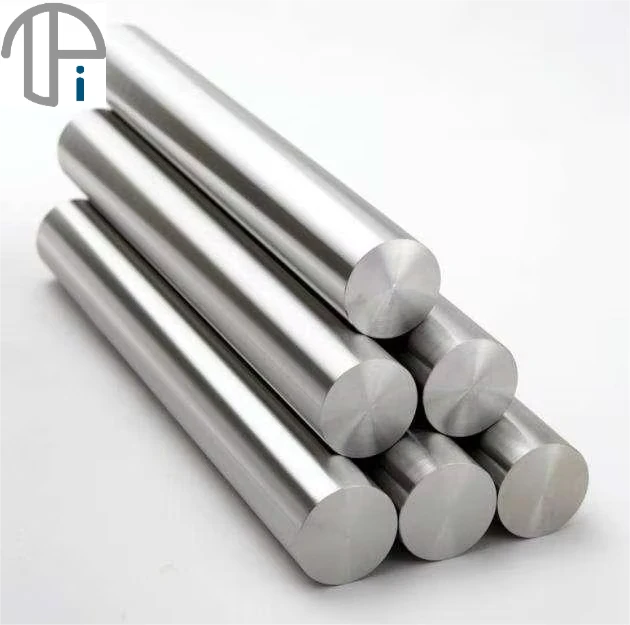
Pure titanium bars, known for their exceptional properties, have found a wide range of medical applications. As a reliable supplier of pure titanium bars, I am excited to delve into the various ways these materials are utilized in the medical field.
Biocompatibility and Its Significance
One of the most remarkable features of pure titanium bars is their high biocompatibility. When a foreign material is introduced into the human body, the body's immune system often responds to it. However, pure titanium is relatively inert within the physiological environment. It does not trigger significant immune responses, such as allergic reactions or inflammation. This biocompatibility is crucial for medical implants. For example, in dental implants, the implant needs to integrate with the jawbone over time. A biocompatible material like pure titanium allows for the growth of bone cells around the implant. This process, known as osseointegration, is essential for the long - term success and stability of the dental implant.
Dental Applications
In the dental industry, pure titanium bars are used extensively. Dental implants are a prime example. The Ti 15333 Titanium Bar is often a preferred choice for dental implant manufacturers. Its high strength - to - weight ratio is beneficial as it can withstand the forces exerted during chewing while being lightweight. The surface of the titanium bar can be treated to enhance its osseointegration properties. For instance, a rough surface treatment can provide more surface area for bone cells to attach and grow.
Orthodontic appliances also make use of pure titanium. Titanium wires are used in braces. These wires are flexible yet strong enough to apply the necessary forces to move teeth gradually into the correct position. The ASTM Gr5 Titanium Rod can be fabricated into such wires. Its corrosion resistance ensures that the wires maintain their integrity over the long - term treatment period of orthodontics, which can last for months or even years.
Orthopedic Applications
In orthopedics, pure titanium bars play a vital role. Hip and knee joint replacements often incorporate titanium components. The use of Gr7 Titanium Round Bar is significant in these applications. Titanium's low modulus of elasticity is similar to that of human bone, which helps to reduce the stress shielding effect. Stress shielding occurs when a more rigid implant takes on most of the load, causing the surrounding bone to weaken over time. With a titanium implant, the load is more evenly distributed between the implant and the bone, promoting better bone health and long - term joint function.
Bone plates and screws used in fracture fixation are also commonly made from pure titanium. These implants need to hold the broken bone fragments in place during the healing process. Titanium's high strength and corrosion resistance make it an ideal material. The implants can remain in the body without degrading or causing adverse reactions, ensuring successful bone healing.
Cardiovascular Applications
In the cardiovascular field, pure titanium has several applications. Stents used to treat blocked blood vessels are sometimes made from titanium alloys. These stents need to be expandable and able to maintain their shape within the blood vessel. Titanium's malleability allows for the precise fabrication of stents. Additionally, its biocompatibility is crucial in preventing blood clot formation on the surface of the stent. A blood clot can lead to further blockages and serious health complications.
Heart valves can also benefit from the use of titanium. The durability of titanium ensures that the heart valve can withstand the constant mechanical stress of the heart's pumping action. The smooth surface of titanium reduces the risk of platelet adhesion, which is important for maintaining proper blood flow through the valve.
Surgical Instruments
Pure titanium bars are used to manufacture surgical instruments. Forceps, scissors, and scalpels made from titanium offer several advantages. Titanium is lightweight, which reduces the fatigue of surgeons during long - term operations. Its high strength allows the instruments to be sharp and precise, ensuring accurate incisions and tissue manipulation. Moreover, titanium's corrosion resistance means that the instruments can be easily sterilized and reused multiple times without losing their functionality or integrity.

Factors Affecting Medical Applications
Several factors need to be considered when using pure titanium bars in medical applications. The purity of the titanium is of utmost importance. High - purity titanium is less likely to cause adverse reactions in the body. The manufacturing process also plays a role. For example, precision machining is required to produce implants with the correct dimensions and surface finish. Heat treatment can further enhance the mechanical properties of titanium bars, improving their performance in medical applications.
Our Quality Assurance as a Supplier
As a supplier of pure titanium bars, we take quality assurance very seriously. We source our raw materials from reliable suppliers and conduct strict quality control tests at every stage of production. We ensure that our titanium bars meet all the necessary medical standards and regulations. Our manufacturing processes are state - of - the - art, allowing us to produce titanium bars with consistent quality and performance.
Contact for Procurement
If you are in the medical industry and are interested in purchasing high - quality pure titanium bars for your medical applications, we would be delighted to discuss your requirements. We offer a wide range of titanium bars, including Ti 15333 Titanium Bar, ASTM Gr5 Titanium Rod, and Gr7 Titanium Round Bar. Contact us to start a procurement discussion and find the best titanium solutions for your needs.
References
- Ratner, B. D., Hoffman, A. S., Schoen, F. J., & Lemons, J. E. (Eds.). (2012). Biomaterials science: An introduction to materials in medicine. Academic Press.
- Williams, D. F. (2008). On the mechanisms of biocompatibility. Biomaterials, 29(20), 2941 - 2953.
- Park, J. B., & Bronzino, J. D. (Eds.). (2003). Biomaterials: An introduction. Springer Science & Business Media.


