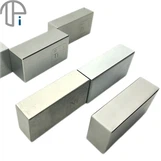
Titanium is a remarkable metal known for its unique combination of strength, corrosion resistance, and low density. Among its various forms, the Titanium Block stands out as a versatile material with numerous applications across different industries. One of the key properties that often piques the interest of engineers, researchers, and potential buyers is its electrical conductivity. In this blog, as a Titanium Block supplier, I'll delve into the electrical conductivity of Titanium Block, exploring its factors, significance, and implications for various applications.
Understanding Electrical Conductivity
Before we dive into the specifics of Titanium Block's electrical conductivity, let's first understand what electrical conductivity is. Electrical conductivity is a measure of a material's ability to conduct an electric current. It is the reciprocal of electrical resistivity and is typically denoted by the Greek letter sigma (σ). Materials with high electrical conductivity allow electrons to move freely through them, while those with low conductivity impede the flow of electrons.
The SI unit of electrical conductivity is siemens per meter (S/m). Metals are generally good conductors of electricity because they have a large number of free electrons that can move easily in response to an electric field. Non-metals, on the other hand, are usually poor conductors and are often used as insulators.
Electrical Conductivity of Titanium
Titanium is a transition metal with an atomic number of 22. It has a relatively low electrical conductivity compared to some other common metals like copper and aluminum. The electrical conductivity of pure titanium at room temperature is approximately 2.38 × 10⁶ S/m. This is significantly lower than copper, which has an electrical conductivity of about 5.96 × 10⁷ S/m, and aluminum, with a conductivity of around 3.77 × 10⁷ S/m.
The lower electrical conductivity of titanium can be attributed to its electronic structure. Titanium has a partially filled d - orbital, which results in a more complex interaction between electrons and the atomic lattice. This interaction restricts the free movement of electrons, thereby reducing the material's ability to conduct electricity.
Factors Affecting the Electrical Conductivity of Titanium Block
Alloying
Most Titanium Blocks available in the market are not pure titanium but are alloys. Alloying titanium with other elements can significantly affect its electrical conductivity. For example, when titanium is alloyed with elements like aluminum, vanadium, or iron, the electrical conductivity can change. The addition of alloying elements can alter the electronic structure of the material, either increasing or decreasing the number of free electrons available for conduction.
Some common titanium alloys used in Titanium Blocks include Ti - 6Al - 4V (Grade 5), which is widely used in aerospace and medical applications. The electrical conductivity of Ti - 6Al - 4V is slightly different from that of pure titanium due to the presence of aluminum and vanadium. These alloying elements can form intermetallic compounds and solid solutions, which affect the electron mobility within the material.
Temperature
Temperature also plays a crucial role in determining the electrical conductivity of Titanium Blocks. Generally, as the temperature increases, the electrical conductivity of metals decreases. This is because, at higher temperatures, the atoms in the metal lattice vibrate more vigorously. These vibrations act as scattering centers for the free electrons, impeding their flow and reducing the electrical conductivity.
Conversely, at lower temperatures, the atomic vibrations are less intense, and the electrons can move more freely, resulting in higher electrical conductivity. However, it's important to note that the change in electrical conductivity with temperature is not linear and can vary depending on the specific alloy composition.
Crystal Structure and Grain Size
The crystal structure and grain size of the Titanium Block can also influence its electrical conductivity. Titanium can exist in different crystal structures, such as alpha (hexagonal close - packed) and beta (body - centered cubic). The electrical conductivity can vary between these different crystal phases.
Moreover, the grain size of the material can affect the electron scattering. Smaller grain sizes can provide more grain boundaries, which can act as scattering centers for electrons, reducing the electrical conductivity. On the other hand, larger grain sizes can lead to fewer scattering events and potentially higher electrical conductivity.
Significance of Electrical Conductivity in Applications
Aerospace Industry
In the aerospace industry, Titanium Blocks are widely used due to their high strength - to - weight ratio and corrosion resistance. While electrical conductivity may not be the primary consideration in most structural applications, it can be important in certain areas. For example, in electrical wiring systems within an aircraft, the electrical conductivity of the materials used is crucial for efficient power transmission.
Although titanium may not be as conductive as copper or aluminum, it can still be used in applications where its other properties, such as corrosion resistance and strength, are more important. For instance, in some aerospace components where weight reduction is a priority, titanium alloys can be used in electrical connectors or grounding systems, provided that the electrical conductivity requirements are met.
Medical Industry
In the medical field, Titanium Blocks are commonly used for implants such as hip and knee replacements. Electrical conductivity is not typically a critical property in these applications. However, in emerging areas such as bioelectronics and neural interfaces, the electrical conductivity of the implant material can be significant.
Some research is being conducted on using titanium - based materials for neural electrodes, where the ability to conduct electrical signals is essential. In these applications, the electrical conductivity of the Titanium Block needs to be carefully considered to ensure proper functioning of the device.
Electrical and Electronics Industry
In the electrical and electronics industry, the relatively low electrical conductivity of titanium can be both an advantage and a disadvantage. On one hand, in applications where electrical insulation or shielding is required, the low conductivity of titanium can be beneficial. For example, titanium can be used as a shielding material to protect sensitive electronic components from electromagnetic interference.
On the other hand, in applications where high - conductivity materials are needed, such as in power transmission lines or high - speed electronic circuits, titanium may not be the first choice. However, with the development of advanced alloying techniques, it may be possible to optimize the electrical conductivity of Titanium Blocks for specific electronic applications.


Our Titanium Block Offerings
As a supplier of Titanium Blocks, we offer a wide range of products to meet the diverse needs of our customers. Our Titanium Block products include different grades and alloy compositions, each with its own unique set of properties, including electrical conductivity.
We have the 381 Titanium Block, which is designed for specific industrial applications where a combination of strength and electrical properties is required. Our Gr2 Titanium Block is known for its excellent corrosion resistance and is suitable for applications in harsh environments.
We understand that the electrical conductivity of Titanium Blocks can be a critical factor for many of our customers. That's why we work closely with our customers to understand their specific requirements and provide them with the most suitable products. Our team of experts can provide detailed information about the electrical conductivity of our Titanium Blocks, as well as other properties such as strength, corrosion resistance, and machinability.
Contact Us for Procurement
If you're interested in purchasing Titanium Blocks and have specific requirements regarding electrical conductivity or other properties, we encourage you to contact us. Our team of experienced professionals is ready to assist you in finding the right product for your application. Whether you're in the aerospace, medical, or electrical and electronics industry, we can provide you with high - quality Titanium Blocks that meet your standards.
We can offer competitive pricing, reliable delivery, and excellent customer service. Don't hesitate to reach out to us to start a discussion about your procurement needs. We look forward to working with you to provide the best Titanium Block solutions for your business.
References
- ASM Handbook, Volume 2: Properties and Selection: Nonferrous Alloys and Special - Purpose Materials. ASM International.
- Titanium: A Technical Guide, Second Edition. John R. Davis (Editor). ASM International.
- "Electrical Conductivity of Metals" by various authors in Metallurgical and Materials Transactions.