

As a supplier of Titanium Disc, I often encounter inquiries about the Charpy impact value of our products. The Charpy impact value is a crucial parameter that reflects the material's ability to absorb energy under impact loading, which is significant for applications where the material may face sudden impact forces.
Understanding the Charpy Impact Test
The Charpy impact test is a standardized method used to measure the energy absorbed by a material during fracture under impact. A notched specimen, in our case, a sample cut from a Titanium Disc, is struck by a pendulum hammer. The energy absorbed during the fracture is determined by the difference in the potential energy of the pendulum before and after the impact. This energy value, known as the Charpy impact value, provides insights into the material's toughness and resistance to brittle fracture.
Factors Affecting the Charpy Impact Value of Titanium Disc
Alloy Composition
Titanium discs can be made from various alloys, each with its unique composition and properties. For example, Gr2 Titanium Disc is composed mainly of commercially pure titanium with a small amount of impurities. The purity and the presence of specific alloying elements can significantly influence the Charpy impact value. Alloying elements such as aluminum, vanadium, and molybdenum can enhance the strength and toughness of the titanium alloy, leading to higher Charpy impact values.
Heat Treatment
Heat treatment processes, such as annealing, quenching, and tempering, can alter the microstructure of the titanium disc, thereby affecting its Charpy impact value. Annealing, for instance, can relieve internal stresses and improve the ductility of the material, resulting in a higher Charpy impact value. On the other hand, improper heat treatment can lead to the formation of brittle phases, reducing the material's toughness and Charpy impact value.
Grain Size
The grain size of the titanium disc also plays a vital role in determining its Charpy impact value. Generally, a finer grain size leads to better mechanical properties, including higher Charpy impact values. This is because finer grains provide more grain boundaries, which can impede the propagation of cracks and absorb more energy during impact.

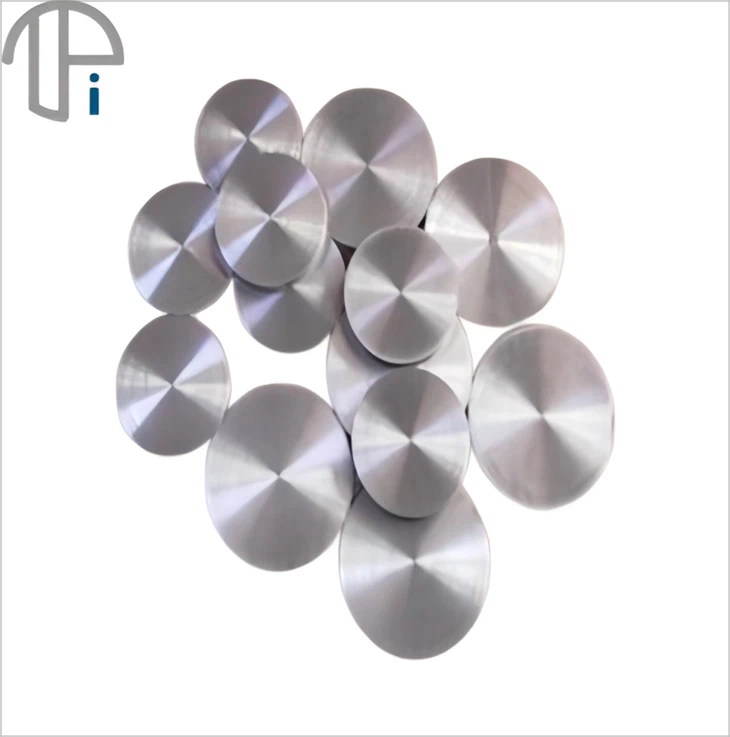
Typical Charpy Impact Values of Titanium Disc
The Charpy impact value of a titanium disc can vary depending on the factors mentioned above. For Dental Implant Titanium Disc, which requires high biocompatibility and good mechanical properties, the Charpy impact value is typically in the range of 20 - 40 J/cm². This value ensures that the dental implant can withstand the impact forces during normal use without fracturing.
For industrial applications, such as aerospace and automotive, where the titanium disc may be subjected to more severe impact loads, the Charpy impact value needs to be higher. Commercially pure titanium discs may have Charpy impact values ranging from 30 - 60 J/cm², while high - strength titanium alloy discs can have values exceeding 60 J/cm².
Importance of Charpy Impact Value in Applications
Aerospace Industry
In the aerospace industry, Titanium Disc is widely used in components such as turbine blades, engine casings, and structural parts. These components may experience high - speed impacts during flight, such as bird strikes or debris impacts. A high Charpy impact value ensures that the titanium disc can absorb the impact energy without catastrophic failure, enhancing the safety and reliability of the aircraft.
Medical Industry
In the medical field, titanium discs are commonly used in dental implants and orthopedic devices. These implants need to withstand the mechanical forces exerted during chewing and movement. A sufficient Charpy impact value ensures that the implant can resist fracture and maintain its integrity over time, providing long - term stability and functionality for the patient.
Automotive Industry
In the automotive industry, titanium discs are used in high - performance components such as connecting rods, valves, and suspension parts. These parts may be subjected to sudden impact loads during driving, such as pothole impacts or collisions. A high Charpy impact value allows the titanium disc to absorb the impact energy and prevent damage to the component, improving the overall performance and durability of the vehicle.
How We Ensure High - Quality Charpy Impact Values in Our Titanium Discs
As a professional Titanium Disc supplier, we implement a series of strict quality control measures to ensure that our products have high - quality Charpy impact values.
Material Selection
We carefully select the raw materials for our titanium discs, ensuring that they meet the required alloy composition and purity standards. We source our titanium from reliable suppliers and conduct thorough material testing to verify the quality of the raw materials.
Precision Manufacturing
Our manufacturing processes are carried out with high precision. We use advanced forging and machining techniques to produce titanium discs with consistent microstructures and dimensions. This helps to ensure that the Charpy impact value of each disc is within the specified range.
Quality Testing
We perform comprehensive quality testing on our titanium discs, including Charpy impact testing. Our testing facilities are equipped with state - of - the - art equipment, and our technicians are highly trained to conduct accurate and reliable tests. We provide detailed test reports to our customers, demonstrating the quality and performance of our products.
Conclusion
The Charpy impact value of a Titanium Disc is a critical parameter that reflects its toughness and ability to withstand impact loads. It is influenced by various factors such as alloy composition, heat treatment, and grain size. At our company, we are committed to providing high - quality titanium discs with excellent Charpy impact values. Whether you are in the aerospace, medical, or automotive industry, our titanium discs can meet your specific requirements.
If you are interested in our Titanium Disc products or have any questions about the Charpy impact value, please feel free to contact us for further discussion and procurement negotiation. We look forward to establishing a long - term and mutually beneficial cooperation with you.
References
- "Titanium: A Technical Guide" by John R. Davis.
- "Mechanical Behavior of Materials" by George E. Dieter.
- "Materials Science and Engineering: An Introduction" by William D. Callister, Jr. and David G. Rethwisch.


