

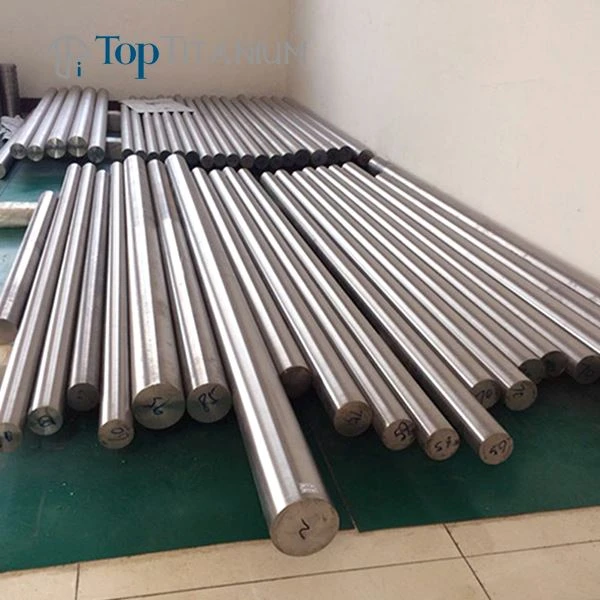
Gr5 titanium bar, also known as Ti-6Al-4V, is one of the most widely used titanium alloys in various industries due to its excellent mechanical properties. As a reliable Gr5 titanium bar supplier, I am delighted to share in - depth knowledge about the mechanical properties of this remarkable material.
1. Tensile Strength
Tensile strength is a crucial mechanical property that measures the maximum stress a material can withstand while being stretched or pulled before breaking. Gr5 titanium bar exhibits high tensile strength, typically ranging from 895 MPa to 1103 MPa in the annealed condition. This high strength - to - weight ratio makes it an ideal choice for applications where lightweight and high - strength components are required.
For example, in the aerospace industry, the high tensile strength of Gr5 titanium bars allows for the construction of aircraft components such as landing gear, engine parts, and structural frames. These components need to withstand extreme forces during flight, and the high tensile strength of Gr5 titanium ensures their reliability and safety. The TC4 6AL - 4V Titanium Rods we supply are carefully manufactured to meet the strict tensile strength requirements of aerospace applications.
2. Yield Strength
Yield strength is the stress at which a material begins to deform plastically. For Gr5 titanium bar, the yield strength is usually around 827 MPa in the annealed state. This means that under normal operating conditions, the material can withstand significant stress without permanent deformation.
In the automotive industry, the high yield strength of Gr5 titanium bars is highly valued. Titanium Bar for Car applications, such as suspension components and engine valves, require materials that can resist deformation under the dynamic loads experienced during driving. The high yield strength of Gr5 titanium ensures that these components maintain their shape and performance over time, contributing to the overall durability and safety of the vehicle.
3. Elongation
Elongation is a measure of the ability of a material to stretch before it breaks. Gr5 titanium bar typically has an elongation of about 10 - 15% in the annealed condition. This level of elongation indicates that the material has a certain degree of ductility, which is important for manufacturing processes such as forging, machining, and forming.
During the manufacturing of complex - shaped components, the ductility of Gr5 titanium allows it to be easily formed into the desired shape without cracking. For instance, in the production of medical implants, the ability to form the titanium bar into specific shapes is essential to ensure a proper fit within the human body. Our Ti6Al4V Titanium Bar can be precisely machined and formed to meet the strict requirements of medical device manufacturers.
4. Hardness
Hardness is a measure of a material's resistance to indentation, scratching, or wear. Gr5 titanium bar has a hardness of approximately 33 - 38 HRC (Rockwell hardness scale) in the annealed state. This relatively high hardness provides good wear resistance, making it suitable for applications where components are subject to friction and abrasion.
In the marine industry, Gr5 titanium bars are used in propeller shafts and other components that are exposed to harsh seawater environments. The high hardness of the material helps to resist corrosion and wear caused by the abrasive action of seawater and sand particles. This ensures the long - term performance and reliability of marine equipment.
5. Fatigue Strength
Fatigue strength is the ability of a material to withstand repeated loading and unloading cycles without failure. Gr5 titanium bar has excellent fatigue strength, which is crucial for applications where components are subjected to cyclic stresses.
In the aerospace and automotive industries, many components experience cyclic loading during operation. For example, aircraft wings and automotive engine parts are constantly under changing loads. The high fatigue strength of Gr5 titanium bars ensures that these components can endure millions of stress cycles without cracking or failing, thereby enhancing the safety and reliability of the entire system.
6. Impact Toughness
Impact toughness is the ability of a material to absorb energy and deform plastically without fracturing under high - speed impact loads. Gr5 titanium bar has good impact toughness, which makes it suitable for applications where sudden impact forces may occur.
In the sports equipment industry, Gr5 titanium bars are used to manufacture high - performance bicycle frames and golf club heads. These products need to withstand the impact forces generated during use, and the good impact toughness of Gr5 titanium ensures that they can absorb the energy of the impact without breaking, providing a more durable and reliable user experience.
7. Modulus of Elasticity
The modulus of elasticity, also known as Young's modulus, is a measure of the stiffness of a material. For Gr5 titanium bar, the modulus of elasticity is approximately 114 GPa. This value indicates that the material has a relatively high stiffness, which is important for maintaining the shape and stability of components under load.

In structural applications, such as in the construction of buildings and bridges, the high modulus of elasticity of Gr5 titanium bars helps to ensure that the structure can resist deformation and maintain its integrity under various loads.
Factors Affecting Mechanical Properties
The mechanical properties of Gr5 titanium bar can be affected by several factors, including the manufacturing process, heat treatment, and alloy composition.
- Manufacturing Process: The way the titanium bar is produced, such as forging, rolling, or extrusion, can influence its mechanical properties. For example, forging can improve the grain structure of the material, resulting in enhanced strength and toughness.
- Heat Treatment: Heat treatment processes, such as annealing, quenching, and tempering, can significantly alter the mechanical properties of Gr5 titanium bar. Annealing is often used to relieve internal stresses and improve ductility, while quenching and tempering can increase strength and hardness.
- Alloy Composition: Although Gr5 titanium has a standard composition of 6% aluminum and 4% vanadium, small variations in the alloying elements can affect its mechanical properties. Precise control of the alloy composition during production is essential to ensure consistent and high - quality mechanical properties.
Conclusion
As a supplier of Ti6Al4V Titanium Bar, I understand the importance of the mechanical properties of Gr5 titanium bar in various industries. Its combination of high strength, good ductility, excellent fatigue strength, and other desirable properties makes it a versatile and valuable material.
Whether you are in the aerospace, automotive, medical, marine, sports equipment, or other industries, Gr5 titanium bar can meet your specific requirements. If you are interested in purchasing Gr5 titanium bars for your projects, I encourage you to contact us for a detailed discussion about your needs. We are committed to providing high - quality products and professional technical support to help you achieve the best results in your applications.
References
- "Titanium: A Technical Guide" by John C. Williams.
- "Materials Science and Engineering: An Introduction" by William D. Callister.
- Industry standards and research papers related to titanium alloys and their applications.


