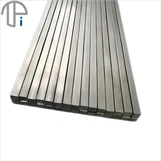
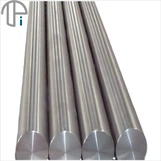
As a supplier of Gr9 titanium bars, I've witnessed firsthand the growing demand for this remarkable material across various industries. Gr9 titanium, also known as Ti-3Al-2.5V, is a titanium alloy that offers an excellent combination of strength, corrosion resistance, and weldability. But what exactly are the standards that govern the production and quality of Gr9 titanium bars? In this blog post, I'll delve into the key standards and specifications that ensure the reliability and performance of Gr9 titanium bars.
Chemical Composition Standards
The chemical composition of Gr9 titanium bars is a critical factor that determines their mechanical properties and performance. According to the ASTM B348 standard, which is widely recognized in the industry, the chemical composition of Gr9 titanium bars must meet the following requirements:
- Aluminum (Al): 2.5 - 3.5%
- Vanadium (V): 2.0 - 3.0%
- Iron (Fe): ≤ 0.30%
- Oxygen (O): ≤ 0.20%
- Carbon (C): ≤ 0.08%
- Nitrogen (N): ≤ 0.05%
- Hydrogen (H): ≤ 0.015%
- Titanium (Ti): Balance
These specific chemical composition limits are carefully defined to ensure that the Gr9 titanium bars possess the desired combination of strength, ductility, and corrosion resistance. For example, the addition of aluminum and vanadium enhances the strength of the alloy, while controlling the levels of impurities such as iron, oxygen, and carbon helps to maintain its ductility and corrosion resistance.
Mechanical Property Standards
In addition to the chemical composition, the mechanical properties of Gr9 titanium bars are also subject to strict standards. The ASTM B348 standard specifies the following minimum mechanical properties for Gr9 titanium bars:
- Tensile Strength: ≥ 795 MPa (115,000 psi)
- Yield Strength (0.2% Offset): ≥ 725 MPa (105,000 psi)
- Elongation in 2 inches (50.8 mm): ≥ 10%
- Reduction of Area: ≥ 25%
These mechanical property requirements ensure that the Gr9 titanium bars can withstand the stresses and loads they are likely to encounter in various applications. For instance, in aerospace applications, the high tensile and yield strengths of Gr9 titanium bars are essential for ensuring the structural integrity of aircraft components, while the good elongation and reduction of area values indicate the material's ability to deform plastically without fracturing, which is crucial for preventing sudden and catastrophic failures.
Manufacturing and Quality Control Standards
The production of Gr9 titanium bars involves a series of complex manufacturing processes, including melting, forging, rolling, and heat treatment. To ensure the quality and consistency of the final product, strict manufacturing and quality control standards must be followed throughout the entire production process.
One of the key standards in the manufacturing of Gr9 titanium bars is the ISO 9001 quality management system. This internationally recognized standard provides a framework for establishing, implementing, and maintaining a quality management system that ensures the consistent production of high-quality products. By adhering to the ISO 9001 standard, manufacturers can demonstrate their commitment to quality and continuous improvement, which is essential for meeting the stringent requirements of customers in various industries.
In addition to the ISO 9001 standard, manufacturers of Gr9 titanium bars must also comply with other industry-specific standards and regulations. For example, in the medical industry, titanium bars used for surgical implantation must meet the requirements of the ASTM F136 standard, which specifies the chemical composition, mechanical properties, and manufacturing processes for titanium alloys used in medical applications. You can find more information about Titanium rods for surgical implantation of medical materials.
Surface Finish and Dimensional Tolerance Standards
The surface finish and dimensional tolerance of Gr9 titanium bars are also important factors that can affect their performance and usability. The ASTM B348 standard specifies the following surface finish and dimensional tolerance requirements for Gr9 titanium bars:
- Surface Finish: The surface of the Gr9 titanium bars should be smooth and free of cracks, pits, and other defects. The surface roughness should typically be within the range of Ra 3.2 - 12.5 μm.
- Dimensional Tolerance: The dimensional tolerance of Gr9 titanium bars is specified based on the diameter or thickness of the bar. For example, for bars with a diameter of up to 25.4 mm (1 inch), the diameter tolerance is typically ± 0.13 mm (± 0.005 inches), while for bars with a diameter greater than 25.4 mm (1 inch), the diameter tolerance is typically ± 0.25 mm (± 0.01 inches).
These surface finish and dimensional tolerance requirements ensure that the Gr9 titanium bars can be easily machined, welded, and assembled into various components without any issues. For example, a smooth surface finish is essential for reducing friction and wear in applications where the bars come into contact with other components, while tight dimensional tolerances are necessary for ensuring the proper fit and function of the components.


Comparison with Other Titanium Alloys
Gr9 titanium bars are often compared with other titanium alloys, such as Gr5 titanium bars. While both Gr9 and Gr5 titanium alloys are widely used in various industries, they have some differences in terms of their chemical composition, mechanical properties, and applications.
Gr5 titanium, also known as Ti-6Al-4V, is a more widely used titanium alloy than Gr9 titanium. It has a higher aluminum and vanadium content, which gives it higher strength and hardness compared to Gr9 titanium. However, Gr5 titanium is also more difficult to machine and weld than Gr9 titanium. You can learn more about Gr5 Titanium Bar.
On the other hand, Gr9 titanium has a lower aluminum and vanadium content, which makes it more ductile and easier to machine and weld than Gr5 titanium. Gr9 titanium is also more corrosion resistant than Gr5 titanium in some environments, such as seawater. As a result, Gr9 titanium bars are often used in applications where a combination of good strength, ductility, and corrosion resistance is required, such as in aerospace, automotive, and marine applications.
Applications of Gr9 Titanium Bars
Gr9 titanium bars are used in a wide range of applications across various industries due to their excellent combination of properties. Some of the common applications of Gr9 titanium bars include:
- Aerospace: Gr9 titanium bars are used in the aerospace industry for manufacturing aircraft components such as landing gear, hydraulic systems, and engine parts. The high strength, low weight, and corrosion resistance of Gr9 titanium bars make them ideal for these applications.
- Automotive: In the automotive industry, Gr9 titanium bars are used for manufacturing exhaust systems, suspension components, and engine valves. The high strength and heat resistance of Gr9 titanium bars help to improve the performance and durability of these components.
- Medical: Gr9 titanium bars are also used in the medical industry for manufacturing surgical implants, such as bone plates, screws, and dental implants. The biocompatibility and corrosion resistance of Gr9 titanium bars make them suitable for these applications.
- Marine: In the marine industry, Gr9 titanium bars are used for manufacturing ship components such as propeller shafts, rudders, and heat exchangers. The corrosion resistance of Gr9 titanium bars helps to prevent the degradation of these components in seawater.
Conclusion
In conclusion, the standards for Gr9 titanium bars are essential for ensuring their quality, reliability, and performance in various applications. These standards cover a wide range of aspects, including chemical composition, mechanical properties, manufacturing processes, surface finish, and dimensional tolerance. By adhering to these standards, manufacturers can produce high-quality Gr9 titanium bars that meet the stringent requirements of customers in different industries.
If you're in the market for high-quality Gr9 titanium bars, I encourage you to contact us for more information. We are a leading supplier of Gr9 titanium bars, and we can provide you with the products and services you need to meet your specific requirements. Whether you need standard or custom-made Gr9 titanium bars, we have the expertise and resources to deliver the solutions you're looking for.
References
- ASTM B348 Standard Specification for Titanium and Titanium Alloy Bars and Billets
- ASTM F136 Standard Specification for Wrought Titanium-6Aluminum-4Vanadium ELI Alloy for Surgical Implant Applications (UNS R56401)
- ISO 9001 Quality management systems — Requirements