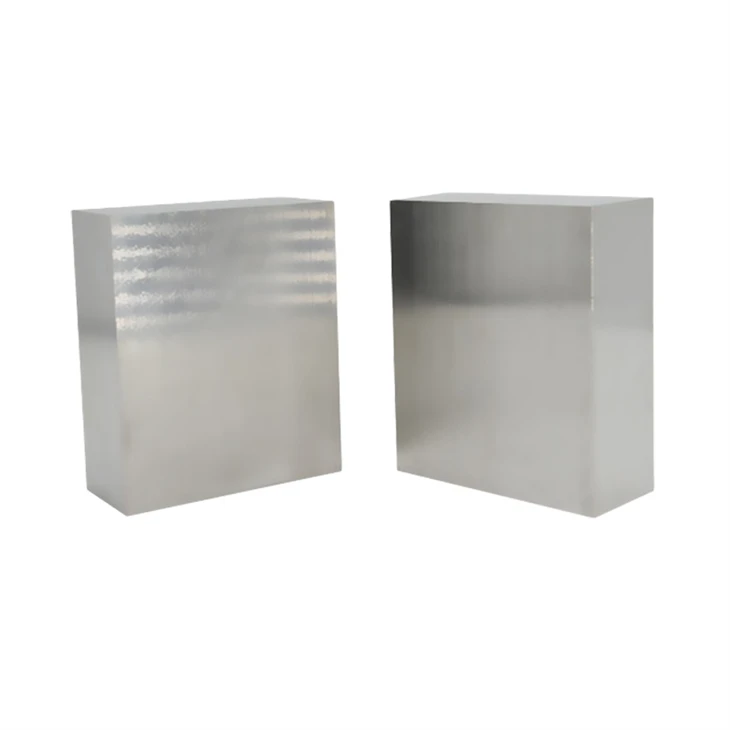
Is Titanium Block lightweight?
As a dedicated supplier of Titanium Blocks, I often encounter a frequently asked question: "Is Titanium Block lightweight?" This seemingly simple question is laden with scientific nuances that go beyond a straightforward yes or no answer. In this blog post, I aim to delve into the intricacies of titanium's weight characteristics, exploring how it compares to other materials and highlighting its significance in various industries.
Understanding the Concept of Lightweight
Before we explore whether titanium blocks are lightweight, it is essential to understand what "lightweight" means in a material context. Lightweight is a relative term, typically used in comparison to other materials with similar properties. In engineering and manufacturing, a lightweight material is often preferred for applications where reducing weight is critical, such as aerospace, automotive, and sports equipment.
Titanium's Density and Weight Advantage
Titanium is renowned for its excellent strength - to - weight ratio. The density of titanium is approximately 4.506 g/cm³, which is significantly less than that of common metals like steel (around 7.85 g/cm³). This lower density means that for a given volume, a titanium block will weigh substantially less than a steel block of the same size.
For example, in aerospace applications where every gram counts, the use of titanium can lead to significant weight savings. As airplanes strive to improve fuel efficiency and performance, reducing the overall weight is a top priority. Titanium blocks are used to manufacture critical components such as engine parts and structural frames. By replacing steel parts with titanium, the aircraft can carry more payload or consume less fuel during flight, translating into cost savings and environmental benefits.
Titanium's Weight in Comparison to Aluminum
While titanium is lighter than steel, it is heavier than aluminum. Aluminum has a density of about 2.7 g/cm³, which is lower than that of titanium. However, when considering strength requirements, titanium often outperforms aluminum. Aluminum may be lighter, but its strength is not as high as titanium's in many cases. For applications where high strength is needed in combination with a relatively low weight, titanium becomes the preferred choice.
For instance, in the production of high - performance bicycle frames, some manufacturers opt for Ti6AI4V Titanium Block. Ti6AI4V is a popular titanium alloy known for its excellent strength and corrosion resistance. Although the frame made of this titanium alloy may be slightly heavier than an aluminum frame, it offers better durability and the ability to withstand higher stresses, making it a better option for serious cyclists.
Factors Affecting the Perceived Weight of Titanium Blocks
The perceived weight of a titanium block can also be affected by other factors beyond its inherent density. The manufacturing process can play a role. For example, forged titanium blocks are often denser and stronger than cast ones, but the forging process can result in a more streamlined shape, which may reduce unnecessary material and thus the overall weight.
Surface treatments can also impact the weight. Some surface treatments add a thin layer of material to the titanium block, which can increase its weight slightly. However, these treatments are usually done to enhance properties such as corrosion resistance or wear resistance, and the weight increase is typically negligible compared to the benefits gained.
The Role of Titanium Blocks in Diverse Industries
The aerospace industry is not the only sector that benefits from the weight - related properties of titanium blocks. In the medical field, titanium is used for implants due to its biocompatibility and relatively low weight. Implants need to be lightweight to ensure patient comfort and to minimize the additional stress on the body. For example, titanium bone plates and screws are commonly used in orthopedic surgeries, and their lightweight nature allows for a quicker recovery and better patient compliance.
The automotive industry also recognizes the value of titanium. High - end sports cars use titanium for parts such as exhaust systems and engine components. The lightweight characteristic of titanium helps to improve the vehicle's acceleration, handling, and fuel efficiency, enhancing the overall driving experience.
Titanium Block and Its Related Products
As a supplier, we offer not only Titanium Blocks but also related products such as Titanium End Cap. These end caps are often used in conjunction with titanium blocks in various applications. They are designed to provide a protective and aesthetic finish to the assemblies. Just like titanium blocks, they too benefit from titanium's lightweight and high - strength properties.
Encouraging Contact for Purchase and Negotiation
If you are in the market for lightweight and high - quality Titanium Block, I encourage you to get in touch. As a reliable supplier, we are committed to providing you with products that meet the highest standards. Whether you are in the aerospace, medical, automotive, or any other industry that requires titanium materials, we can offer you customized solutions based on your specific requirements. Contact us today to start a discussion about your needs and explore the potential of using titanium blocks in your projects.
References
ASM Handbook Volume 2: Properties and Selection: Nonferrous Alloys and Special - Purpose Materials. ASM International.
Titanium: A Technical Guide. Second Edition. William L. Worthington, ed. ASM International.