Hey there! As a supplier of titanium discs, I often get asked about how to test the quality of these nifty little products. Titanium discs are used in a wide range of industries, from aerospace to dental implants, and ensuring their quality is crucial. In this blog post, I'll share some practical ways to test the quality of a titanium disc, so you can make sure you're getting the best possible product.
1. Visual Inspection
The first step in testing the quality of a titanium disc is a simple visual inspection. This is something you can do right off the bat. Just take a good look at the disc under proper lighting. Here's what you should be looking for:
- Surface Defects: Check for any visible cracks, scratches, or pits on the surface of the disc. Cracks can weaken the disc and make it more prone to failure, while scratches and pits can affect its performance, especially in applications where a smooth surface is essential, like Dental Implant Titanium Disc.
- Color Uniformity: The color of the titanium disc should be consistent across the entire surface. Any discoloration could indicate impurities or improper heat treatment during the manufacturing process.
2. Dimensional Accuracy
Getting the right dimensions is super important for titanium discs. You can use precision measuring tools like calipers or micrometers to check the thickness, diameter, and flatness of the disc. Here's what you need to keep in mind:
- Thickness: Measure the thickness at multiple points on the disc to ensure it's within the specified tolerance. A disc that's too thick or too thin might not work properly in your application.
- Diameter: The diameter should also be within the acceptable range. If it's off, it could cause fitment issues, especially if the disc is going to be used in a precise assembly.
- Flatness: A flat disc is crucial for many applications. You can use a flat surface and a feeler gauge to check if the disc is warped or bowed.
3. Chemical Composition Analysis
The chemical composition of a titanium disc plays a huge role in its properties and performance. There are a few methods you can use to analyze the chemical composition:
- Spectroscopy: This is a common method used to determine the elemental composition of the titanium disc. It can quickly and accurately identify the presence and concentration of different elements in the disc. For example, if you're using a Gr.1 Titanium Disc Plate, spectroscopy can confirm that it meets the specific chemical composition requirements for Grade 1 titanium.
- Wet Chemical Analysis: This method involves dissolving a small sample of the titanium disc in a chemical solution and then analyzing the solution to determine the elemental composition. It's a more time-consuming process but can provide very accurate results.
4. Mechanical Property Testing
Testing the mechanical properties of a titanium disc is essential to ensure it can withstand the stresses and loads it will encounter in its intended application. Here are some common mechanical property tests:
- Tensile Testing: This test measures the strength and ductility of the titanium disc. A sample of the disc is pulled until it breaks, and the stress and strain are recorded. The results can tell you how much force the disc can withstand before it fails and how much it can stretch before breaking.
- Hardness Testing: Hardness is a measure of a material's resistance to indentation or scratching. You can use a hardness tester to measure the hardness of the titanium disc. Different applications may require different levels of hardness, so it's important to test for this property.
5. Microstructure Analysis
The microstructure of a titanium disc can have a big impact on its mechanical properties and performance. You can use a microscope to examine the microstructure of the disc. Here's what you're looking for:
- Grain Size: The size of the grains in the titanium disc can affect its strength, ductility, and other properties. A fine-grained microstructure generally indicates better mechanical properties.
- Phase Composition: Titanium can exist in different phases, and the phase composition can affect the disc's properties. For example, the presence of certain phases may make the disc more brittle or more corrosion-resistant.
6. Non-Destructive Testing
Non-destructive testing (NDT) methods are used to detect internal defects in the titanium disc without damaging it. Here are some common NDT methods:
- Ultrasonic Testing: This method uses high-frequency sound waves to detect internal flaws in the disc. The sound waves are sent through the disc, and any reflections or changes in the waves can indicate the presence of a defect.
- X-ray Testing: X-rays can penetrate the titanium disc and create an image of its internal structure. This can help detect internal cracks, voids, or other defects that may not be visible on the surface.
7. Corrosion Resistance Testing
Since titanium is known for its excellent corrosion resistance, it's important to test the corrosion resistance of the titanium disc. There are a few ways to do this:
- Salt Spray Testing: In this test, the titanium disc is exposed to a salt spray environment for a certain period of time. The amount of corrosion that occurs on the disc is then evaluated. This test can simulate the conditions the disc may encounter in a marine or corrosive environment.
- Immersion Testing: The disc is immersed in a corrosive solution for a specified time, and the corrosion rate is measured. This can help determine how well the disc will resist corrosion in a particular chemical environment.
Conclusion
Testing the quality of a titanium disc is a multi-step process that involves a combination of visual inspection, dimensional accuracy checks, chemical composition analysis, mechanical property testing, microstructure analysis, non-destructive testing, and corrosion resistance testing. By using these methods, you can ensure that the titanium disc you're using meets the required quality standards and will perform well in your application.

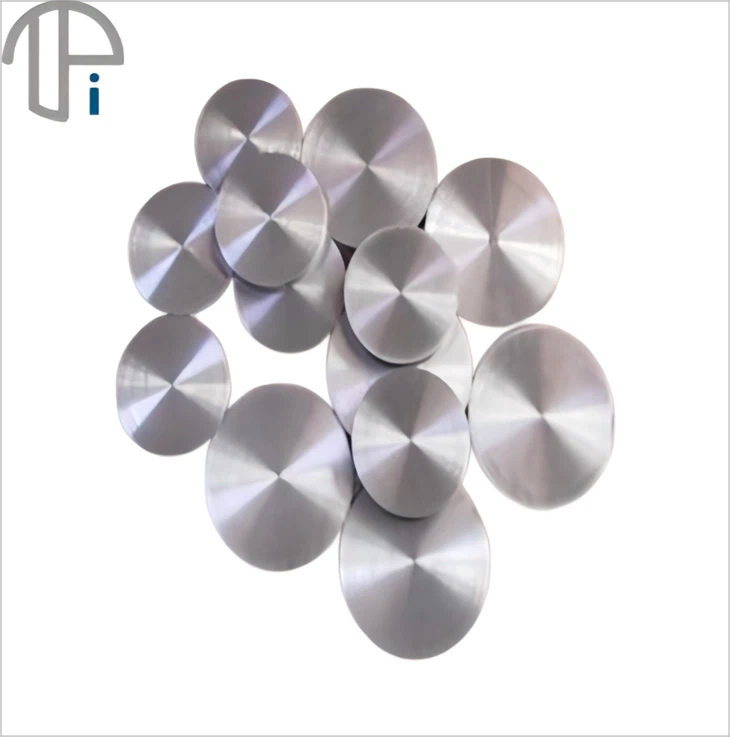
If you're in the market for high-quality titanium discs, whether it's a Gr.1 Titanium Disc Plate, Dental Implant Titanium Disc, or Titanium Target, I'd love to chat with you. We have a wide range of titanium discs available, and we can work with you to find the perfect product for your needs. Feel free to reach out and start a conversation about your procurement requirements.
References
- ASM Handbook Volume 2: Properties and Selection: Nonferrous Alloys and Special-Purpose Materials
- ASTM International Standards for Titanium and Titanium Alloys
- "Titanium: A Technical Guide" by Don E. Boyer, Gary W. Chandler, and Albert L. Giorgi