

Determining the yield strength of a titanium square bar is a critical process for both manufacturers and end - users. As a titanium square bar supplier, I understand the importance of accurately assessing this mechanical property. Yield strength is the stress at which a material begins to deform plastically, and knowing this value helps in ensuring the safety and performance of the final product.
Understanding Titanium Square Bars
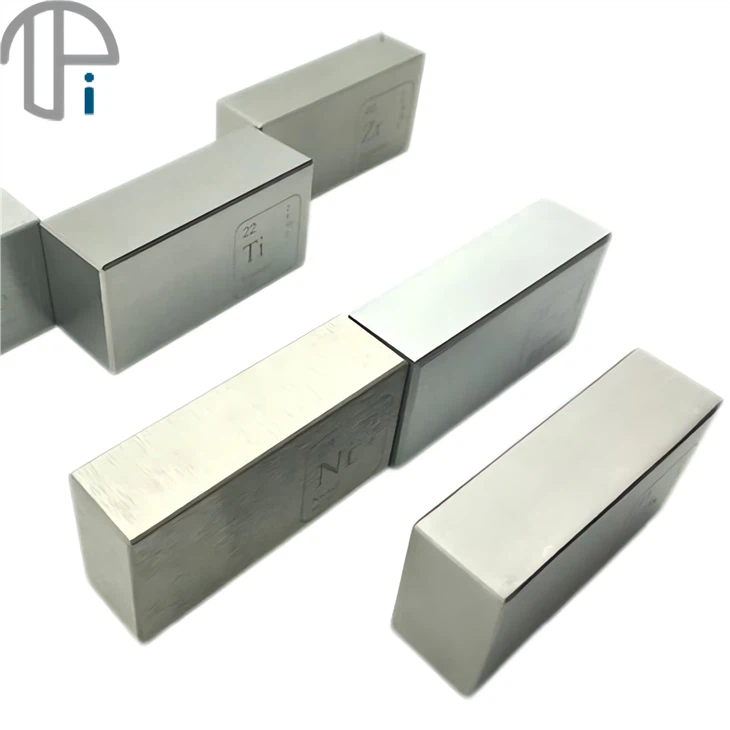
Titanium square bars are widely used in various industries due to their excellent properties such as high strength - to - weight ratio, corrosion resistance, and biocompatibility. We offer different grades of titanium square bars, including Gr5 Titanium Square Bar, AMS 4928 Titanium Square Bar, and Gr1 Titanium Square Bar. Each grade has its own unique chemical composition and mechanical properties, which in turn affect the yield strength.
Factors Affecting Yield Strength
Several factors can influence the yield strength of a titanium square bar.
Chemical Composition
The chemical composition of titanium bars plays a crucial role in determining their yield strength. For example, alloying elements such as aluminum, vanadium, and molybdenum can significantly enhance the strength of titanium. In Gr5 titanium, which contains 6% aluminum and 4% vanadium, the alloying elements form a solid - solution strengthening effect, increasing the yield strength compared to pure titanium.
Heat Treatment
Heat treatment is another important factor. Processes like annealing, quenching, and tempering can alter the microstructure of the titanium square bar. Annealing can relieve internal stresses and make the material more ductile, potentially reducing the yield strength. On the other hand, quenching followed by tempering can create a fine - grained microstructure, which generally increases the yield strength.
Manufacturing Process
The way the titanium square bar is manufactured also impacts its yield strength. Forging, rolling, and extrusion are common manufacturing methods. Forging can align the grain structure of the titanium, resulting in improved mechanical properties, including yield strength. Rolling can produce a more uniform cross - section and may also enhance the strength of the bar.
Methods for Determining Yield Strength
Tensile Testing
Tensile testing is the most common method for determining the yield strength of a titanium square bar. In this test, a sample of the bar is placed in a testing machine, and a gradually increasing tensile force is applied until the sample breaks. During the test, the stress and strain are measured continuously.
The yield strength can be determined in two ways: the offset method and the proportional limit method.
Offset Method
The offset method is widely used. A 0.2% offset line is drawn parallel to the linear elastic portion of the stress - strain curve. The point where this offset line intersects the stress - strain curve is defined as the yield strength. This method is suitable for materials that do not have a well - defined yield point, such as many titanium alloys.
Proportional Limit Method
The proportional limit method is used when the material has a clear linear elastic region. The yield strength is defined as the stress at the end of the linear elastic region, where the stress - strain relationship ceases to be proportional.
Non - Destructive Testing (NDT)
Although not as direct as tensile testing, non - destructive testing methods can also provide some information about the yield strength. Ultrasonic testing, for example, can detect internal defects in the titanium square bar. Defects such as cracks or inclusions can reduce the yield strength of the bar. By identifying and quantifying these defects, we can estimate the potential reduction in yield strength.
Importance of Accurate Yield Strength Determination
Accurately determining the yield strength of a titanium square bar is essential for several reasons.

Design and Engineering
In engineering design, the yield strength is used to calculate the maximum load that a component made from the titanium square bar can withstand without permanent deformation. This ensures the safety and reliability of the structure or equipment. For example, in aerospace applications, where weight and strength are critical, knowing the exact yield strength of titanium components is crucial for designing aircraft parts that can operate under extreme conditions.
Quality Control
For a supplier like us, accurate yield strength determination is an important part of quality control. By ensuring that the yield strength of our titanium square bars meets the specified standards, we can provide high - quality products to our customers. This helps in building trust and maintaining a good reputation in the market.
Practical Considerations in Yield Strength Determination
When determining the yield strength of a titanium square bar, there are some practical considerations.
Sampling
Proper sampling is essential. The sample should be representative of the entire batch of titanium square bars. It is usually taken from different locations along the length and cross - section of the bar to account for any variations in the manufacturing process.
Testing Conditions
The testing conditions, such as temperature and strain rate, can also affect the yield strength. Titanium's mechanical properties are temperature - dependent, and the yield strength generally decreases with increasing temperature. Therefore, it is important to conduct the tests under the same or similar conditions as the intended application.
Conclusion
Determining the yield strength of a titanium square bar is a complex but essential process. As a supplier, we are committed to providing accurate information about the yield strength of our products. By understanding the factors that affect yield strength, using appropriate testing methods, and considering practical aspects, we can ensure that our customers receive high - quality titanium square bars that meet their specific requirements.
If you are interested in purchasing titanium square bars or have any questions about yield strength determination, please feel free to contact us for more information and to start a procurement discussion.
References
- ASM Handbook Volume 2: Properties and Selection: Nonferrous Alloys and Special - Purpose Materials
- Titanium: A Technical Guide, Second Edition by John C. Williams


