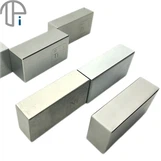
As a seasoned supplier of titanium plates, I understand the critical importance of controlling the cold - working process. Cold working is a fundamental process in the production of titanium plates, which can significantly enhance the mechanical properties of the material, such as strength and hardness. However, it also brings challenges, including potential issues like cracking and reduced ductility. In this blog, I will share some key strategies on how to control the cold - working process of titanium plates effectively.
Understanding the Material
Before delving into the cold - working process, it is essential to have a deep understanding of the titanium material. Titanium exists in different grades, each with unique chemical compositions and properties. For instance, GR1 titanium is known for its excellent corrosion resistance and high ductility, making it suitable for a wide range of applications. Our Cold Rolled GR1 Titanium Plate is a popular choice among customers due to its superior quality.
The microstructure of titanium also plays a crucial role in the cold - working process. Titanium has an alpha - beta phase structure, and the ratio of these phases can affect its formability and mechanical properties. During cold working, the deformation of the material can cause changes in the microstructure, which in turn impacts the final properties of the titanium plate.
Pre - treatment of Titanium Plates
Proper pre - treatment is the first step in ensuring a successful cold - working process. This includes cleaning the titanium plates to remove any surface contaminants, such as oil, dirt, and oxides. Contaminants can cause uneven deformation during cold working and may lead to surface defects on the final product.
Heat treatment can also be an important pre - treatment step. Annealing the titanium plates before cold working can relieve internal stresses and improve the material's ductility. This makes it easier to deform the material during the cold - working process without cracking. The annealing temperature and time should be carefully controlled based on the grade of titanium and the specific requirements of the application.
Controlling the Cold - Rolling Process
Cold rolling is one of the most common cold - working methods for titanium plates. In the cold - rolling process, the titanium plate is passed through a pair of rollers to reduce its thickness and improve its surface finish. To control this process effectively, several factors need to be considered.
Rolling Reduction
The rolling reduction, which is the ratio of the thickness reduction to the initial thickness, is a critical parameter. Excessive rolling reduction in a single pass can cause high stresses in the material, leading to cracking. Therefore, it is advisable to use multiple passes with smaller rolling reductions. This allows the material to gradually adapt to the deformation and reduces the risk of cracking.


Rolling Speed
The rolling speed also affects the cold - working process. A high rolling speed can generate more heat due to friction between the rollers and the titanium plate. This heat can cause changes in the microstructure of the material and may affect its mechanical properties. On the other hand, a very low rolling speed may result in inefficient production. Therefore, an optimal rolling speed should be selected based on the material properties and the equipment used.
Roller Design
The design of the rollers, including their diameter, surface finish, and hardness, can also impact the cold - rolling process. Rollers with a larger diameter can provide more uniform deformation across the width of the titanium plate. A smooth surface finish on the rollers can prevent surface scratches on the plate. Additionally, the hardness of the rollers should be appropriate to withstand the forces exerted during the rolling process without deforming.
Post - treatment after Cold Working
After the cold - working process, post - treatment is necessary to optimize the properties of the titanium plate. One of the most common post - treatment methods is stress relieving. Cold working can introduce internal stresses in the material, which can lead to dimensional instability and reduced fatigue life. Stress relieving involves heating the titanium plate to a specific temperature and holding it for a certain period to relieve these internal stresses.
Another important post - treatment step is surface finishing. The surface of the cold - worked titanium plate may have some roughness or defects. Surface finishing processes, such as grinding, polishing, or pickling, can improve the surface quality of the plate and enhance its corrosion resistance.
Quality Control
Quality control is an integral part of the cold - working process. Non - destructive testing methods, such as ultrasonic testing and eddy - current testing, can be used to detect internal defects in the titanium plate, such as cracks and porosity. Dimensional inspection is also crucial to ensure that the final product meets the required specifications.
In addition, mechanical property testing, such as tensile testing and hardness testing, should be conducted to verify the mechanical properties of the cold - worked titanium plate. These tests can provide valuable information about the strength, ductility, and hardness of the material, which are important for its performance in different applications.
Meeting Industry Standards
As a titanium plate supplier, we are committed to meeting industry standards. Our ASTM B265 Titanium Sheet and ASTM B265 Titanium Plate products comply with the ASTM B265 standard, which specifies the requirements for titanium and titanium alloy rolled plate, sheet, and strip. Adhering to these standards ensures that our products are of high quality and can be used in various industries, including aerospace, medical, and chemical processing.
Conclusion
Controlling the cold - working process of titanium plates is a complex but essential task. By understanding the material, proper pre - treatment, precise control of the cold - working process, appropriate post - treatment, and strict quality control, we can produce high - quality titanium plates that meet the diverse needs of our customers.
If you are interested in our titanium plate products or have any questions about the cold - working process, please feel free to contact us for further discussion and procurement negotiation. We are always ready to provide you with the best solutions and high - quality products.
References
- "Titanium: A Technical Guide" by John C. Williams
- "Metal Forming: Mechanics and Metallurgy" by Dieter, G. E.
- ASTM B265 Standard Specification for Titanium and Titanium Alloy Rolled Plate, Sheet, and Strip