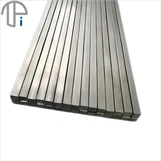
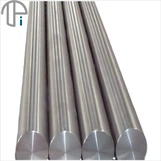
As a trusted supplier of Gr9 Titanium Bar, I often encounter inquiries regarding the cold - working capabilities of this remarkable material. In this blog, I'll delve into the scientific aspects of whether Gr9 Titanium Bar can be cold - worked, drawing on my experience in the industry and the latest research findings.
Understanding Gr9 Titanium Bar
First, let's understand what Gr9 Titanium Bar is. Gr9 titanium, also known as Ti - 3Al - 2.5V, is an alpha - beta titanium alloy. It is well - regarded for its excellent combination of high strength, good corrosion resistance, and relatively low density. This makes it a popular choice in various industries, including aerospace, automotive, and marine. For more details about titanium bars, you can refer to ASTM B348 Titanium Bar.
The Basics of Cold - Working
Cold - working is a metal - forming process that is carried out at room temperature or slightly above. It involves deforming the metal through processes such as rolling, drawing, or bending without the application of external heat. The main advantages of cold - working are improved surface finish, better dimensional accuracy, and increased strength due to strain hardening.
Can Gr9 Titanium Bar be Cold - Worked?
The short answer is yes, Gr9 Titanium Bar can be cold - worked, but there are several factors to consider.
Material Properties
The alpha - beta phase structure of Gr9 titanium gives it a certain degree of ductility, which is essential for cold - working. The presence of aluminum (Al) and vanadium (V) in the alloy composition contributes to its strength and formability. However, compared to some other metals, titanium alloys like Gr9 have a relatively low ductility at room temperature. This means that during cold - working, the material is more prone to cracking and fracture if not properly handled.
Cold - Working Processes
- Rolling: Cold rolling of Gr9 Titanium Bar can be used to reduce its thickness and improve its surface finish. However, the reduction in thickness per pass should be carefully controlled. A large reduction in a single pass can generate excessive stress, leading to cracking. Usually, multiple passes with small reductions are preferred.
- Drawing: Cold drawing is another common cold - working process. When drawing Gr9 Titanium Bar, it is important to use appropriate lubricants to reduce friction and prevent surface damage. The die design also plays a crucial role. A well - designed die can ensure a smooth deformation process and minimize the risk of cracking.
- Bending: Cold bending of Gr9 Titanium Bar is possible, but the bending radius needs to be carefully selected. A too - small bending radius can cause the outer surface of the bar to crack. It is recommended to conduct some preliminary tests to determine the minimum safe bending radius for a specific batch of Gr9 Titanium Bar.
Strain Hardening
One of the significant features of cold - working Gr9 Titanium Bar is strain hardening. As the material is deformed, dislocations within the crystal structure interact and multiply, making it more difficult for further deformation to occur. This leads to an increase in strength and hardness but a decrease in ductility. After a certain amount of cold - working, the material may become too brittle to be further deformed without cracking. To restore its ductility, an annealing process can be carried out.
Comparison with Other Titanium Alloys
When compared to Gr5(Ti6AI4V)titanium Round Bar, Gr9 has different cold - working characteristics. Gr5 is a more widely used titanium alloy, known for its high strength and good weldability. However, Gr9 generally has better cold - formability due to its relatively lower strength and higher ductility at room temperature. This makes Gr9 a more suitable choice for applications that require extensive cold - working.
Applications of Cold - Worked Gr9 Titanium Bar
The cold - worked Gr9 Titanium Bar finds applications in a variety of fields.
- Aerospace: In the aerospace industry, cold - worked Gr9 Titanium Bar is used in components such as hydraulic lines, fasteners, and structural parts. The improved strength and dimensional accuracy achieved through cold - working make these components more reliable and lightweight.
- Automotive: Cold - worked Gr9 Titanium Bar can be used in high - performance automotive parts, such as suspension components and exhaust systems. Its corrosion resistance and high strength - to - weight ratio contribute to the overall performance and durability of the vehicle.
- Marine: In the marine environment, cold - worked Gr9 Titanium Bar is resistant to seawater corrosion. It can be used in boat fittings, propeller shafts, and other marine equipment.
Best Practices for Cold - Working Gr9 Titanium Bar
To ensure successful cold - working of Gr9 Titanium Bar, the following best practices should be followed:
- Material Selection: Start with high - quality Gr9 Titanium Bar. The material should have a uniform microstructure and meet the relevant standards.
- Pre - treatment: Before cold - working, it is advisable to clean the surface of the bar to remove any contaminants that may affect the deformation process.
- Tooling and Equipment: Use high - quality tools and equipment that are suitable for titanium alloys. The tools should be properly maintained to ensure smooth operation.
- Process Control: Monitor and control the cold - working process parameters, such as deformation rate, reduction per pass, and temperature. Keep detailed records of the process for quality control purposes.
- Post - treatment: After cold - working, consider annealing the bar to relieve stress and restore ductility if necessary.
Building Material & Titanium
Titanium, including Gr9 Titanium Bar, also has significant applications in the construction industry. You can find more information about Building Material & Titanium. Its corrosion resistance, strength, and aesthetic appeal make it an attractive choice for building facades, structural elements, and decorative features. Cold - worked Gr9 Titanium Bar can offer enhanced properties for these architectural applications, such as better dimensional stability and a more refined surface finish.
Conclusion
In conclusion, Gr9 Titanium Bar can be cold - worked, but it requires careful consideration of material properties, cold - working processes, and post - treatment. With the right approach, cold - working can enhance the strength, surface finish, and dimensional accuracy of Gr9 Titanium Bar, making it suitable for a wide range of applications in aerospace, automotive, marine, and construction industries.


If you are interested in purchasing Gr9 Titanium Bar or have any questions about its cold - working capabilities, please feel free to contact us for procurement and negotiation. We are committed to providing high - quality products and professional technical support.
References
- "Titanium: A Technical Guide" by John R. Boyer, Gary Welsch, and E. W. Collings.
- ASTM International standards related to titanium alloys.
- Industry research reports on titanium alloy applications and processing.