

The decline in titanium prices has led to a new demand for 3D printed titanium alloys in various scenarios
In 2024, due to factors such as continuous expansion of production capacity, titanium prices fell to the lowest point in nearly a decade. Data shows that as of December 13th, the average price of domestically produced sponge titanium has dropped to 43.5 yuan/kg, the lowest level since records began in 2011. The analysis points out that the accelerated expansion of processing capacity and slow demand growth, as well as the low production costs caused by the full industry chain layout of large enterprises, are the main reasons for the low price of titanium.
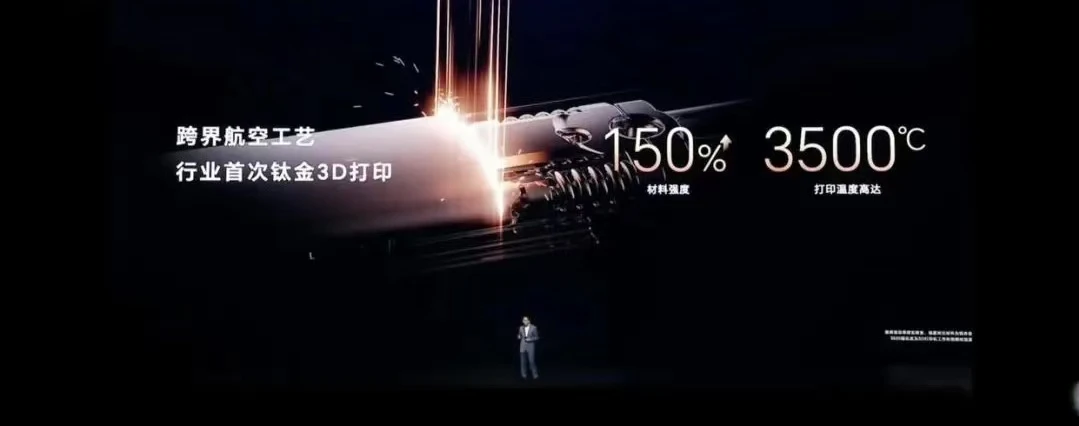
Despite the low price of titanium, the downstream application scenarios of titanium metal have been further enriched. In addition to traditional fields such as aerospace and petrochemicals, the application of titanium alloys in civilian consumer goods is gradually increasing, especially in the field of 3C products, where titanium alloys have become a popular material choice. In recent years, leading mobile phone manufacturers have adopted titanium alloy materials, such as Apple, Xiaomi, Huawei, etc. The penetration rate of titanium alloy in mobile phone frames, folding screen hinges, watch cases, and other aspects continues to increase. It is expected that the global market size of titanium alloy mobile phone frames will reach 43.2 billion yuan by 2027.

At the same time, the domestic titanium alloy 3D printing industry is also developing rapidly. A leading titanium industry enterprise announced that it will change some of its fundraising projects to the "Titanium Alloy 3D Printing Pilot Production Line Construction Project", with a total investment of approximately 57 million yuan. The largest domestic metal 3D printing service provider also plans to invest 1 billion yuan to build supporting projects such as high-quality additive manufacturing raw material titanium alloy and high-temperature alloy powder production lines, in order to meet the rapidly growing market demand of the additive manufacturing industry.

Industry insiders say that compared to traditional forging and casting processing methods, 3D printing technology can achieve more complex shape design and manufacturing, save raw materials, and improve processing efficiency, making it one of the most cost-effective ways to process titanium alloys. In the future, with the continuous advancement of technology and further cost reduction, titanium alloy 3D printing is expected to be applied in more fields.
Looking ahead to the future, the development opportunities of titanium metal are in the aviation, shipbuilding, and 3C industries. However, high costs limit downstream demand, and titanium metal companies need to focus on product quality and structural optimization, and shift to areas with lower electricity bills. At the same time, low-end and homogeneous products are facing significant pressure, and mergers and acquisitions within the industry will accelerate. Under the new opportunity of decreasing titanium prices, the titanium metal industry will usher in new changes and developments.


