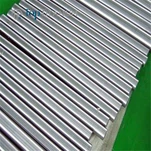
Introduction to the properties of titanium and titanium alloys
1.1 Introduction to Titanium
Titanium is a new type of material, which has the advantages of low density, high specific strength, heat resistance and corrosion resistance. It weighs only half as much as iron, but its mechanical properties, such as hammering and drawing, are comparable to copper. Generally speaking, as the temperature decreases, the resistance of metals will decrease, but titanium is on the contrary, the lower the temperature, titanium will become harder and harder, and superconductivity will appear when the critical temperature is reached.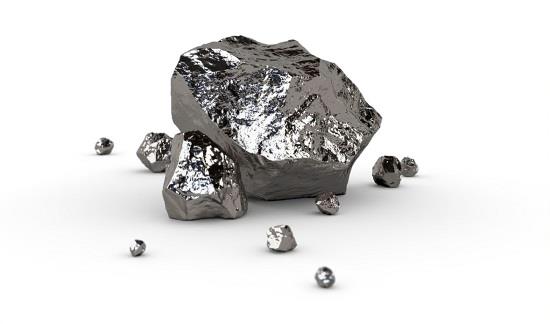
1.2 Introduction to titanium alloy
Titanium alloy and titanium are similar in nature to some extent, with the characteristics of low density and high strength, in addition to its excellent mechanical properties, strong corrosion resistance. Moreover, its thermal strength is high, which is obviously better than that of aluminum alloy. At the same time, its mechanical properties have little change at low temperature and ultra-low temperature.
New technology and application of titanium
2.1 Preparation method of titanium
Although titanium is relatively abundant in nature, it is also a rare metal because it is dispersed and difficult to extract. At present, the preparation of titanium is divided into two categories: thermal reduction method and molten salt electrolysis method.
(1) Titanium was prepared by thermal reduction method
Thermal reduction method is at a certain temperature, the use of Li, Na, Mg, Ca and its hydride and other strong reducing agents, titanium from titanium compounds such as TiCl4, TiO2, K2TiF6 reduction. According to the different titanium compounds, the technology of titanium preparation by thermal reduction can be divided into three categories:
① Titanium chloride REDOX method, such as Kroll method, Hunter method, Armstrong method and EMR method;
② REDOX method of titanium oxide, such as OS method, PRP process, MHR method, etc.
③ REDOX method of titanate.
At present, only the Kroll method and the Hunter method can be successfully applied in industrial production. The Kroll method uses magnesium to replace titanium out of chloride, and the Hunter method uses sodium metal to replace titanium out of chloride. In addition, the United States Chicago international titanium powder company developed Armstrong method, its preparation method is similar to Hunter method, is also the use of reducing agent sodium to purify titanium metal. The United States is already using this method for pre-production in factories.
(2) Preparation of titanium by molten salt electrolysis
In 1959, Kroll predicted that molten salt electrolysis would replace Kroll as the dominant method of titanium production within the next five to ten years. Over the years, research institutions and laboratories at home and abroad have developed a total of more than a dozen new technologies for the preparation of titanium by molten salt electrolysis, which can be divided into the following three categories according to the raw materials:
① Electrolysis of titanate;
(2) Electrolysis of titanium chloride;
③ Electrolytic method of titanium oxide, including FFC Cambridge method, MER process, USTB method, QIT process, SOM method and ionic liquid electrolytic method, etc.
2.2 New uses of titanium
Since the 1940s, the use of titanium has developed rapidly, and it has been widely used in aircraft, rockets, missiles, satellites, spaceships, ships, military industry, medical treatment and petrochemical fields. The latest research found that the human body contains a certain amount of titanium, titanium will stimulate phagocytic cells, can strengthen the immune function, so many laboratories are committed to the development and application of biological titanium.
New technology and application of titanium alloy
3.1 Preparation method of titanium alloy
Titanium alloy traditional processing generally adopts smelting and casting technology, the latest processing technology is divided into the following:
(1) Near net molding technology;
(2) Line friction welding technology;
(3) superplastic forming technology;
(4) Computer simulation technology of material preparation and processing process.
Near net molding technology includes laser molding, precision casting, precision die forging, powder metallurgy, jet molding and other methods. Powder metallurgy is the use of titanium powder or titanium alloy powder as raw materials, after molding and sintering, so as to manufacture titanium parts of the new process. The first is the production of powder, generally using the method of mechanical alloying, using a ball mill to strongly impact, grind and stir the raw material. Then the alloy that has formed powder is pressed and formed. There are two pressing methods, namely pressure forming and non-pressure forming. The purpose of this step is to make a certain shape and size of the pressed embryo, and make it have a certain density and strength. Then in the made of the blastoplasm discharge plasma sintering, the use of upper and lower die punching and electric electrode will be specific sintering power supply and pressing pressure applied to the sintered powder, after discharge activation, thermoplastic deformation and cooling to complete the preparation of high performance titanium materials. Then the plasma sintered titanium alloy for subsequent treatment, generally heat treatment or plastic processing.
3.2 New uses of titanium alloys
Titanium alloys were widely used in the aerospace field in the early days, mainly in the production of aircraft engines or pneumatic components. Later, with the continuous development of technology, titanium alloy has entered the life of ordinary people, in the factory or home devices also have titanium alloy figure. Now countries and institutions are scrambling to develop new titanium alloys, so that they have the characteristics of low cost and high performance, the new development of titanium alloys in recent years is mainly concentrated in the following five aspects.
(1) Medical titanium alloy
Titanium alloys with low density and good biocompatibility are ideal medical materials and can even be implanted into the human body. Titanium alloys previously used in the medical field contain vanadium and aluminum, which can cause harm to the human body. But in the near future, Japanese scholars have developed a new type of titanium alloy, with good biocompatibility, but the alloy has not yet been mass-produced, it is believed that in the near future, such high-quality alloy can be widely used in daily life.
(2) Flame retardant titanium alloy
The titanium base alloy that can resist combustion under certain pressure, temperature and air flow rate is flame retardant titanium alloy. The United States, Russia and China have developed new resistance titanium alloys, among which the United States will apply these resistance titanium alloys to the engine, because these titanium alloys are not sensitive to combustion, so can greatly improve the stability of the engine.
(3) β type with high strength and toughness
β type titanium alloy has the characteristics of high strength, good weldability and excellent cold and hot working performance. Researchers use this law, the preparation of β-type titanium alloy characteristics are very obvious: good hot working performance, good plasticity, good welding performance. And the mechanical properties are greatly improved after the solution aging treatment. At present, Japan and Russia have prepared such titanium alloys.
(4) Titanium and aluminum compounds
Compared with the general titanium alloy, the titanium aluminum compound has good high temperature performance, good oxidation resistance and creep resistance, and the density is less than the general titanium alloy. These excellent characteristics are destined to Ti - Al compounds will set off a new alloy boom. The new titanium - aluminum compound alloy has been synthesized in the United States and is in mass production.
(5) High temperature titanium alloy
By combining the rapid solidification method and powder metallurgy method, the titanium alloy prepared by fiber or particle reinforced composite has excellent high temperature mechanical characteristics. The temperature limit of high temperature titanium alloy is much higher than that of ordinary titanium alloy. At present, the United States has prepared a new high temperature titanium alloy.
(6) Titanium nickel alloy
An alloy of titanium and nickel, known as a "memory alloy," is made into a predetermined shape. After being shaped, if deformed by external forces, it can be restored to its original appearance with a little heat. This alloy can be used in various fields such as instrumentation and electronic devices.
Current status of titanium alloy material development in China
Titanium alloy refers to a variety of alloy metals made of titanium and other metals. In recent years, China has frequently issued policies to encourage the research and development, production and application of titanium alloy materials. In the global market, titanium alloy materials are mainly used in the aviation industry, defense industry, and other industries. Among them, the application demand in the aviation industry accounts for about 50%, mainly for the manufacture of aircraft and engines. In the demand structure of titanium materials in our country, titanium processing materials are mainly used in the field of chemical industry, and the proportion of titanium materials used in domestic aerospace is only 20%, indicating that there is great potential in the market of titanium materials used in aviation in our country. At present, in the field of high-end titanium alloy, there are few enterprises that can mass produce military aviation titanium alloy rod and wire in our country, which is a "duopoly" competition pattern.
1. The policy encourages the development of titanium alloy materials
Titanium alloys refer to a variety of alloyed metals made of titanium and other metals. Many countries in the world have realized the importance of titanium alloy materials, and have carried out research and development on it, and has been applied in practice. In recent years, China has frequently issued policies to encourage the research and development, production and application of titanium alloy materials. In 2019, according to the information disclosed in the Guidance Catalogue for Industrial Structure Adjustment (2019 Draft), high-performance ultra-fine, ultra-coarse, composite structure cemented carbide materials and deep processing products, low modulus titanium alloy materials, corrosion resistant titanium alloy materials, titanium alloy fasteners for aerospace and so on will be listed as encouraged projects for industrial structure adjustment.
2. Titanium alloy materials are mainly used in aerospace and military fields
In the global market, titanium alloy materials are mainly used in the aviation industry, defense industry, and other industries. Among them, the application demand in the aviation industry accounts for about 50%, mainly for the manufacture of aircraft and engines. In the demand structure of titanium materials in China, titanium processing materials are mainly used in the chemical field. The most important difference compared with the world is in the aviation field. Titanium materials used in aviation have always accounted for about 53% of the total demand of titanium materials in the world, while the proportion of titanium materials used in domestic aerospace is only 20%, indicating that there is still great potential in the market of titanium materials used in aviation in China.
Summary
Titanium has many incomparable advantages of metal, with the progress of society, the development of science and technology, titanium and titanium alloy will be more widely used, human demand for titanium and titanium alloy will be increasing, and high production cost is one of the main reasons to limit the promotion and use of titanium and titanium alloy. Therefore, the development and application of low-cost, large-scale and ecological environmental protection continuous production process can make titanium and titanium alloys more widely used.