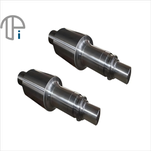
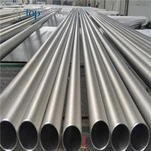
Enterprises across many industries, including aerospace, Marine shipbuilding, and military/defense, rely on titanium forgings for various industrial and production uses. This metal is in high demand mainly because of the excellent strength-density ratio of forged titanium alloys and their remarkable corrosion resistance.
These two characteristics result in a durable, reliable material that can function on land, in the air, and even under the sea -- all of which illustrate the versatility of titanium alloys. The benefit of forged titanium is that it enables custom-sized precision parts for special applications that require the strength and versatility of titanium.
Some titanium alloy forging processes are briefly introduced below, including the influence of different forging temperatures on the final product.
Titanium forging process Titanium forging process
Titanium forging is a set of specialized manufacturing processes used to make parts from titanium alloys. Which process is ultimately used depends on the metallurgical properties of the initial material, and the particular structure the forger wishes to manufacture. Some of these processes include
· Open die forging - The titanium billet material is deformed and pressed into shape in a cavity between two dies. These molds do not completely wrap the material, but provide a narrow gap for excess material to flow out. The titanium is repeatedly stamped in the die cavity until the desired shape is reached.
· Closed die forging - also known as press die forging, this method uses high pressure compression to form a heated titanium blank. The blank is fully or partially covered by the die, which moves with each other from top to bottom to achieve the desired shape.
· Free forging - Small and/or simple orders can be completed by free forging, which is a titanium forging method performed between two flat dies without internal cavities. This is a relatively inexpensive and flexible method, but it is not the most common method for forging large amounts of titanium metal due to its high labor requirements.
· Isothermal forging - a process in which starting material and die are heated to equal and highly controlled temperatures to achieve high deformation rates with minimum pressure.
Other types of titanium forging, such as multiway die forging, extrusion die forging, local die forging, and roll ring forging, also rely on similar heat, pressure, and unique arrangement of the die to achieve the desired shape.
Titanium alloy forging has many advantages, including
· High strength
· Corrosion resistance
· Heat resistance
· Biocompatibility
· Weldability
In addition, according to the specific application requirements, the forging process will also use a variety of different grades of titanium alloys. When looking for a titanium forging company, make sure that the company you are interested in working with is able to forge titanium to the specifications you need.
The most common grades include
·6-4:6-4 Titanium is one of the most widely used titanium alloys in forging and is particularly popular in aerospace components.
·6-2-4-2:6-2-4-2 Titanium is preferred for its excellent creep resistance and strength at high temperatures and can be used in components where high heat and stress are present.
·6-2-4-6: similar to 6-2-4-2 titanium but with better toughness and ductility.
·3-2.5:3-2.5 alloys are known for their excellent weldability and corrosion resistance and are commonly used in implants in the medical industry.
In short, titanium forging involves selecting the appropriate titanium alloy grade according to the application requirements, followed by a series of forging processes on the blank to create high-strength, corrosion-resistant, and heat-resistant parts that can bring numerous benefits to various industries depending on the alloy chosen.
Effect of forging temperature
Can titanium be forged at any temperature? Technically, yes; However, the temperature used must meet the requirements of the process and parts.
Hot forging is more common than cold forging, but the latter can be cheaper and more environmentally friendly. It is important to note that the lower temperatures (below 1650 degrees Fahrenheit) are only available for non-alloy titanium, while the higher temperatures are necessary for alloy titanium.
It is not just the temperature of the titanium itself that is crucial in the forging process. The temperature of the die must also be controlled, as excessive heat loss or heat variation can lead to defects in the part.
The importance of temperature in titanium forging process is mainly related to the structural elements of metal at different heat levels. By forging the starting material and die with the right heat, the forger can forge a stronger and more reliable final product-structurally appropriate for the job at hand.