Analysis Report on the Development Status and Supply Trends of Titanium Industry from 2024 to 2030
Titanium is one of the most widely distributed and abundant elements in the Earth's crust, accounting for 0.61% of its weight and ranking 9th. However, in nature, it is dispersed and difficult to extract, and is considered a rare metal.
Titanium has strong chemical activity and does not exist as elemental titanium in nature. It is easy to combine with oxygen. Titanium in minerals mainly exists in the form of TiO2 and titanates, often coexisting with iron to form various minerals. There are more than 140 minerals with TiO2 content exceeding 1% alone, of which only more than 10 have industrial value, mainly including rutile, ilmenite, ilmenite, rutile, perovskite, etc.
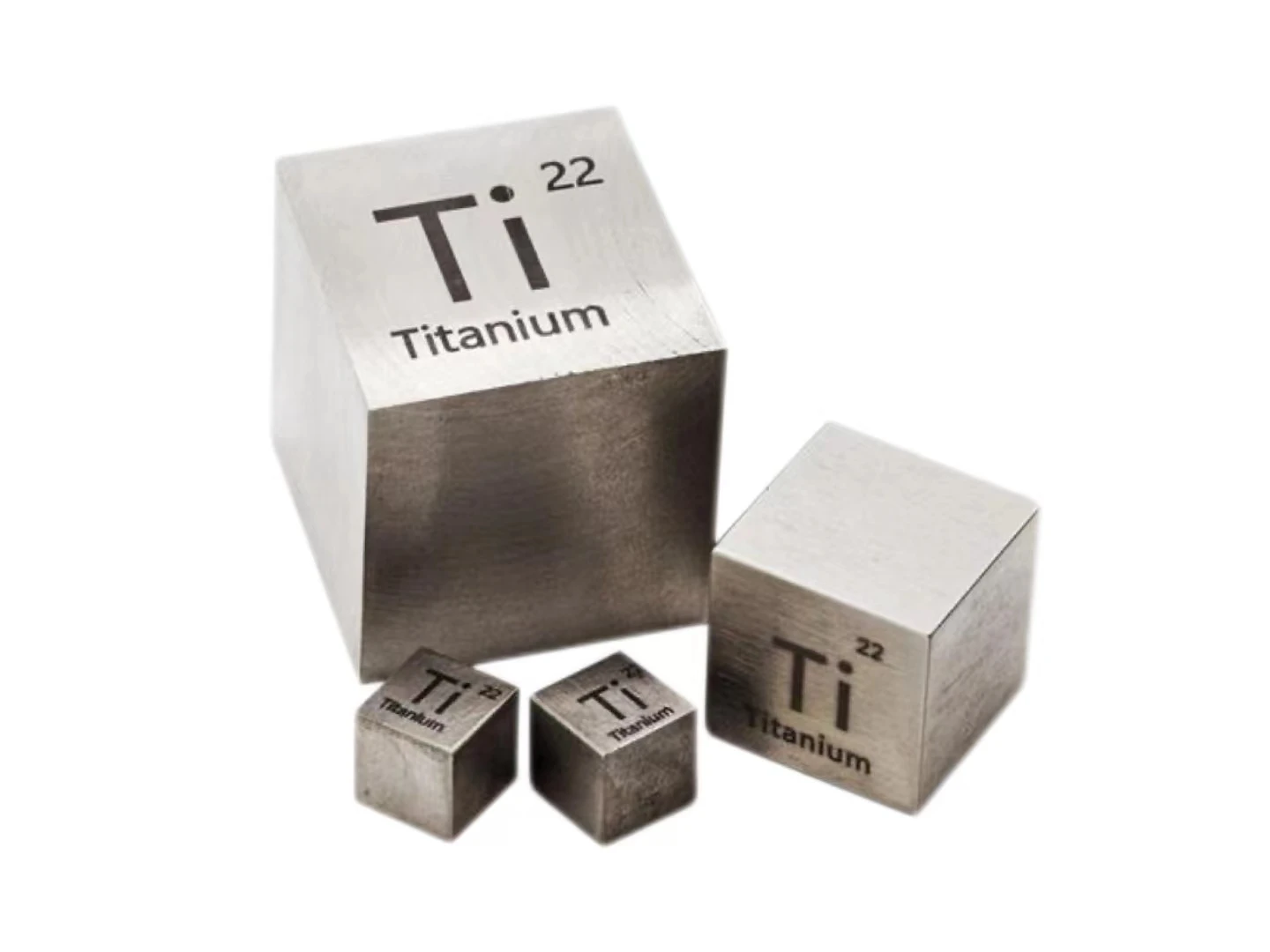
However, due to the high dependence of the economic value and mining potential of titanium resources on the quality of minerals, the titanium ore resources currently with industrial mining value are mainly ilmenite and rutile. Among them:
(1) Titanium iron ore: Titanium iron ore is divided into rock ore and sand ore. The TiO2 grade of titanium concentrate selected from rock ore is generally 42% -48%, while the TiO2 grade of titanium concentrate selected from sand ore can exceed 50%. Titanium iron ore is currently the most important titanium ore resource, which can be directly used as a raw material for producing titanium dioxide or sponge titanium. However, this process will cause significant environmental pressure and waste a large amount of iron resources. In order to fully utilize the iron in ilmenite, many smelters use ilmenite as raw material for electric furnace smelting, obtaining pig iron and high titanium slag, which are then used as raw materials for producing sponge titanium, titanium tetrachloride or titanium dioxide.
(2) Rutile: Rutile is one of the most widely distributed sand minerals in titanium ore, with high grade and high TiO2 content. It also contains impurity elements such as Fe, Mg, Al, Si, Ca, etc. After beneficiation through methods such as gravity separation, magnetic separation, and electrostatic separation, high-grade concentrate with high TiO2 content can be obtained, which can be used to produce sponge titanium, titanium tetrachloride, titanium dioxide and other products. Although natural hematite has relatively high quality, its reserves are relatively small, making it difficult to meet production needs. Therefore, a large amount of synthetic hematite (also known as synthetic hematite) needs to be produced as a substitute.
At present, mainstream manufacturers mostly use ilmenite as raw material and use methods such as sulfuric acid leaching, hydrochloric acid leaching, selective chlorination, and reduction rusting to separate most of the iron components in the iron ore, producing a rich titanium material with the same composition and structural properties as natural hematite. It is a high-quality substitute for natural hematite.

The global titanium ore resources are mainly ilmenite, concentrated in countries such as China, Australia, and India. According to data from the United States Geological Survey, the total global reserves of titanium ore resources in 2022 are approximately 700 million tons (calculated as TiO2), of which the reserves of ilmenite and rutile resources are 650 million tons and 49 million tons respectively, accounting for 92.86% and 7.00%, respectively.
From a regional perspective, according to data from the United States Geological Survey, ilmenite resources are mainly distributed in China and Australia, reaching 190 million tons (TiO2 content, the same below) and 160 million tons respectively in 2022, accounting for 27% and 23%, respectively. Rutile resources are mainly distributed in Australia, accounting for 63%, about 30 million tons. China has the richest titanium ore resources, with a total reserve of 230 million tons, accounting for 30.7%.

Although China has large reserves and wide distribution of titanium resources, most of them are low-grade primary ores accompanied by various types of minerals. More than 90% of the iron ore is rock type vanadium titanium magnetite, with high vein content and dense structure, making mineral separation difficult. Coupled with immature domestic mineral processing technology, the comprehensive utilization rate is low, which cannot meet the domestic demand for titanium ore.
Therefore, China has a certain import demand for high-grade and high-quality titanium ore, with an external dependence of about 40%. According to the Titanium Zirconium Hafnium Branch of the China Nonferrous Metals Industry Association, in 2022, there were approximately 3.144 million tons of domestically produced titanium ore (TiO2 content, the same below) and 1.553 million tons of imported titanium ore.