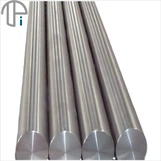
As a supplier of B348 Titanium Bar, I am often asked about the work - hardening rate of this particular titanium bar. In this blog, I will delve into what work - hardening rate is, how it applies to B348 Titanium Bar, and why it matters in various applications.
Understanding Work - Hardening Rate
Work - hardening, also known as strain hardening, is a process in which a metal becomes stronger and harder as it is deformed. When a metal is subjected to plastic deformation, such as during forging, rolling, or machining, the dislocations within the metal's crystal structure interact with each other. These interactions impede the movement of dislocations, making it more difficult for the metal to deform further. As a result, the strength and hardness of the metal increase.
The work - hardening rate is a measure of how quickly a metal's strength and hardness increase with plastic deformation. It is typically expressed as the slope of the stress - strain curve in the plastic deformation region. A high work - hardening rate means that the metal becomes significantly stronger and harder with relatively small amounts of deformation, while a low work - hardening rate indicates that the metal's strength and hardness increase more gradually.
Work - Hardening Rate of B348 Titanium Bar
B348 Titanium Bar is a high - quality titanium product that conforms to the ASTM B348 standard. Titanium is known for its excellent strength - to - weight ratio, corrosion resistance, and biocompatibility. When it comes to work - hardening, B348 Titanium Bar exhibits unique characteristics.
Titanium has a relatively high work - hardening rate compared to some other metals. This is due to its hexagonal close - packed (HCP) crystal structure. In an HCP structure, the number of slip systems (planes and directions along which dislocations can move) is limited compared to a face - centered cubic (FCC) or body - centered cubic (BCC) structure. As a result, dislocations in titanium interact more strongly with each other during plastic deformation, leading to a more rapid increase in strength and hardness.
For B348 Titanium Bar, the work - hardening rate can vary depending on several factors, including the specific alloy composition, heat treatment, and the amount and type of deformation. For example, if the bar has been properly heat - treated, it can have a more uniform microstructure, which can affect the work - hardening behavior. Additionally, different types of deformation, such as cold rolling or hot forging, can lead to different work - hardening rates. Cold working generally results in a higher work - hardening rate because the lower temperature restricts the movement of atoms and dislocations, causing them to pile up more easily.
Importance of Work - Hardening Rate in Applications
The work - hardening rate of B348 Titanium Bar is crucial in many applications. Here are some examples:
Aerospace Industry
In the aerospace industry, weight reduction is of utmost importance. B348 Titanium Bar's high strength - to - weight ratio makes it an ideal material for various components, such as aircraft frames, engine parts, and landing gear. The high work - hardening rate allows these components to be formed into complex shapes during manufacturing processes like forging and machining. Once formed, the work - hardened areas can withstand high stresses during flight, ensuring the safety and reliability of the aircraft.
Medical Industry
Titanium's biocompatibility makes B348 Titanium Bar a popular choice for medical implants, such as hip and knee replacements, dental implants, and spinal fusion devices. The work - hardening rate is important in this context because it allows the implants to be precisely shaped during manufacturing. After implantation, the work - hardened surface can resist wear and deformation over time, providing long - term stability and functionality.
Chemical Processing Industry
In the chemical processing industry, B348 Titanium Bar is used in equipment that comes into contact with corrosive chemicals. The high work - hardening rate can enhance the bar's resistance to abrasion and erosion, which are common issues in chemical processing environments. This helps to extend the service life of the equipment and reduce maintenance costs.
How Our B348 Titanium Bar Compares
As a supplier, we take pride in offering high - quality B348 Titanium Bar. Our bars are carefully manufactured to ensure consistent work - hardening properties. We use advanced production techniques and strict quality control measures to guarantee that each bar meets or exceeds the ASTM B348 standard.
Compared to some other suppliers, our B348 Titanium Bar has a more predictable work - hardening rate. This is because we have a deep understanding of the factors that affect work - hardening, such as alloy composition and heat treatment. We can customize the manufacturing process to meet the specific requirements of our customers, whether they need bars with a high work - hardening rate for applications that require high strength or bars with a more moderate work - hardening rate for easier forming.
Related Products
In addition to B348 Titanium Bar, we also offer other related titanium products. For example, our Polished 348 Titanium Bar is a great option for applications where a smooth surface finish is required. The polishing process not only enhances the aesthetic appearance of the bar but also can improve its corrosion resistance.
We also supply Gr12 Titanium Round Bar, which has different alloying elements compared to B348 Titanium Bar. Gr12 Titanium Round Bar is known for its good weldability and high - temperature strength, making it suitable for applications in the chemical and petrochemical industries.
If you are specifically looking for titanium bars that strictly adhere to the ASTM B348 standard, our ASTM B348 Titanium Bar is the perfect choice. It offers the same high - quality and consistent work - hardening properties as our B348 Titanium Bar.


Contact Us for Purchase and Discussion
If you are interested in purchasing B348 Titanium Bar or any of our other titanium products, we encourage you to contact us. Our team of experts is ready to assist you with all your inquiries, whether it's about the work - hardening rate, product specifications, or pricing. We can also provide samples for you to test and evaluate before making a decision.
The work - hardening rate of B348 Titanium Bar is a key property that affects its performance in various applications. As a reliable supplier, we are committed to providing high - quality products with consistent work - hardening characteristics. Contact us today to start your procurement process and discuss how our titanium bars can meet your specific needs.
References
- ASM Handbook Committee. (2000). ASM Handbook, Volume 2: Properties and Selection: Nonferrous Alloys and Special - Purpose Materials. ASM International.
- Dieter, G. E. (1986). Mechanical Metallurgy. McGraw - Hill.
- Titanium Information Group. (2015). Titanium: A Technical Guide. ASM International.