

As a supplier of Pure Titanium Bars, I've had the privilege of witnessing the remarkable properties and diverse applications of this exceptional material. In this blog, I'll delve into the concept of the purity of pure titanium bars, exploring what it means, why it matters, and how it impacts various industries.
Understanding Titanium Purity
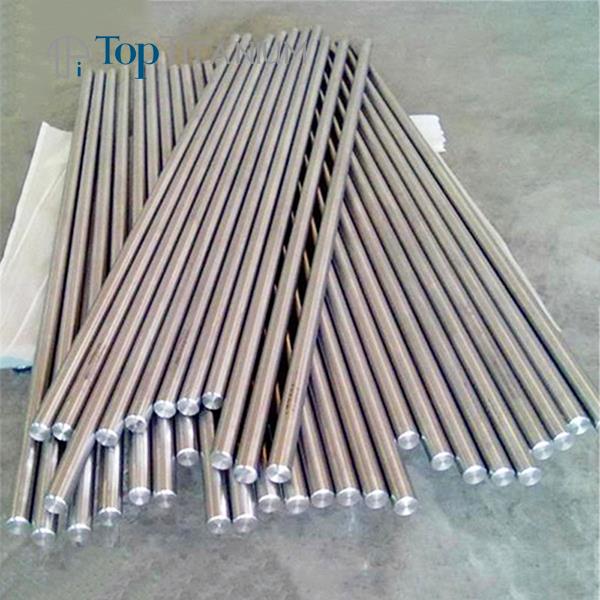
Titanium is a chemical element with the symbol Ti and atomic number 22. It is a lustrous transition metal known for its high strength, low density, and excellent corrosion resistance. When we talk about pure titanium bars, we're referring to bars that are composed primarily of titanium, with minimal impurities.
The purity of titanium is typically measured in terms of the percentage of titanium content in the bar. For example, a titanium bar with a purity of 99.5% means that 99.5% of the bar is made up of titanium, while the remaining 0.5% consists of other elements. These impurities can include iron, oxygen, nitrogen, carbon, and hydrogen, among others.

Why Purity Matters
The purity of a titanium bar has a significant impact on its properties and performance. Higher purity titanium bars generally exhibit better corrosion resistance, higher strength, and improved ductility. These properties make them ideal for applications where reliability and durability are critical, such as in the aerospace, medical, and chemical industries.
In the aerospace industry, for example, titanium is used in the construction of aircraft frames, engines, and landing gear. The high strength-to-weight ratio of titanium makes it an ideal material for these applications, as it allows for lighter and more fuel-efficient aircraft. However, the presence of impurities can reduce the strength and corrosion resistance of the titanium, making it less suitable for use in critical aerospace components.
Similarly, in the medical industry, titanium is used in the manufacturing of implants, such as hip and knee replacements. The biocompatibility of titanium makes it an ideal material for these applications, as it is well-tolerated by the human body. However, the purity of the titanium is crucial to ensure that the implants are safe and effective. Impurities in the titanium can cause adverse reactions in the body, leading to inflammation, infection, and other complications.
In the chemical industry, titanium is used in the construction of chemical processing equipment, such as reactors, heat exchangers, and storage tanks. The excellent corrosion resistance of titanium makes it an ideal material for these applications, as it can withstand the harsh chemical environments found in many chemical processing plants. However, the purity of the titanium is important to ensure that it does not react with the chemicals being processed, which could lead to contamination and reduced efficiency.
Measuring Titanium Purity
There are several methods for measuring the purity of titanium bars. One of the most common methods is chemical analysis, which involves analyzing the composition of the titanium bar using techniques such as spectroscopy, chromatography, and titration. These methods can provide accurate measurements of the titanium content and the levels of impurities in the bar.
Another method for measuring titanium purity is physical testing, which involves testing the mechanical properties of the titanium bar, such as its strength, hardness, and ductility. These properties can be affected by the presence of impurities in the titanium, so physical testing can provide an indirect measure of the purity of the bar.
Factors Affecting Titanium Purity
Several factors can affect the purity of titanium bars. One of the most important factors is the source of the titanium ore. Different sources of titanium ore can contain different levels of impurities, which can affect the purity of the titanium bars produced from them.
The manufacturing process used to produce the titanium bars can also affect their purity. For example, the use of high-quality raw materials, such as sponge titanium, can help to ensure that the titanium bars have a high purity. Additionally, the use of advanced manufacturing techniques, such as vacuum arc remelting and electron beam melting, can help to reduce the levels of impurities in the titanium bars.
Applications of Pure Titanium Bars
Pure titanium bars have a wide range of applications in various industries. Some of the most common applications include:
- Aerospace Industry: As mentioned earlier, titanium is used in the construction of aircraft frames, engines, and landing gear. The high strength-to-weight ratio and excellent corrosion resistance of titanium make it an ideal material for these applications.
- Medical Industry: Titanium is used in the manufacturing of implants, such as hip and knee replacements, dental implants, and spinal fusion devices. The biocompatibility of titanium makes it an ideal material for these applications, as it is well-tolerated by the human body.
- Chemical Industry: Titanium is used in the construction of chemical processing equipment, such as reactors, heat exchangers, and storage tanks. The excellent corrosion resistance of titanium makes it an ideal material for these applications, as it can withstand the harsh chemical environments found in many chemical processing plants.
- Marine Industry: Titanium is used in the construction of marine equipment, such as propellers, shafts, and hulls. The high strength and corrosion resistance of titanium make it an ideal material for these applications, as it can withstand the harsh marine environment.
- Sports Equipment Industry: Titanium is used in the manufacturing of sports equipment, such as golf clubs, tennis rackets, and bicycles. The high strength-to-weight ratio and excellent corrosion resistance of titanium make it an ideal material for these applications, as it can provide a lightweight and durable alternative to traditional materials.
Our Pure Titanium Bars
As a supplier of Pure Titanium Bars, we offer a wide range of high-quality titanium bars with different purities and specifications. Our titanium bars are produced using advanced manufacturing techniques and high-quality raw materials to ensure that they have a high purity and excellent properties.
We offer Titanium Bar for Chemical Industry, which are specifically designed for use in the chemical industry. These bars have a high purity and excellent corrosion resistance, making them ideal for use in chemical processing equipment.
We also offer Ti 1023 Titanium Bar, which are a high-strength titanium alloy that is commonly used in the aerospace and automotive industries. These bars have a high strength-to-weight ratio and excellent fatigue resistance, making them ideal for use in critical components.
In addition, we offer Pure Titanium Bar, which are available in a variety of purities and sizes. These bars are suitable for a wide range of applications, including aerospace, medical, chemical, marine, and sports equipment industries.
Contact Us for Procurement
If you're interested in purchasing our Pure Titanium Bars, please don't hesitate to contact us. We have a team of experienced professionals who can help you choose the right titanium bars for your specific application and provide you with competitive pricing and excellent customer service.
Whether you're looking for high-purity titanium bars for critical applications or standard titanium bars for general use, we have the expertise and resources to meet your needs. Contact us today to discuss your requirements and start the procurement process.
References
- ASM Handbook, Volume 2: Properties and Selection: Nonferrous Alloys and Special-Purpose Materials, ASM International, 1990.
- Titanium: A Technical Guide, Second Edition, J.R. Davis, ASM International, 1999.
- The Science and Technology of Titanium, Fourth Edition, R.I. Jaffee and N.E. Promisel, Pergamon Press, 1973.


