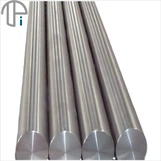
Hey there! As a supplier of Gr3 Titanium Bar, I often get asked about the modulus of elasticity of this awesome material. So, let's dive right in and break it down.
First off, what's the modulus of elasticity? Well, it's a measure of how a material responds to being stretched or compressed. In simple terms, it tells us how stiff or flexible a material is. When a force is applied to a material, it deforms. The modulus of elasticity is the ratio of the stress (the force per unit area) to the strain (the deformation per unit length). It's usually denoted by the letter E and is measured in units of pressure, like gigapascals (GPa).
Now, let's talk about Gr3 Titanium Bar. Grade 3 titanium is an unalloyed titanium that's known for its high strength, excellent corrosion resistance, and good weldability. It's commonly used in a wide range of applications, from aerospace and automotive to medical and marine industries.
The modulus of elasticity of Gr3 Titanium Bar is approximately 110 GPa. This value indicates that Gr3 titanium is relatively stiff compared to some other metals. For example, aluminum has a modulus of elasticity of around 70 GPa, which means it's more flexible than Gr3 titanium. On the other hand, steel can have a modulus of elasticity ranging from 190 - 210 GPa, making it stiffer than Gr3 titanium.
The relatively high modulus of elasticity of Gr3 Titanium Bar is one of the reasons why it's so popular in applications where dimensional stability is crucial. In aerospace, for instance, components need to maintain their shape under various loads and environmental conditions. The stiffness provided by the high modulus of elasticity helps ensure that the parts don't deform excessively, which is essential for the safety and performance of the aircraft.
In the medical field, Medical Cannulated Titanium Bar made from Gr3 titanium is used in implants. The modulus of elasticity of Gr3 titanium is close to that of human bone, which is around 10 - 30 GPa. This similarity helps reduce the stress shielding effect, where the implant takes on too much of the load, causing the surrounding bone to weaken over time. By having a modulus of elasticity that's relatively close to bone, Gr3 titanium implants can better distribute the load and promote bone growth and integration.
Another application where the modulus of elasticity of Gr3 Titanium Bar plays a significant role is in the automotive industry. In high - performance vehicles, components like suspension parts need to be strong and stiff to handle the forces generated during driving. Gr3 titanium's modulus of elasticity allows these parts to resist deformation, providing better handling and stability.
Now, if you're in the market for high - quality Gr3 Titanium Bar, you've come to the right place. We're a trusted supplier, and we offer a wide range of titanium products, including Gr2 Titanium Round Bar and B348 Titanium Bar. Our bars are manufactured to the highest standards, ensuring consistent quality and performance.


We understand that every project has unique requirements, and that's why we offer customization options. Whether you need a specific size, shape, or finish, we can work with you to meet your needs. Our team of experts is always ready to provide technical support and advice to help you choose the right product for your application.
If you're interested in purchasing Gr3 Titanium Bar or any of our other titanium products, don't hesitate to reach out. We're here to make the procurement process as smooth and hassle - free as possible. Whether you're a small business or a large corporation, we can offer competitive prices and excellent customer service.
In conclusion, the modulus of elasticity of Gr3 Titanium Bar is an important property that influences its performance in various applications. With its relatively high stiffness, Gr3 titanium is well - suited for industries where dimensional stability, strength, and compatibility with other materials are key factors. So, if you're looking for a reliable titanium bar supplier, contact us today and let's start working on your project together.
References:
- "Titanium: A Technical Guide" by John C. Williams
- Various industry research papers on titanium materials and their properties.