Hey there! As a titanium plate supplier, I often get asked about the chemical composition of titanium plates. It's a super important topic, especially if you're in the market for high - quality titanium products. So, let's dive right in and break down what makes up these amazing titanium plates.
Titanium is a pretty unique metal. It's known for its high strength - to - weight ratio, excellent corrosion resistance, and biocompatibility. These properties make it a go - to material in a wide range of industries, from aerospace and automotive to medical and marine.
The base element of titanium plates, of course, is titanium (Ti). Pure titanium has an atomic number of 22 and is a silver - gray metal. In most commercial titanium plates, the titanium content is quite high, usually over 90%. But it's rarely used in its pure form. Instead, it's alloyed with other elements to enhance specific properties.
One of the most common alloying elements is aluminum (Al). Aluminum is added to titanium plates to increase their strength and heat resistance. When aluminum is alloyed with titanium, it forms a solid - solution strengthening effect. This means that the aluminum atoms fit into the titanium's crystal lattice, making it harder for the lattice to deform under stress. In some titanium alloys, the aluminum content can range from 2% to 6%.
Vanadium (V) is another important alloying element. Vanadium helps to improve the ductility and formability of titanium plates. It also contributes to the alloy's strength at high temperatures. In titanium - vanadium alloys, the vanadium content can be around 3% to 5%. These alloys are often used in applications where the material needs to be shaped into complex forms, like aircraft components.
Iron (Fe) is sometimes present in titanium plates, although usually in small amounts. Iron can increase the strength of the alloy, but too much of it can make the titanium more brittle. Typically, the iron content in titanium plates is kept below 0.5%.
Oxygen (O) is an interstitial element in titanium. A small amount of oxygen can actually strengthen the titanium by increasing the resistance to dislocation movement in the crystal lattice. However, excessive oxygen can lead to a decrease in ductility. The oxygen content in titanium plates is carefully controlled, usually in the range of 0.1% to 0.4%.
Carbon (C) is also present in trace amounts. Carbon can form carbides in the titanium alloy, which can affect its mechanical properties. Generally, the carbon content is kept very low, often less than 0.1%, to avoid any negative impacts on the alloy's performance.
Nitrogen (N) is another interstitial element. Similar to oxygen, a small amount of nitrogen can strengthen the titanium alloy. But too much nitrogen can cause embrittlement. The nitrogen content is usually maintained at a level below 0.05%.

Let's talk about some specific types of titanium plates. For instance, the ASTM B265 Titanium Sheet. This type of titanium sheet is produced according to the ASTM B265 standard, which specifies the requirements for different grades of titanium and titanium alloy sheets, strips, and plates. The chemical composition of ASTM B265 titanium sheets can vary depending on the grade. For example, Grade 1 titanium in this standard is nearly pure titanium, with a very high titanium content and only small amounts of other elements like iron and oxygen.
The Cold Rolled GR1 Titanium Plate is also quite popular. Grade 1 titanium is known for its excellent corrosion resistance and high ductility. Cold rolling is a process that further enhances the mechanical properties of the plate. During cold rolling, the plate is passed through a set of rollers at room temperature, which reduces its thickness and increases its strength. The chemical composition of GR1 titanium plates mainly consists of titanium with small, controlled amounts of iron, oxygen, and other trace elements.
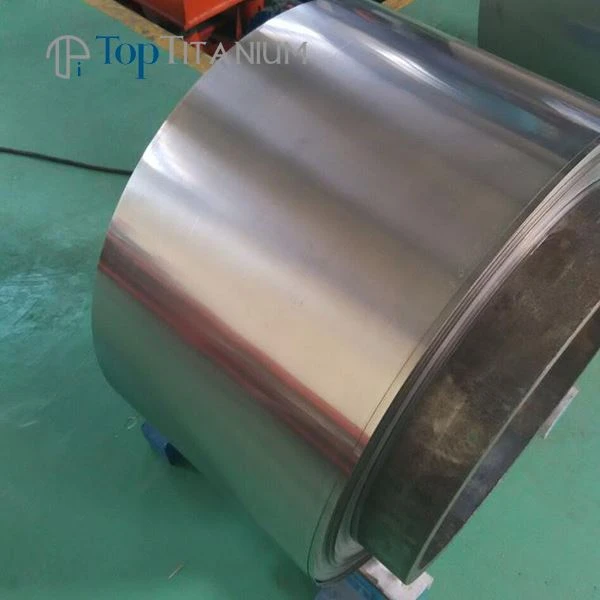
Then there's the Titanium Foil In Coil. Titanium foil is extremely thin, and its chemical composition is similar to that of other titanium plates. However, because of its thinness, it may have different requirements for purity and surface finish. The production of titanium foil in coil form allows for easy handling and storage, and it's widely used in applications like electronics and jewelry.
Now, understanding the chemical composition of titanium plates is crucial because it directly affects their performance in different applications. For example, in the aerospace industry, where components need to withstand high stresses and extreme temperatures, titanium alloys with high aluminum and vanadium content are preferred. In the medical field, where biocompatibility is key, pure titanium or low - alloyed titanium plates are often used.
If you're in the market for titanium plates, it's important to know exactly what you need in terms of chemical composition. Different applications call for different grades and compositions of titanium plates. And as a supplier, I can help you find the perfect titanium plate that meets your specific requirements.
Whether you're working on a large - scale industrial project or a small - scale DIY job, having the right titanium plate is essential. I've got a wide range of titanium plates in stock, with various chemical compositions to suit different needs. So, if you're interested in purchasing titanium plates, don't hesitate to reach out. We can have a detailed discussion about your project, and I'll help you select the best - fitting titanium plate for you.
In conclusion, the chemical composition of titanium plates is a complex but fascinating topic. It's what gives titanium its unique properties and makes it suitable for so many different applications. If you have any questions about the chemical composition of titanium plates or need help with your titanium plate procurement, feel free to contact me. I'm here to assist you every step of the way.
References
- "Titanium: A Technical Guide" by Don Eylon
- ASTM International standards for titanium and titanium alloys