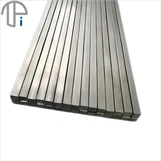
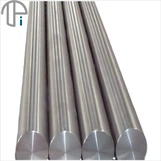
Hey there! As a supplier of Titanium Hexagon Bars, I often get asked about the brittleness of these bars. So, I thought I'd take a moment to break it down for you.
First off, let's talk about what brittleness actually means. In simple terms, brittleness is the tendency of a material to break or shatter without significant deformation when it's subjected to stress. You know, like how a piece of glass just shatters into a million pieces when you drop it. That's brittleness in action.
Now, titanium is generally known for its strength, corrosion resistance, and low density. But when it comes to brittleness, it's a bit more complicated. Titanium hexagon bars can exhibit different levels of brittleness depending on a few key factors.
Composition and Grade
One of the biggest factors affecting the brittleness of a titanium hexagon bar is its composition and grade. We offer different grades of titanium hexagon bars, like Gr1 Titanium Hexagon Bar, Gr2 Titanium Hexagon Bar, and Gr5 Titanium Hexagon Bar.
Grade 1 titanium is the purest form of commercially available titanium. It's highly ductile, which means it can be easily bent and shaped without breaking. So, it has a relatively low level of brittleness. It's often used in applications where formability is key, like in the chemical processing industry or in architectural applications.
Grade 2 titanium is also quite ductile, but it has a bit more strength compared to Grade 1. It's a popular choice for a wide range of applications, from marine components to medical devices. Again, its brittleness is relatively low, making it a reliable choice when you need a material that can withstand some stress without shattering.
On the other hand, Grade 5 titanium, also known as Ti-6Al-4V, is an alloy that contains aluminum and vanadium. This alloy is much stronger than the pure grades, but it can be a bit more brittle. The addition of these alloying elements increases its strength, but it also changes its microstructure in a way that can make it more prone to cracking under certain conditions. However, it's important to note that the brittleness of Grade 5 titanium is still within acceptable limits for most engineering applications. It's widely used in aerospace, automotive, and medical industries because of its excellent strength-to-weight ratio.
Heat Treatment
Another factor that can affect the brittleness of a titanium hexagon bar is heat treatment. Heat treatment is a process where the bar is heated to a specific temperature and then cooled at a controlled rate. This can change the microstructure of the titanium, which in turn affects its mechanical properties, including brittleness.
For example, if a titanium hexagon bar is overheated during the heat treatment process, it can form a brittle phase called alpha-case on its surface. This alpha-case is harder and more brittle than the underlying titanium, and it can make the bar more likely to crack or break. On the other hand, proper heat treatment can actually improve the ductility of the titanium and reduce its brittleness. By carefully controlling the heating and cooling rates, we can optimize the microstructure of the bar to achieve the desired balance of strength and ductility.


Cold Working
Cold working is another process that can impact the brittleness of a titanium hexagon bar. Cold working involves deforming the bar at room temperature, usually by rolling, forging, or drawing. This process can increase the strength of the titanium, but it can also make it more brittle.
When a titanium hexagon bar is cold worked, the grains in its microstructure are deformed and aligned in a certain direction. This can create internal stresses within the bar, which can make it more prone to cracking. However, the amount of cold working and the way it's done can be carefully controlled to minimize the increase in brittleness. For example, if we do multiple passes of cold working with intermediate annealing steps, we can reduce the internal stresses and maintain a good balance of strength and ductility.
Testing for Brittleness
As a supplier, we take the brittleness of our titanium hexagon bars very seriously. We conduct a variety of tests to ensure that our bars meet the required standards and specifications. One of the most common tests for brittleness is the Charpy impact test. In this test, a notched specimen of the titanium bar is struck with a pendulum, and the amount of energy absorbed by the specimen before it breaks is measured. A higher energy absorption indicates that the material is more ductile and less brittle.
We also use other non-destructive testing methods, like ultrasonic testing and X-ray inspection, to detect any internal defects or cracks in the bars. These defects can significantly increase the brittleness of the bar and reduce its reliability. By catching these defects early, we can ensure that only high-quality bars are delivered to our customers.
Applications and Brittleness Considerations
When choosing a titanium hexagon bar for a specific application, it's important to consider the level of brittleness. For applications where the bar will be subjected to high-impact loads or sudden shocks, like in automotive or aerospace components, a lower level of brittleness is usually preferred. In these cases, Grade 1 or Grade 2 titanium might be a better choice.
On the other hand, for applications where high strength is the primary requirement, like in medical implants or structural components, Grade 5 titanium might be more suitable. Even though it has a slightly higher level of brittleness, its excellent strength-to-weight ratio and corrosion resistance make it a popular choice. However, in these applications, it's important to design the components in a way that minimizes the risk of cracking due to brittleness.
Conclusion
So, to sum it up, the brittleness of a titanium hexagon bar depends on several factors, including its composition and grade, heat treatment, and cold working. As a supplier, we do our best to control these factors to ensure that our bars have the right balance of strength and ductility. Whether you need a highly ductile Grade 1 bar or a strong Grade 5 bar, we've got you covered.
If you're in the market for titanium hexagon bars and have any questions about brittleness or any other aspect of our products, don't hesitate to reach out. We're here to help you find the perfect solution for your application. Let's start a conversation and see how we can work together to meet your needs.
References
- ASM Handbook Volume 2: Properties and Selection: Nonferrous Alloys and Special-Purpose Materials
- Titanium: A Technical Guide, Second Edition by John C. Williams