

Hey there! As a supplier of Gr3 Titanium Bars, I often get asked whether Gr3 Titanium Bar is brittle or ductile. It's a question that's crucial for anyone looking to use this material in their projects, whether it's in aerospace, medical devices, or other high - tech fields. So, let's dive right in and explore this topic.
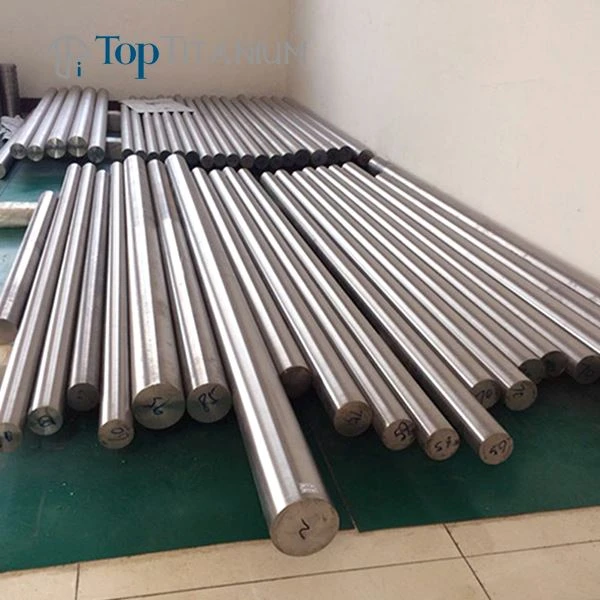

First off, let's understand what we mean by brittle and ductile. A brittle material is one that breaks or fractures with little or no plastic deformation. When you apply stress to a brittle material, it'll just snap suddenly, like a piece of glass. On the other hand, a ductile material can undergo significant plastic deformation before it fails. Think of a piece of copper wire that you can bend and twist without it breaking easily.
Now, Gr3 Titanium is a grade of commercially pure titanium. It has a relatively high purity level, which gives it some unique properties. In general, Gr3 Titanium Bar is more ductile than brittle. The reason lies in its crystal structure. Titanium has a hexagonal close - packed (HCP) crystal structure at room temperature. This structure allows for some degree of slip between atomic planes when stress is applied. Slip is the mechanism by which metals deform plastically.
The ductility of Gr3 Titanium Bar makes it a great choice for a variety of applications. In the aerospace industry, for example, components need to withstand high - stress environments and also be able to deform slightly without breaking. Gr3 Titanium Bar can be used to make parts like fasteners and brackets. Its ductility ensures that these parts can handle the vibrations and stresses during flight.
In the medical field, the ductility of Gr3 Titanium Bar is also a huge advantage. Medical implants, such as bone plates and screws, need to be able to conform to the shape of the body and withstand the forces exerted on them over time. The ductility of Gr3 Titanium allows these implants to be shaped and molded during the manufacturing process and also to adapt to the body's movements without cracking.
However, it's important to note that the ductility of Gr3 Titanium Bar can be affected by several factors. One of the main factors is the presence of impurities. Even though Gr3 is a commercially pure grade, small amounts of impurities like oxygen, nitrogen, and carbon can reduce its ductility. These impurities can form hard particles within the titanium matrix, which can act as stress concentrators and make the material more prone to cracking.
Another factor is the heat treatment. If Gr3 Titanium Bar is heat - treated incorrectly, it can become more brittle. For example, over - heating the bar can cause the formation of a brittle phase. This is why it's crucial to have strict quality control measures in place during the manufacturing process.
When compared to other titanium grades, Gr3 Titanium Bar has its own unique balance of properties. For instance, if you compare it with TC4 6AL - 4V Titanium Rods, TC4 is an alloy that contains aluminum and vanadium. This alloy is known for its high strength - to - weight ratio but may have different ductility characteristics compared to Gr3. TC4 is often used in applications where high strength is the primary requirement, while Gr3 is more focused on the combination of moderate strength and good ductility.
Gr2 Titanium Round Bar is another commercially pure grade. Gr2 has a lower oxygen content compared to Gr3. Generally, Gr2 is even more ductile than Gr3. However, Gr3 offers a bit more strength due to its slightly higher oxygen content. So, the choice between Gr2 and Gr3 depends on the specific requirements of the application.
Forged Titanium Bar can also have different ductility characteristics compared to Gr3 Titanium Bar. Forging is a process that can improve the mechanical properties of titanium. A forged titanium bar may have a more uniform grain structure, which can enhance its ductility. But again, the final properties depend on the forging parameters and the initial material.
To test the ductility of Gr3 Titanium Bar, there are several standard tests. One of the most common tests is the tensile test. In a tensile test, a sample of the bar is pulled at a constant rate until it breaks. The amount of elongation and reduction in cross - sectional area before fracture are measured. These values are used to calculate the ductility of the material. A high elongation and reduction in area indicate high ductility.
Another test is the bend test. In a bend test, the bar is bent to a certain angle. If the bar can bend without cracking, it shows good ductility. These tests are crucial for ensuring that the Gr3 Titanium Bar meets the required standards for its intended application.
In conclusion, Gr3 Titanium Bar is generally ductile, but its ductility can be influenced by impurities, heat treatment, and other factors. Its ductility makes it suitable for a wide range of applications in different industries. Whether you're in aerospace, medical, or other high - tech fields, understanding the ductility of Gr3 Titanium Bar is essential for making the right material choices.
If you're interested in purchasing Gr3 Titanium Bar or have any questions about its properties and applications, don't hesitate to reach out. We're here to help you find the best solution for your specific needs. We can provide you with high - quality Gr3 Titanium Bar that meets all the necessary standards. So, let's start a conversation and see how we can work together to meet your requirements.
References:
- "Titanium: A Technical Guide" by John C. Williams
- "Materials Science and Engineering: An Introduction" by William D. Callister Jr. and David G. Rethwisch


