

As a supplier of Gr5 Titanium Bars, I understand the critical importance of controlling impurity content during production. Gr5 Titanium, also known as Ti6Al4V, is a widely used titanium alloy due to its excellent combination of high strength, low density, and good corrosion resistance. However, the presence of impurities can significantly affect its mechanical properties and performance. In this blog, I will share some key strategies and practices that we implement to ensure the impurity content in our Gr5 Titanium Bars is well - controlled.
Raw Material Selection
The first step in controlling impurity content is the careful selection of raw materials. We source high - purity titanium sponge and aluminum - vanadium master alloy from reliable suppliers. Titanium sponge is the primary raw material for titanium alloy production. By choosing suppliers with a proven track record of providing high - quality materials, we can minimize the initial impurity levels.
We conduct strict quality inspections on all incoming raw materials. This includes chemical analysis using advanced techniques such as inductively coupled plasma mass spectrometry (ICP - MS) and optical emission spectrometry (OES). These methods can accurately detect and quantify various elements, allowing us to reject any raw materials that do not meet our strict impurity limits.
Melting Process
The melting process is a crucial stage where impurities can either be removed or introduced. We use vacuum arc remelting (VAR) as our primary melting method for Gr5 Titanium Bars. VAR is carried out in a vacuum environment, which helps to prevent the introduction of atmospheric impurities such as oxygen, nitrogen, and hydrogen.
During VAR, the electrodes made from the raw materials are melted in a water - cooled copper crucible under a vacuum. The high - temperature environment and the vacuum conditions promote the removal of volatile impurities. For example, hydrogen has a high vapor pressure at the melting temperature of titanium, and it can be effectively removed during the VAR process.
To further improve the purity of the titanium alloy, we often perform double or triple VAR. Each additional remelting pass helps to homogenize the alloy composition and reduce the impurity content. After each VAR pass, we conduct chemical analysis to ensure that the impurity levels are within the desired range.
Electrode Preparation
Before the melting process, proper electrode preparation is essential. The electrodes are usually made by compacting and welding the raw materials. During this process, we need to ensure that the electrodes are free from contaminants. Any dirt, grease, or other foreign materials on the surface of the raw materials can introduce impurities during melting.
We clean the raw materials thoroughly before electrode preparation. This may involve using solvents to remove organic contaminants and mechanical cleaning methods to remove surface oxides. Additionally, we use high - quality welding techniques to ensure that the electrodes are well - formed and free from cracks or voids, which could trap impurities.
Ingot Casting and Homogenization
After melting, the molten titanium alloy is cast into ingots. The casting process should be carefully controlled to avoid the introduction of impurities. We use high - quality molds that are made from materials that do not react with the titanium alloy. The molds are also pre - heated to a proper temperature to ensure a smooth casting process.
Once the ingots are cast, we perform a homogenization heat treatment. Homogenization helps to eliminate composition gradients within the ingot and further reduce the segregation of impurities. The ingots are heated to a specific temperature for a certain period of time and then slowly cooled. This process allows the elements in the alloy to diffuse and achieve a more uniform distribution.
Forging and Rolling
During the forging and rolling processes, we need to be careful not to introduce new impurities. The tools and equipment used in these processes should be clean and made from materials that do not contaminate the titanium alloy. For example, the dies and rollers should be regularly cleaned and maintained to prevent the build - up of debris.
We also control the deformation rate and temperature during forging and rolling. These parameters can affect the microstructure and properties of the titanium alloy. By optimizing these parameters, we can ensure that the mechanical properties of the Gr5 Titanium Bars are not compromised due to the presence of impurities or improper processing.
Quality Control and Inspection
Throughout the production process, we implement a comprehensive quality control system. In addition to the chemical analysis mentioned earlier, we also use non - destructive testing methods such as ultrasonic testing (UT) and eddy current testing (ECT). These methods can detect internal defects and inhomogeneities in the Gr5 Titanium Bars, which may be related to the presence of impurities.
We also perform mechanical property testing, such as tensile testing, hardness testing, and impact testing. Any deviation in the mechanical properties from the standard values may indicate the presence of impurities or improper processing. If any issues are detected, we immediately investigate the root cause and take corrective actions.
Surface Treatment
Surface treatment can also play a role in controlling the impurity content. After forging and rolling, the Gr5 Titanium Bars may have a surface layer that contains a higher concentration of impurities due to oxidation or contamination during processing. We use pickling or machining to remove this surface layer.
Pickling is a chemical process that uses acids to dissolve the surface oxides and contaminants. However, we need to carefully control the pickling process to avoid over - etching and introducing new impurities. Machining, on the other hand, can physically remove the surface layer, leaving a clean and pure surface.
Conclusion
Controlling the impurity content in Gr5 Titanium Bars during production is a complex and multi - step process. From raw material selection to surface treatment, every stage requires strict quality control and careful attention to detail. By implementing the strategies and practices mentioned above, we can ensure that our polished round Titanium Bar and Gr5(Ti6AI4V)titanium Round Bar meet the highest quality standards.
Our Gr5 Titanium Bars are widely used in various industries, including aerospace, medical, and Building Material & Titanium. The low impurity content ensures their excellent performance and reliability in these demanding applications.

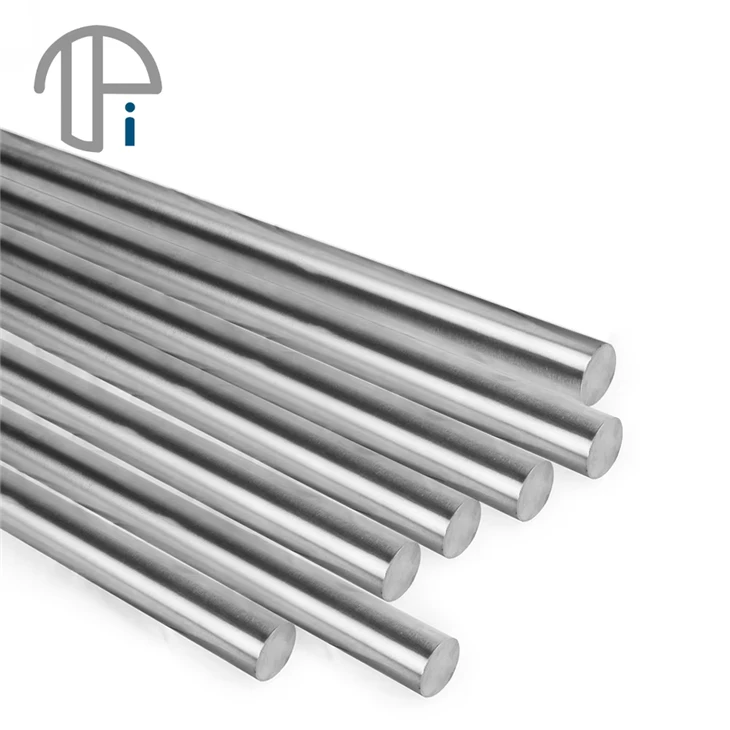
If you are interested in purchasing high - quality Gr5 Titanium Bars with well - controlled impurity content, please feel free to contact us for more information and to discuss your specific requirements. We are committed to providing you with the best products and services.
References
- "Titanium: A Technical Guide" by John R. Gilbert.
- "Metallurgy of Titanium Alloys" by Y. W. Kim and W. C. Oliver.
- Various industry standards and research papers on titanium alloy production and quality control.


