

Titanium is a remarkable metal renowned for its exceptional properties, and among its various grades, Gr3 Titanium Bar stands out for its outstanding corrosion resistance. As a leading supplier of Gr3 Titanium Bar, I am excited to delve into the science behind how this material resists corrosion and why it is a top choice for numerous applications.
Understanding Gr3 Titanium Bar
Gr3 Titanium Bar is part of the commercially pure titanium family. It contains a minimum of 99% titanium, along with small amounts of iron, oxygen, and other trace elements. This specific composition gives Gr3 Titanium Bar a unique set of properties, including high strength - to - weight ratio, good formability, and, most importantly, excellent corrosion resistance.
The Mechanism of Corrosion Resistance
Formation of a Passive Oxide Film
The primary reason for Gr3 Titanium Bar's corrosion resistance lies in its ability to form a stable, self - healing passive oxide film on its surface. When titanium comes into contact with oxygen, a thin layer of titanium dioxide (TiO₂) forms spontaneously. This oxide film is extremely thin, typically only a few nanometers thick, but it acts as a protective barrier between the metal and the surrounding environment.
The formation of TiO₂ is a thermodynamically favorable process. Titanium has a strong affinity for oxygen, and the reaction occurs rapidly even at room temperature. The chemical equation for the formation of titanium dioxide is:
[Ti + O₂ → TiO₂]
This oxide film is highly adherent to the metal surface and has excellent chemical stability. It prevents the underlying titanium from reacting with corrosive agents such as water, acids, and alkalis. For example, in an aqueous environment, the TiO₂ film inhibits the dissolution of titanium ions into the solution, thus preventing the metal from corroding.
Self - Healing Property
One of the most remarkable features of the passive oxide film on Gr3 Titanium Bar is its self - healing ability. If the oxide film is damaged due to mechanical abrasion or other external factors, it can quickly reform in the presence of oxygen. This means that even if the surface of the titanium bar is scratched, the protective layer will regenerate, maintaining the corrosion resistance of the material.
In harsh environments where other metals would quickly corrode, the self - healing property of Gr3 Titanium Bar ensures its long - term durability. For instance, in marine applications where the metal is constantly exposed to saltwater, any minor damage to the oxide film will be repaired rapidly, preventing the onset of corrosion.
Factors Affecting Corrosion Resistance
Environmental Conditions
The corrosion resistance of Gr3 Titanium Bar can be influenced by the environmental conditions it is exposed to. In general, titanium is highly resistant to corrosion in a wide range of environments, including oxidizing acids, alkaline solutions, and seawater. However, in some specific conditions, such as highly reducing acids or environments with high concentrations of fluoride ions, the corrosion resistance may be compromised.
In oxidizing acids, the passive oxide film on titanium remains stable, and the metal shows excellent resistance. For example, in nitric acid, the TiO₂ film protects the titanium from corrosion, even at relatively high acid concentrations. On the other hand, in reducing acids like hydrochloric acid, the corrosion rate of titanium can increase, especially at high temperatures and concentrations.
Alloying Elements
Although Gr3 Titanium Bar is a commercially pure titanium grade, the presence of trace elements can have an impact on its corrosion resistance. For example, iron can act as a cathode in a galvanic cell within the titanium matrix. If the iron content is too high, it may increase the risk of localized corrosion. Therefore, strict control of the alloying element content is essential to ensure the optimal corrosion resistance of Gr3 Titanium Bar.
Applications of Gr3 Titanium Bar Based on Corrosion Resistance
Chemical Processing Industry
In the chemical processing industry, Gr3 Titanium Bar is widely used due to its excellent corrosion resistance. It can be used in equipment such as reactors, heat exchangers, and piping systems. These components are often exposed to highly corrosive chemicals, and the use of Gr3 Titanium Bar ensures their long - term reliability. For example, in the production of fertilizers, where strong acids and alkalis are involved, titanium bars are used to construct storage tanks and reaction vessels to prevent corrosion.
Marine Applications
The marine environment is extremely corrosive, with high salt content and the presence of various microorganisms. Gr3 Titanium Bar is an ideal material for marine applications such as shipbuilding, offshore oil and gas platforms, and desalination plants. In shipbuilding, titanium bars can be used for hull components, propeller shafts, and other parts that are in direct contact with seawater. The corrosion resistance of Gr3 Titanium Bar ensures that these components can withstand the harsh marine environment for extended periods without significant degradation.
Medical Applications
In the medical field, Gr3 Titanium Bar is used in the manufacturing of surgical implants. The corrosion resistance of titanium is crucial in this application because implants need to be biocompatible and durable within the human body. The passive oxide film on titanium prevents the release of metal ions into the body, reducing the risk of allergic reactions and ensuring the long - term stability of the implant.
Comparison with Other Titanium Grades
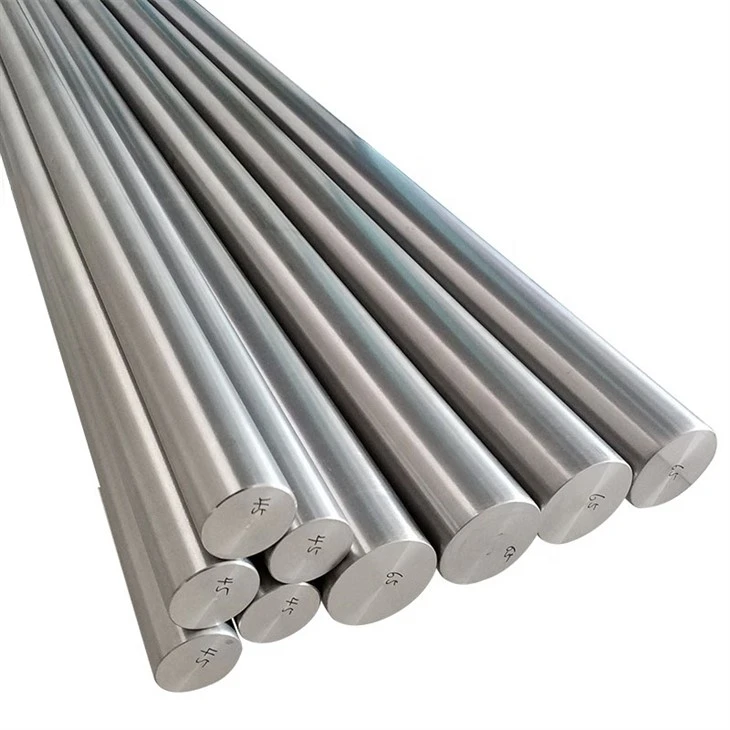
When comparing Gr3 Titanium Bar with other titanium grades, it is important to note that each grade has its own unique properties and applications. For example, Gr5(Ti6AI4V)titanium Round Bar is an alloy that contains aluminum and vanadium. This alloy has higher strength than commercially pure titanium grades like Gr3 but may have slightly different corrosion resistance characteristics.
Ti6AL4V ELI titanium bar is a special grade of Ti6Al4V with extra - low interstitial elements. It is often used in medical applications where high purity and excellent biocompatibility are required. While it also has good corrosion resistance, the specific alloy composition may affect its performance in different environments compared to Gr3 Titanium Bar.
Gr9 Titanium Bar is an alloy of titanium with 3% aluminum and 2.5% vanadium. It offers a good combination of strength and corrosion resistance, and it is commonly used in aerospace and automotive applications.

Conclusion
In conclusion, Gr3 Titanium Bar's ability to resist corrosion is due to the formation of a stable, self - healing passive oxide film on its surface. This film protects the metal from a wide range of corrosive agents and ensures its long - term durability in various environments. Whether in the chemical processing industry, marine applications, or medical field, Gr3 Titanium Bar has proven to be a reliable and high - performance material.
As a supplier of Gr3 Titanium Bar, we are committed to providing high - quality products that meet the strictest industry standards. Our Gr3 Titanium Bars are manufactured using advanced production processes to ensure consistent quality and excellent corrosion resistance. If you are interested in purchasing Gr3 Titanium Bar for your specific application, we invite you to contact us for further discussions. We have a team of experts who can provide you with detailed technical information and help you select the most suitable product for your needs.
References
- Fontana, M. G. (1986). Corrosion Engineering. McGraw - Hill.
-ASM Handbook, Volume 13A: Corrosion: Fundamentals, Testing, and Protection. ASM International. - Llanes, L., & Pardo, A. (2006). Corrosion of Titanium and Its Alloys. In Titanium and Titanium Alloys: Fundamentals and Applications. Wiley - VCH Verlag GmbH & Co. KGaA.


