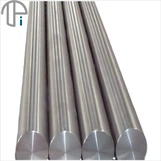
Hey there! As a supplier of Gr2 Titanium Bar, I often get asked about the wear resistance of this amazing material. So, I thought I'd take some time to break it down for you.
First off, let's understand what Gr2 Titanium Bar is. Grade 2 titanium is an unalloyed, commercially pure titanium. It's known for its excellent corrosion resistance, good formability, and weldability. But today, we're focusing on its wear resistance.
Wear resistance is all about how well a material can withstand the damage caused by contact with another surface. There are different types of wear, like abrasive wear, adhesive wear, and erosive wear. Let's see how Gr2 Titanium Bar fares in each of these scenarios.
Abrasive Wear
Abrasive wear happens when a hard surface rubs against a softer one, causing the removal of material from the softer surface. In the case of Gr2 Titanium Bar, it has a relatively good resistance to abrasive wear. The reason behind this is its hardness and the formation of a tough oxide layer on its surface.
The hardness of Gr2 titanium is decent, but it's not the hardest metal out there. However, the oxide layer that forms naturally on the surface of the bar acts as a protective shield. This layer is called titanium dioxide (TiO₂), and it's very stable and hard. It helps to prevent direct contact between the titanium surface and the abrasive particles, reducing the amount of material that gets worn away.
But, it's important to note that the wear resistance can be affected by factors like the type of abrasive material, the load applied, and the sliding speed. For example, if the abrasive particles are very hard and sharp, like silicon carbide, the wear rate of the Gr2 Titanium Bar might increase. Similarly, a higher load or a faster sliding speed can also lead to more wear.
Adhesive Wear
Adhesive wear occurs when two surfaces are in contact and there's a transfer of material between them. This can happen when the surfaces are pressed together under high pressure and there's relative motion. Gr2 Titanium Bar has a moderate resistance to adhesive wear.
The surface properties of Gr2 titanium play a crucial role here. The titanium dioxide layer on the surface helps to reduce the adhesion between the bar and the other surface. However, if the surfaces are clean and there's no lubrication, there's a chance of metal-to-metal contact, which can lead to adhesive wear.
To improve the adhesive wear resistance, surface treatments can be applied. For instance, coatings can be added to the surface of the Gr2 Titanium Bar to reduce friction and prevent direct contact between the titanium and the other material. Some common coatings include nitride coatings and diamond-like carbon (DLC) coatings.
Erosive Wear
Erosive wear is caused by the impact of solid particles or droplets on a surface. This can happen in applications where there's a flow of fluid containing abrasive particles, like in pumps or pipelines. Gr2 Titanium Bar has a good resistance to erosive wear.
The toughness of Gr2 titanium helps it to withstand the impact of the particles without getting damaged easily. The oxide layer also provides some protection against erosive wear. However, like in the case of abrasive wear, the wear rate can be affected by factors such as the size and shape of the particles, the velocity of the fluid, and the angle of impact.
Comparing with Other Titanium Bars
Now, let's compare the wear resistance of Gr2 Titanium Bar with some other types of titanium bars. For example, the Ti 15333 Titanium Bar is an alloy that's designed for high strength and good formability. It generally has a higher wear resistance than Gr2 titanium, especially in applications where high strength and toughness are required.
The ASTM F67 Titanium Bar is another type of commercially pure titanium bar. It has similar properties to Gr2 titanium, but its wear resistance might vary slightly depending on its specific chemical composition and manufacturing process.
The Gr12 Titanium Round Bar is an alloy that contains small amounts of molybdenum and nickel. This alloy has better corrosion resistance and higher strength compared to Gr2 titanium. In terms of wear resistance, it also performs well, especially in environments where there's a combination of wear and corrosion.
Applications
The wear resistance of Gr2 Titanium Bar makes it suitable for a wide range of applications. Some common applications include:
- Medical Devices: In medical implants, the bar's wear resistance is important to ensure the long-term performance of the device. The good corrosion resistance also makes it biocompatible, which is crucial for medical applications.
- Chemical Processing: In the chemical industry, the bar can be used in equipment like pumps, valves, and heat exchangers. Its resistance to wear and corrosion helps to prevent the failure of these components.
- Aerospace: In the aerospace industry, Gr2 Titanium Bar can be used in various parts where wear resistance and light weight are required. For example, it can be used in landing gear components and fasteners.
Improving Wear Resistance
If you need to improve the wear resistance of Gr2 Titanium Bar for a specific application, there are several methods you can consider.
- Surface Treatments: As mentioned earlier, coatings can be applied to the surface of the bar to enhance its wear resistance. Heat treatments can also be used to change the microstructure of the titanium, which can improve its hardness and wear resistance.
- Alloying: Adding small amounts of other elements to the titanium can form an alloy with better wear resistance. However, this might also affect other properties of the bar, so it needs to be carefully considered.
- Lubrication: Using a lubricant between the Gr2 Titanium Bar and the other surface can significantly reduce the wear rate. Lubricants can reduce friction and prevent direct contact between the surfaces.
Conclusion
In conclusion, Gr2 Titanium Bar has a decent wear resistance, thanks to its hardness and the protective oxide layer on its surface. It can withstand different types of wear, like abrasive, adhesive, and erosive wear, but its performance can be affected by various factors.
If you're in the market for a material with good wear resistance and other beneficial properties like corrosion resistance and formability, Gr2 Titanium Bar could be a great choice. Whether you're in the medical, chemical, or aerospace industry, this bar can meet your needs.
If you're interested in purchasing Gr2 Titanium Bar or have any questions about its wear resistance or other properties, feel free to reach out to me. I'd be more than happy to discuss your requirements and help you find the right solution for your application.


References
- "Titanium: A Technical Guide" by John R. Davis
- "Wear of Materials" by M. A. Meyers and K. K. Chawla
- Various research papers on the properties of Gr2 titanium and its wear resistance.