

As a dedicated supplier of Titanium Bars, I've often encountered inquiries regarding the shape accuracy of extruded Titanium Bars. Shape accuracy is a critical factor that significantly impacts the performance and applicability of these bars in various industries. In this blog, I'll delve into the concept of shape accuracy, its importance, the factors influencing it, and how we ensure high - precision in our products.
Understanding Shape Accuracy
Shape accuracy refers to how closely the actual shape of an extruded Titanium Bar conforms to its designed or ideal shape. This includes parameters such as straightness, roundness (for round bars), flatness (for flat bars), and dimensional consistency along the length and cross - section of the bar.
For instance, in applications like aerospace components, a Titanium Bar with poor straightness can lead to misalignment during assembly, which may compromise the structural integrity of the final product. Similarly, in medical devices, the roundness of a Gr3 Titanium Round Bar is crucial for proper fitting and functionality. Any deviation from the desired shape can affect the overall performance and safety of the device.
Importance of Shape Accuracy
The importance of shape accuracy cannot be overstated, as it directly influences the quality and performance of the end - products made from extruded Titanium Bars.

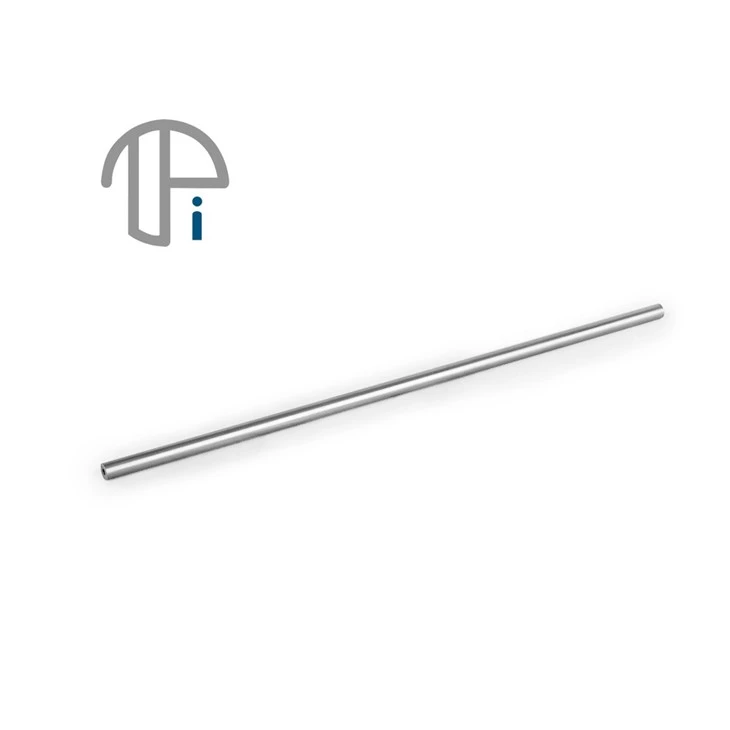
In the aerospace industry, where safety is of utmost importance, high - precision Titanium Bars are used in critical components such as landing gear, engine parts, and structural frames. A slight deviation in shape can lead to stress concentrations, fatigue failures, and ultimately, catastrophic consequences.
In the medical field, Medical Implant Tube Titanium Capillary Pipe Tube Round Tube ASTM B862 Gr 12 Grade 12 Titanium Alloy Wooden Case Seamless CN;SHA are used for implants. The shape accuracy of these bars ensures a proper fit within the human body, reducing the risk of rejection and promoting faster healing.
In the automotive industry, Titanium Bars are used in high - performance engines and suspension systems. Accurate shapes contribute to better fuel efficiency, smoother operation, and enhanced durability of the components.
Factors Influencing Shape Accuracy
Several factors can influence the shape accuracy of extruded Titanium Bars.
1. Material Properties
The inherent properties of titanium, such as its high strength - to - weight ratio, low thermal conductivity, and high chemical reactivity, can pose challenges during the extrusion process. Titanium has a relatively high elastic modulus, which means it tends to spring back after deformation. This spring - back effect can cause deviations from the desired shape.
Moreover, the presence of impurities or inhomogeneities in the titanium alloy can also affect the extrusion process and lead to shape irregularities. For example, hard inclusions can cause local deformation and disrupt the smooth flow of the material during extrusion.
2. Extrusion Process Parameters
The extrusion process involves heating the titanium billet to a specific temperature and forcing it through a die to obtain the desired shape. The temperature, extrusion speed, and pressure are critical process parameters that can significantly impact shape accuracy.
If the extrusion temperature is too low, the titanium may not flow smoothly through the die, resulting in surface defects and shape deviations. On the other hand, if the temperature is too high, the material may experience excessive oxidation, grain growth, and loss of mechanical properties.
The extrusion speed also plays a crucial role. A high extrusion speed can lead to uneven deformation and shape distortion, while a low speed may increase the production time and cost.
3. Die Design
The design of the extrusion die is another important factor. The die must be precisely engineered to produce the desired shape with high accuracy. Any imperfections or wear in the die can transfer to the extruded bar, causing shape irregularities.
The die's surface finish is also critical. A rough die surface can cause friction and adhesion between the titanium and the die, leading to surface defects and shape deviations.
4. Post - Extrusion Processes
After extrusion, the Titanium Bars may undergo various post - extrusion processes such as heat treatment, machining, and straightening. These processes can also affect the shape accuracy.
Heat treatment can cause dimensional changes due to thermal expansion and contraction. Machining operations, if not performed correctly, can introduce new shape deviations. Straightening operations are often required to correct any residual curvature in the bars, but improper straightening can also lead to over - correction and new shape problems.
Ensuring High Shape Accuracy in Our Products
As a Titanium Bar supplier, we take several measures to ensure high shape accuracy in our products.
1. Material Selection and Quality Control
We source high - quality titanium alloys from trusted suppliers. Before using the material, we conduct thorough quality inspections to ensure its chemical composition, mechanical properties, and homogeneity meet our strict standards. This helps to minimize the influence of material - related factors on shape accuracy.
2. Advanced Extrusion Technology
We invest in state - of - the - art extrusion equipment and technology. Our extrusion process is carefully controlled to optimize the temperature, extrusion speed, and pressure. We use advanced monitoring systems to continuously monitor and adjust these process parameters in real - time, ensuring consistent and accurate extrusion.
3. Precision Die Manufacturing
Our die manufacturing process is highly precise. We use advanced machining techniques and high - quality tooling materials to produce dies with excellent surface finish and dimensional accuracy. Regular die maintenance and inspection are carried out to ensure its performance and longevity.
4. Rigorous Quality Assurance
After extrusion, our Titanium Bars undergo a series of quality inspections. We use advanced measurement tools such as coordinate measuring machines (CMMs) and optical profilometers to measure the shape, dimensions, and surface finish of the bars. Any bars that do not meet our shape accuracy standards are rejected or re - worked.
5. Post - Extrusion Optimization
We have developed advanced post - extrusion processes to further improve shape accuracy. Our heat treatment processes are carefully controlled to minimize dimensional changes. Our machining operations are performed with high - precision equipment, and our straightening processes are optimized to correct any residual curvature without introducing new shape problems.
Applications of Our High - Precision Titanium Bars
Our high - precision Titanium Rod find wide applications in various industries.
In the aerospace industry, our bars are used in the manufacturing of critical components such as wing spars, fuselage frames, and engine mounts. The high shape accuracy ensures proper fit and function, contributing to the safety and performance of aircraft.
In the medical field, our Titanium Bars are used for dental implants, orthopedic implants, and surgical instruments. The accurate shapes of our bars ensure a perfect fit within the human body, reducing the risk of complications and promoting better patient outcomes.
In the automotive industry, our bars are used in high - performance engines, suspension systems, and exhaust components. The precise shapes of our bars contribute to improved engine efficiency, better handling, and enhanced durability of the vehicles.
Contact Us for Your Titanium Bar Needs
If you are in need of high - precision extruded Titanium Bars with excellent shape accuracy, we are here to serve you. Our team of experts has extensive experience in the titanium industry and can provide you with customized solutions to meet your specific requirements.
Whether you are in the aerospace, medical, automotive, or any other industry, we can supply you with the highest quality Titanium Bars. We are committed to providing you with products that meet the most stringent quality standards and exceed your expectations.
Contact us today to start a discussion about your Titanium Bar procurement needs. We look forward to partnering with you and helping you achieve your goals.
References
- "Extrusion of Metals: Processes and Theory" by R. Altan, S. I. Oh, and H. L. Gegel.
- "Titanium: A Technical Guide" by J. R. Davis.
- "Manufacturing Engineering and Technology" by S. Kalpakjian and S. R. Schmid.


