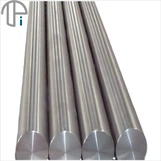
The origin of B348 Titanium Bar is a fascinating journey that combines the marvels of science, engineering, and industrial development. As a supplier of B348 Titanium Bar, I have had the privilege of delving deep into the intricacies of its creation and understanding its significance in various industries.
The Discovery and Development of Titanium
Titanium was first discovered in 1791 by the British clergyman and amateur geologist William Gregor. He found a new oxide in ilmenite sand from a stream in Cornwall, England. However, it was not until 1795 that the German chemist Martin Heinrich Klaproth independently discovered the same element in rutile and named it "titanium" after the Titans of Greek mythology, symbolizing its strength.
It took over a century for scientists to develop a practical method to produce pure titanium. In 1910, Matthew A. Hunter produced pure titanium by heating titanium tetrachloride with sodium in a steel bomb at red heat. This process, known as the Hunter process, was the first successful method for commercial production of titanium.
The ASTM Standard and B348 Titanium Bar
The American Society for Testing and Materials (ASTM) plays a crucial role in the standardization of materials. ASTM B348 is a specification that covers titanium and titanium alloy bars and billets for general corrosion - resistant and high - temperature applications.
The development of ASTM standards is a collaborative effort involving experts from various industries, including manufacturers, end - users, and testing laboratories. These standards ensure that the materials meet specific quality, performance, and safety requirements.
ASTM B348 Titanium Bar is available in different grades, such as Gr1 and Gr4. Each grade has unique chemical compositions and mechanical properties, which make them suitable for different applications. For more information on ASTM B348 Titanium Bar, you can visit ASTM B348 Titanium Bar.
Production Process of B348 Titanium Bar
The production of B348 Titanium Bar starts with the extraction of titanium ore. The most common titanium ores are ilmenite (FeTiO₃) and rutile (TiO₂). These ores are first processed to obtain titanium tetrachloride (TiCl₄).


The Kroll process is the most widely used method for converting titanium tetrachloride into sponge titanium. In this process, titanium tetrachloride is reduced with magnesium in a sealed reactor at high temperatures. The resulting sponge titanium is then melted in an electric arc furnace or a vacuum arc remelting furnace to produce ingots.
The ingots are then hot - worked through processes such as forging and rolling to reduce their cross - sectional area and improve their mechanical properties. These hot - working processes also help to refine the grain structure of the titanium.
After hot - working, the bars may undergo cold - working operations, such as cold drawing or cold rolling, to achieve the desired dimensional accuracy and surface finish. Heat treatment is often carried out to optimize the mechanical properties of the B348 Titanium Bar.
Gr1 and Gr4 Titanium Round Bars
Among the different grades of ASTM B348 Titanium Bar, Gr1 and Gr4 are two popular choices.
Gr1 Titanium Round Bar is known for its excellent formability and high corrosion resistance. It is the softest and most ductile of the commercially pure titanium grades. Gr1 titanium has a relatively low oxygen content, which contributes to its good weldability and formability. It is commonly used in applications where corrosion resistance and formability are critical, such as in the chemical processing industry, marine applications, and architecture. To learn more about Gr1 Titanium Round Bar, please visit Gr1 Titanium Round Bar.
On the other hand, Gr4 Titanium Round Bar is the strongest of the commercially pure titanium grades. It has a higher oxygen content compared to Gr1, which gives it increased strength. Gr4 titanium is often used in applications where high strength and corrosion resistance are required, such as in the aerospace and medical industries. For detailed information on Gr4 Titanium Round Bar, you can refer to Gr4 Titanium Round Bar.
Applications of B348 Titanium Bar
The unique properties of B348 Titanium Bar make it suitable for a wide range of applications.
In the aerospace industry, titanium bars are used in aircraft engines, airframes, and landing gear components. The high strength - to - weight ratio, corrosion resistance, and ability to withstand high temperatures make titanium an ideal material for these critical applications.
The chemical processing industry also relies heavily on B348 Titanium Bar. Titanium's excellent corrosion resistance to a wide range of chemicals, including acids and alkalis, makes it suitable for use in reactors, heat exchangers, and piping systems.
In the medical field, titanium bars are used in orthopedic implants, dental implants, and surgical instruments. Titanium is biocompatible, which means it is not rejected by the human body, and it has the necessary strength and durability for long - term use in the body.
Quality Control and Assurance
As a supplier of B348 Titanium Bar, quality control and assurance are of utmost importance. We follow strict quality control procedures at every stage of the production process.
We conduct various tests on the B348 Titanium Bar, including chemical analysis, mechanical testing, and non - destructive testing. Chemical analysis ensures that the bar meets the specified chemical composition of the ASTM B348 standard. Mechanical testing, such as tensile testing and hardness testing, verifies the mechanical properties of the bar. Non - destructive testing methods, such as ultrasonic testing and eddy - current testing, are used to detect internal defects in the bar.
We also maintain detailed records of the production process, test results, and material traceability. This allows us to provide our customers with comprehensive quality documentation and ensure that they receive high - quality B348 Titanium Bar.
Conclusion
The origin of B348 Titanium Bar is a story of scientific discovery, technological innovation, and industrial progress. From the initial discovery of titanium to the development of the ASTM B348 standard and the production of high - quality bars, every step in the process is a testament to human ingenuity.
Whether you are in the aerospace, chemical processing, medical, or any other industry that requires high - performance materials, B348 Titanium Bar offers a reliable solution. If you are interested in purchasing B348 Titanium Bar, we invite you to contact us for a detailed discussion about your specific requirements. Our team of experts is ready to assist you in finding the right grade and specification of B348 Titanium Bar for your application.
References
- ASM Handbook Committee, "ASM Handbook Volume 2: Properties and Selection: Nonferrous Alloys and Special - Purpose Materials", ASM International, 2001.
- "Titanium: A Technical Guide", Second Edition, by John C. Williams, ASM International, 2007.
- ASTM International, "ASTM B348 - 22 Standard Specification for Titanium and Titanium Alloy Bars and Billets".