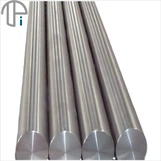
As a supplier of Titanium Discs, I've had the privilege of delving deep into the fascinating world of titanium's microstructure. Understanding the microstructure of a Titanium Disc is crucial not only for scientists and engineers but also for those in industries that rely on the unique properties of titanium, such as aerospace, medical, and automotive.
The Basics of Titanium's Microstructure
Titanium exists in two allotropic forms: alpha (α) and beta (β). At room temperature, pure titanium has a hexagonal close - packed (HCP) crystal structure, known as the alpha phase. This alpha phase gives titanium its excellent corrosion resistance and relatively high strength - to - weight ratio. The atoms in the HCP structure are arranged in a closely packed manner, with each atom having twelve nearest neighbors.
When the temperature rises above approximately 882°C (1620°F), titanium undergoes a phase transformation from the alpha phase to the beta phase, which has a body - centered cubic (BCC) crystal structure. The BCC structure is less densely packed than the HCP structure, with each atom having eight nearest neighbors. This phase transformation is reversible, and upon cooling, the beta phase can transform back into the alpha phase.
Factors Affecting the Microstructure of Titanium Discs
Alloying Elements
The addition of alloying elements is one of the most significant factors influencing the microstructure of Titanium Discs. For example, elements like aluminum (Al) and oxygen (O) are alpha stabilizers. They increase the stability of the alpha phase, shifting the phase transformation temperature upwards. On the other hand, elements such as vanadium (V), niobium (Nb), and molybdenum (Mo) are beta stabilizers. They lower the phase transformation temperature and promote the formation of the beta phase.
In the case of Ti - 6Al - 4V, one of the most widely used titanium alloys, the 6% aluminum acts as an alpha stabilizer, while the 4% vanadium is a beta stabilizer. This combination results in a two - phase microstructure consisting of alpha and beta phases. The presence of both phases allows for a balance of properties, such as high strength, good ductility, and excellent fatigue resistance.
Heat Treatment
Heat treatment is another crucial factor in controlling the microstructure of Titanium Discs. Different heat treatment processes can be used to achieve specific microstructures and properties. For example, annealing is a common heat treatment process where the titanium disc is heated to a specific temperature and then slowly cooled. This process relieves internal stresses, refines the grain structure, and improves the ductility of the material.
Solution treatment followed by aging is often used for precipitation - hardening titanium alloys. In solution treatment, the alloy is heated to a temperature where the alloying elements are dissolved into a single phase (usually the beta phase). Then, during aging, the alloy is held at a lower temperature for a certain period, allowing the precipitation of fine particles that strengthen the material.


Deformation Processing
Deformation processing, such as forging, rolling, and extrusion, also has a significant impact on the microstructure of Titanium Discs. During deformation, the grains in the titanium material are elongated and oriented in the direction of deformation. This can lead to the development of a preferred grain orientation, known as texture. Texture can affect the mechanical properties of the titanium disc, such as its strength and ductility in different directions.
Microstructure and Properties of Titanium Discs
Strength and Ductility
The microstructure of a Titanium Disc has a direct impact on its strength and ductility. A fine - grained microstructure generally results in higher strength and better ductility compared to a coarse - grained microstructure. In a two - phase alpha - beta titanium alloy, the presence of the beta phase can enhance the ductility of the material, while the alpha phase contributes to its strength.
Corrosion Resistance
The alpha phase in titanium is known for its excellent corrosion resistance. The closely packed HCP structure of the alpha phase forms a protective oxide layer on the surface of the titanium disc, which prevents further corrosion. Alloying elements can also affect the corrosion resistance of titanium. For example, the addition of palladium (Pd) can significantly improve the corrosion resistance of titanium in certain environments.
Fatigue Resistance
The microstructure of a Titanium Disc also plays a crucial role in its fatigue resistance. A homogeneous microstructure with fine grains and a proper distribution of phases can improve the fatigue life of the titanium disc. The presence of defects, such as voids or inclusions, can act as stress concentration points and reduce the fatigue resistance of the material.
Our Titanium Discs and Their Microstructure
As a supplier of [Titanium Disc]( /titanium - forging/titanium - disc/titanium - disc - 20241026.html), we take great care in controlling the microstructure of our products. We use high - quality raw materials and advanced manufacturing processes to ensure that our Titanium Discs have the desired microstructure and properties.
Our [Titanium Target]( /titanium - forging/titanium - disc/titanium - target.html) products are carefully engineered to meet the specific requirements of different applications. Whether it's for thin - film deposition in the semiconductor industry or for sputtering in the coating industry, we can provide Titanium Targets with the appropriate microstructure and purity.
We also offer [Titanium Disk]( /titanium - forging/titanium - disc/custom - ti6al - 4v - titanium - disk - gr5 - gr23.html) products with customized microstructures. By controlling the alloy composition, heat treatment, and deformation processing, we can produce Titanium Disks with tailored properties to meet the unique needs of our customers.
Contact Us for Procurement
If you are in the market for high - quality Titanium Discs, we invite you to contact us for procurement discussions. Our team of experts is ready to assist you in selecting the right product with the optimal microstructure for your specific application. Whether you need a small quantity for research purposes or a large - scale production order, we have the capabilities to meet your requirements.
References
- Boyer, R., Welsch, G., & Collings, E. W. (1994). Materials Properties Handbook: Titanium Alloys. ASM International.
- Lutjering, G., & Williams, J. C. (2007). Titanium: A Technical Guide. ASM International.
- Zi, J., & Yang, R. (2013). Microstructure and Mechanical Properties of Titanium Alloys. In Handbook of Titanium Alloys (pp. 1 - 22). Woodhead Publishing.