

What is the aging behavior of a titanium hexagon bar?
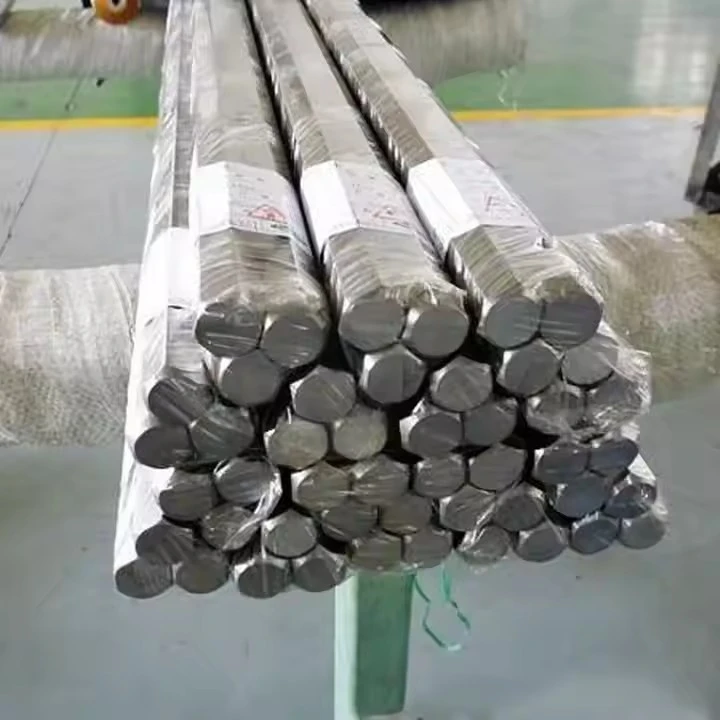
As a trusted supplier of titanium hexagon bars, I've witnessed firsthand the growing demand for these versatile products across various industries. Titanium hexagon bars, known for their exceptional strength-to-weight ratio, corrosion resistance, and biocompatibility, are used in aerospace, medical, and chemical processing applications. One aspect that often piques the interest of our customers is the aging behavior of titanium hexagon bars. In this blog post, I'll delve into the intricacies of this phenomenon, explaining what it is, why it matters, and how it can impact the performance of titanium hexagon bars.

Understanding Aging in Titanium Alloys
Aging, in the context of metallurgy, refers to the process by which a metal's properties change over time due to the precipitation of fine particles within its microstructure. This process is often accelerated by heat treatment, which can cause the atoms within the metal to rearrange themselves into a more stable configuration. In titanium alloys, aging can have a significant impact on the material's strength, hardness, and ductility.
The aging behavior of titanium alloys is primarily influenced by two factors: the alloy composition and the heat treatment conditions. Different alloying elements, such as aluminum, vanadium, and molybdenum, can affect the precipitation kinetics and the resulting microstructure of the alloy. Additionally, the temperature and duration of the aging treatment can also play a crucial role in determining the final properties of the material.
Types of Aging in Titanium Hexagon Bars
There are two main types of aging that can occur in titanium hexagon bars: natural aging and artificial aging.
Natural Aging: Natural aging occurs at room temperature over an extended period. During this process, the supersaturated solid solution of the alloy gradually decomposes, resulting in the formation of fine precipitates. Natural aging is a relatively slow process, and the changes in properties are typically less significant compared to artificial aging.
Artificial Aging: Artificial aging, also known as precipitation hardening, involves heating the titanium hexagon bar to a specific temperature for a predetermined time. This heat treatment accelerates the precipitation process, leading to a more pronounced increase in strength and hardness. The optimal aging temperature and time depend on the specific alloy composition and the desired properties of the final product.
Effects of Aging on Titanium Hexagon Bars
The aging process can have several beneficial effects on the properties of titanium hexagon bars:
Increased Strength and Hardness: One of the primary benefits of aging is the significant increase in strength and hardness. The formation of fine precipitates within the microstructure acts as obstacles to dislocation movement, making it more difficult for the material to deform. This results in improved mechanical properties, making titanium hexagon bars suitable for applications where high strength is required.
Improved Corrosion Resistance: Aging can also enhance the corrosion resistance of titanium hexagon bars. The formation of a more stable microstructure can help to reduce the susceptibility of the material to corrosion, particularly in aggressive environments.
Enhanced Ductility: In some cases, aging can also improve the ductility of titanium hexagon bars. By carefully controlling the aging conditions, it is possible to achieve a balance between strength and ductility, resulting in a material that is both strong and tough.
Factors Affecting Aging Behavior
Several factors can influence the aging behavior of titanium hexagon bars:
Alloy Composition: As mentioned earlier, the alloy composition plays a crucial role in determining the aging behavior of titanium hexagon bars. Different alloying elements can affect the precipitation kinetics and the resulting microstructure, leading to variations in the final properties of the material.
Heat Treatment Conditions: The temperature and duration of the aging treatment are critical factors that can significantly impact the aging behavior. Higher aging temperatures generally result in faster precipitation rates and a more pronounced increase in strength and hardness. However, excessive aging can also lead to overaging, which can cause a decrease in ductility and an increase in brittleness.
Initial Microstructure: The initial microstructure of the titanium hexagon bar, which is determined by the prior processing history, can also influence the aging behavior. For example, a material with a fine-grained microstructure may exhibit different aging characteristics compared to a material with a coarse-grained microstructure.
Applications of Aged Titanium Hexagon Bars
The unique properties of aged titanium hexagon bars make them suitable for a wide range of applications:
Aerospace Industry: In the aerospace industry, titanium hexagon bars are used in the manufacturing of aircraft components, such as landing gear, structural frames, and engine parts. The high strength-to-weight ratio and excellent corrosion resistance of aged titanium hexagon bars make them ideal for these demanding applications.
Medical Industry: Titanium is widely used in the medical field due to its biocompatibility and corrosion resistance. Aged titanium hexagon bars are commonly used in the production of orthopedic implants, dental implants, and surgical instruments. The improved strength and hardness of aged titanium can help to ensure the long-term durability and performance of these medical devices.
Chemical Processing Industry: Titanium hexagon bars are also used in the chemical processing industry, where they are exposed to harsh chemicals and high temperatures. The corrosion resistance of aged titanium hexagon bars makes them suitable for applications such as heat exchangers, reaction vessels, and piping systems.
Our Titanium Hexagon Bar Offerings
As a leading supplier of titanium hexagon bars, we offer a wide range of products to meet the diverse needs of our customers. Our inventory includes Gr2 Titanium Hexagon Bar, 348 Titanium Hexagon Bar, and Gr3 Titanium Hexagon Bar, among others. We can also provide customized solutions based on your specific requirements.
Our titanium hexagon bars are manufactured using high-quality raw materials and state-of-the-art production techniques. We have strict quality control measures in place to ensure that our products meet the highest standards of quality and performance. Whether you need a small quantity for a research project or a large order for a commercial application, we can provide you with the right solution at a competitive price.
Contact Us for Procurement
If you're interested in learning more about our titanium hexagon bars or have any questions about the aging behavior, please don't hesitate to contact us. Our team of experts is always ready to assist you with your procurement needs and provide you with the information you need to make an informed decision. We look forward to working with you and helping you find the perfect titanium hexagon bar for your application.
References
- Boyer, R. R., Welsch, G., & Collings, E. W. (1994). Materials Properties Handbook: Titanium Alloys. ASM International.
- Lutjering, G., & Williams, J. C. (2007). Titanium: A Technical Guide. ASM International.
- Schijve, J. (2009). Fatigue of Structures and Materials. Springer.


