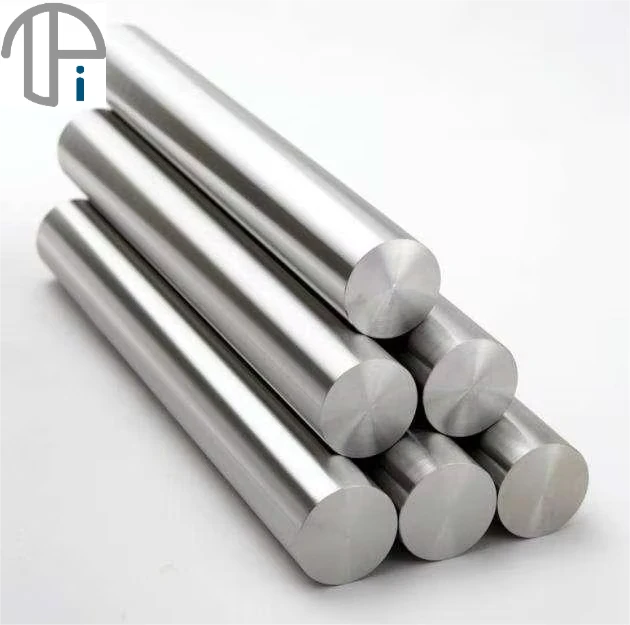
In the dynamic world of metallurgy, F136 Titanium Bar has emerged as a remarkable material, attracting significant attention from researchers, manufacturers, and end - users alike. As a leading F136 Titanium Bar supplier, I have witnessed firsthand the growing interest in this material and the various research endeavors surrounding it. This blog post aims to explore the current research hotspots of F136 Titanium Bar and provide insights into its potential applications.
1. Microstructure and Mechanical Properties Optimization
One of the primary research hotspots for F136 Titanium Bar is the optimization of its microstructure and mechanical properties. F136 Titanium Bar, typically made of Ti - 6Al - 4V ELI (Extra Low Interstitial) alloy, is widely used in the medical and aerospace industries due to its excellent biocompatibility, high strength - to - weight ratio, and corrosion resistance.
Researchers are constantly working on developing new heat treatment processes to refine the microstructure of F136 Titanium Bar. For example, by carefully controlling the heating and cooling rates during heat treatment, it is possible to achieve a more uniform distribution of phases, such as the alpha and beta phases in Ti - 6Al - 4V ELI. This can lead to improved mechanical properties, including higher strength, better ductility, and enhanced fatigue resistance.
Some studies have also focused on the effect of alloying elements on the microstructure and properties of F136 Titanium Bar. Minor additions of elements like iron, silicon, or oxygen can have a significant impact on the material's performance. For instance, a small amount of iron can increase the strength of the alloy, but too much can also reduce its ductility. Therefore, finding the optimal composition and processing parameters is crucial for achieving the desired balance of properties. [1]
2. Surface Modification for Enhanced Performance
Surface modification is another important research area for F136 Titanium Bar. The surface properties of the bar can greatly influence its performance in different applications. In the medical field, for example, improving the surface biocompatibility of F136 Titanium Bar can enhance its integration with human tissues when used as implants.
One common surface modification technique is coating. Various types of coatings, such as hydroxyapatite (HA) coatings, can be applied to the surface of F136 Titanium Bar. HA is a bioactive ceramic that is similar in composition to the mineral phase of human bone. By coating the titanium bar with HA, it can promote bone growth and improve the long - term stability of the implant.
Another approach is surface texturing. Creating micro - or nano - scale textures on the surface of the bar can increase its surface area, which can enhance cell adhesion and proliferation in medical applications. In addition, surface texturing can also improve the tribological properties of the bar, reducing friction and wear in mechanical applications. [2]
3. Applications in New Industries
The unique properties of F136 Titanium Bar have opened up opportunities for its application in new industries. While it has been traditionally used in aerospace and medical fields, there is growing interest in its use in other sectors, such as the chemical industry.
The Titanium Bar for Chemical Industry requires materials that can withstand harsh chemical environments. F136 Titanium Bar's excellent corrosion resistance makes it a promising candidate for use in chemical processing equipment, such as reactors, heat exchangers, and pipes.
In the energy sector, F136 Titanium Bar can be used in offshore oil and gas platforms. The high strength - to - weight ratio of the bar can reduce the weight of the structures, which is beneficial for offshore applications where weight is a critical factor. Moreover, its corrosion resistance can ensure the long - term durability of the equipment in the harsh marine environment.
4. Manufacturing Process Innovation
Research is also being conducted on innovative manufacturing processes for F136 Titanium Bar. Traditional manufacturing methods, such as forging and machining, have their limitations in terms of cost, efficiency, and the ability to produce complex shapes.
Additive manufacturing, also known as 3D printing, has emerged as a potential game - changer in the production of F136 Titanium Bar. This technology allows for the direct production of complex geometries with high precision, reducing material waste and production time. By using additive manufacturing, it is possible to create customized F136 Titanium Bar components for specific applications, such as patient - specific medical implants.
However, there are still some challenges associated with additive manufacturing of F136 Titanium Bar. For example, the porosity and residual stresses in the printed parts can affect their mechanical properties. Therefore, researchers are working on developing post - processing techniques, such as hot isostatic pressing (HIP), to improve the quality of the printed parts. [3]
5. Environmental and Sustainability Considerations
In recent years, there has been an increasing focus on environmental and sustainability aspects in the production and use of materials. For F136 Titanium Bar, researchers are exploring ways to reduce its environmental impact.
One area of research is the recycling of titanium. Titanium is a valuable metal, and recycling can help conserve natural resources and reduce energy consumption. Developing efficient recycling processes for F136 Titanium Bar can not only make the production more sustainable but also reduce the cost of the material.
Another aspect is the reduction of energy consumption during the manufacturing process. New manufacturing technologies, such as the aforementioned additive manufacturing, have the potential to be more energy - efficient compared to traditional methods. Additionally, optimizing the heat treatment and processing parameters can also lead to energy savings.
As a F136 Titanium Bar supplier, we are committed to providing high - quality products that meet the diverse needs of our customers. Our Gr7 Titanium Round Bar also offers excellent performance in different applications. If you are interested in purchasing F136 Titanium Bar or have any questions about its properties and applications, please feel free to contact us for further discussions and potential procurement opportunities.
References
[1] Boyer, R., Welsch, G., & Collings, E. W. (1994). Materials Properties Handbook: Titanium Alloys. ASM International.
[2] Ratner, B. D., Hoffman, A. S., Schoen, F. J., & Lemons, J. E. (Eds.). (2004). Biomaterials Science: An Introduction to Materials in Medicine. Academic Press.
[3] Gibson, I., Rosen, D. W., & Stucker, B. (2010). Additive Manufacturing Technologies: Rapid Prototyping to Direct Digital Manufacturing. Springer.