

Hey there! As a titanium plate supplier, I often get asked how titanium plates stack up against aluminum plates in terms of performance. It's a great question, and today, I'm gonna break it down for you.
Strength and Durability
Let's start with strength. Titanium is known for its incredible strength - to - weight ratio. It's super strong, even though it's relatively light. Aluminum, on the other hand, is also light, but it doesn't have the same level of strength as titanium.
Titanium plates can withstand a lot of stress and pressure without deforming. They're commonly used in aerospace applications, where the material needs to be strong enough to handle high - speed flights and extreme conditions. For example, in aircraft frames, titanium plates can ensure the structural integrity of the plane.
Aluminum plates are strong in their own right, but they're more likely to bend or dent under heavy loads. They're great for applications where weight is a major concern, like in some consumer electronics or automotive parts where you need a lightweight material but don't require the highest level of strength.
If you're looking for a material that can take a beating and last a long time, titanium is the way to go. Check out our ASTM B265 Titanium Plate for high - quality, strong titanium plates.

Corrosion Resistance
Corrosion is a big deal when it comes to choosing the right metal plate. Titanium has outstanding corrosion resistance. It forms a thin, protective oxide layer on its surface when exposed to oxygen, which prevents further corrosion. This makes it ideal for use in marine environments, chemical processing plants, and other places where the metal will be exposed to harsh chemicals or saltwater.
Aluminum also has some corrosion resistance due to the formation of an aluminum oxide layer. However, this layer is not as stable as the titanium oxide layer. In highly corrosive environments, aluminum is more likely to corrode over time.
For example, if you're building a structure near the ocean or in a chemical factory, titanium plates will give you much better long - term performance. And if you need a thin titanium product with great corrosion resistance, our ASTM B265 Titanium Sheet is a great option.
Heat Resistance
When it comes to heat, titanium and aluminum have different characteristics. Titanium can handle high temperatures without losing its strength. It has a high melting point and can maintain its mechanical properties even at elevated temperatures. This makes it suitable for applications in the aerospace and automotive industries, where parts are exposed to high - heat environments, such as engine components.
Aluminum, while it can conduct heat well, has a lower melting point compared to titanium. At high temperatures, aluminum can start to lose its strength and become more malleable. So, if you need a material that can withstand extreme heat, titanium is the better choice.
Cost
Now, let's talk about cost. Titanium is generally more expensive than aluminum. The production process of titanium is more complex and energy - intensive, which drives up the cost. Aluminum, on the other hand, is more abundant and easier to produce, so it's more budget - friendly.
However, when you consider the long - term performance and durability of titanium, the higher upfront cost can be worth it. Titanium plates may last much longer, require less maintenance, and offer better performance in harsh conditions, which can save you money in the long run.
Machinability
Machinability is another factor to consider. Aluminum is relatively easy to machine. It can be cut, drilled, and formed with standard machining equipment. This makes it a popular choice for manufacturers who need to produce parts quickly and cost - effectively.
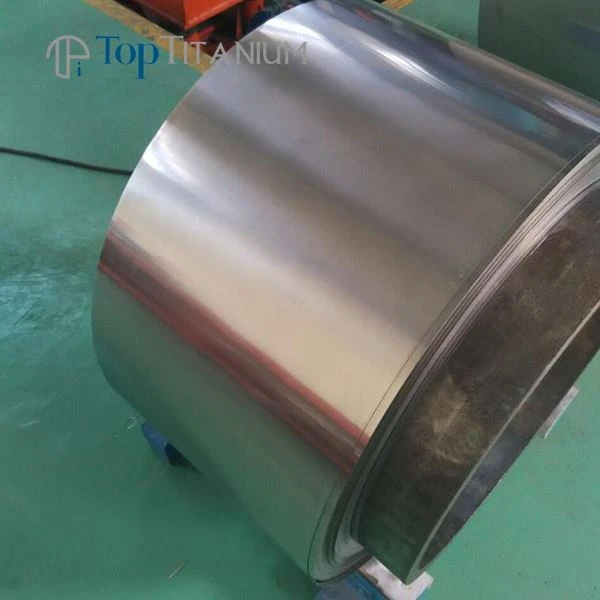
Titanium, on the other hand, is more difficult to machine. It has a high strength and can cause more wear on cutting tools. Specialized machining techniques and tools are often required to work with titanium. But with the right expertise and equipment, high - quality titanium parts can be produced. If you're interested in a thinner form of titanium that might be a bit easier to work with in some cases, take a look at our Titanium Foil In Coil.
Applications
The different performance characteristics of titanium and aluminum plates lead to different applications.
Titanium Plate Applications:
- Aerospace: As mentioned earlier, titanium plates are used in aircraft frames, engine components, and other critical parts due to their high strength, heat resistance, and corrosion resistance.
- Medical: Titanium is biocompatible, which means it can be used in medical implants such as hip and knee replacements.
- Chemical Processing: Its corrosion resistance makes it ideal for use in chemical reactors, pipes, and other equipment in chemical plants.
Aluminum Plate Applications:
- Consumer Electronics: Aluminum is used in laptops, smartphones, and other electronic devices because of its lightweight and good heat - conducting properties.
- Automotive: It's used in car bodies, engine parts, and wheels to reduce weight and improve fuel efficiency.
- Construction: Aluminum plates are used in building facades, roofing, and other architectural applications due to their light weight and relatively low cost.
Conclusion
In conclusion, both titanium and aluminum plates have their own advantages. If you need a material with high strength, excellent corrosion resistance, and good heat resistance, titanium is the better choice, despite its higher cost and more difficult machinability. On the other hand, if you're on a budget and need a lightweight material that's easy to machine, aluminum might be the way to go.
As a titanium plate supplier, I can offer you high - quality titanium products that meet your specific needs. Whether you're in the aerospace, medical, or chemical industry, we've got the right titanium plates for you. If you're interested in learning more about our products or have any questions about choosing between titanium and aluminum plates, feel free to reach out to us for a consultation. We're here to help you make the best decision for your project.
References
- ASM Handbook Committee. (2000). ASM Handbook Volume 2: Properties and Selection: Nonferrous Alloys and Special - Purpose Materials. ASM International.
- Callister, W. D., & Rethwisch, D. G. (2014). Materials Science and Engineering: An Introduction. Wiley.


