

Heat treatment is a crucial process in the manufacturing and processing of metals, significantly influencing their mechanical, physical, and chemical properties. As a supplier of Gr5 Titanium Bar, I have witnessed firsthand how heat treatment can transform the characteristics of these bars to meet diverse industrial needs. In this blog, we will delve into the effects of heat treatment on the properties of Gr5 Titanium Bar, exploring the science behind it and its practical implications.
Understanding Gr5 Titanium Bar
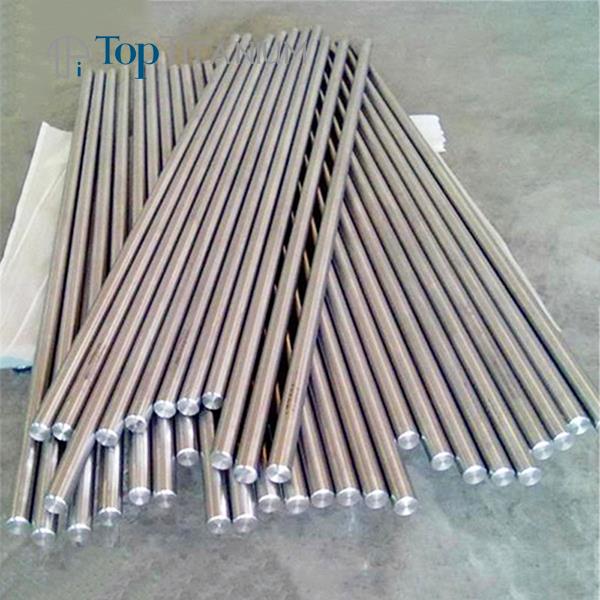
Gr5 Titanium Bar, also known as Grade 5 Titanium Alloy Round Bar, is one of the most widely used titanium alloys in various industries. It is composed of 6% aluminum, 4% vanadium, and the remainder titanium. This alloy offers a unique combination of high strength, excellent corrosion resistance, and good weldability, making it suitable for applications in aerospace, medical, marine, and automotive industries. Grade 5 Titanium Alloy Round Bar
The Basics of Heat Treatment
Heat treatment involves heating and cooling a metal in a controlled manner to alter its microstructure and properties. The three main stages of heat treatment are heating, soaking, and cooling. Each stage plays a vital role in determining the final properties of the metal.
Heating
During the heating stage, the Gr5 Titanium Bar is heated to a specific temperature, which depends on the desired properties and the type of heat treatment process. The heating rate is carefully controlled to ensure uniform heating throughout the bar.
Soaking
Once the desired temperature is reached, the bar is held at that temperature for a certain period to allow the microstructure to homogenize. This stage is known as soaking, and the soaking time is determined by the size and composition of the bar.
Cooling
The cooling stage is critical as it determines the final microstructure and properties of the bar. Different cooling rates can result in different microstructures, such as martensite, bainite, or ferrite-pearlite. The cooling rate can be controlled by various methods, including air cooling, oil quenching, or water quenching.
Effects of Heat Treatment on the Properties of Gr5 Titanium Bar
Mechanical Properties
- Strength and Hardness: Heat treatment can significantly increase the strength and hardness of Gr5 Titanium Bar. By heating the bar to a high temperature and then rapidly cooling it, a hard and strong microstructure called martensite can be formed. This process, known as quenching, is commonly used to improve the wear resistance and strength of the bar. However, quenching can also make the bar brittle, so it is often followed by a tempering process to reduce the brittleness and improve the toughness.
- Toughness: The toughness of Gr5 Titanium Bar can be improved by heat treatment. Tempering, which involves heating the quenched bar to a lower temperature and then cooling it slowly, can reduce the internal stresses and improve the ductility and toughness of the bar. This makes the bar more resistant to cracking and fracture under impact or cyclic loading.
- Ductility: Heat treatment can also affect the ductility of Gr5 Titanium Bar. Annealing, which involves heating the bar to a high temperature and then cooling it slowly, can soften the bar and improve its ductility. This process is often used to make the bar more easily machinable or formable.
Physical Properties
- Density: The density of Gr5 Titanium Bar is relatively unaffected by heat treatment. However, the thermal expansion coefficient of the bar can be slightly changed by heat treatment, which can have implications for applications where dimensional stability is critical.
- Thermal Conductivity: Heat treatment can have a small effect on the thermal conductivity of Gr5 Titanium Bar. Generally, the thermal conductivity of the bar decreases slightly after heat treatment, which can be beneficial in applications where thermal insulation is required.
Chemical Properties
- Corrosion Resistance: Gr5 Titanium Bar is known for its excellent corrosion resistance, and heat treatment can further enhance this property. By heating the bar to a high temperature and then cooling it slowly, a passive oxide layer can be formed on the surface of the bar, which provides additional protection against corrosion. This process, known as passivation, is commonly used to improve the corrosion resistance of the bar in harsh environments.
Practical Applications
The ability to tailor the properties of Gr5 Titanium Bar through heat treatment makes it suitable for a wide range of applications.
Aerospace Industry
In the aerospace industry, Gr5 Titanium Bar is used in the manufacture of aircraft components, such as landing gear, engine parts, and structural frames. Heat treatment is used to improve the strength, hardness, and toughness of the bar, making it capable of withstanding the high stresses and temperatures encountered in flight. Ti 1023 Titanium Bar
Medical Industry
In the medical industry, Gr5 Titanium Bar is used in the manufacture of medical implants, such as hip and knee replacements, dental implants, and spinal fusion devices. Heat treatment is used to improve the biocompatibility and corrosion resistance of the bar, making it suitable for long-term use in the human body.
Marine Industry
In the marine industry, Gr5 Titanium Bar is used in the manufacture of marine components, such as propeller shafts, boat hulls, and offshore platforms. Heat treatment is used to improve the corrosion resistance and strength of the bar, making it capable of withstanding the harsh marine environment. Titanium Alloy Rods
Conclusion
As a supplier of Gr5 Titanium Bar, I understand the importance of heat treatment in optimizing the properties of these bars for various applications. By carefully controlling the heating, soaking, and cooling processes, we can produce Gr5 Titanium Bar with the desired strength, hardness, toughness, ductility, and corrosion resistance. Whether you are in the aerospace, medical, marine, or automotive industry, our Gr5 Titanium Bar can be customized to meet your specific requirements through heat treatment.

If you are interested in learning more about our Gr5 Titanium Bar or would like to discuss your specific needs, please feel free to contact us. We look forward to working with you to provide the highest quality titanium bars for your applications.
References
- ASM Handbook, Volume 4: Heat Treating, ASM International
- Titanium: A Technical Guide, Second Edition, John R. Davis
- Metals Handbook, Volume 1: Properties and Selection: Irons, Steels, and High-Performance Alloys, ASM International


