

In the dynamic and ever - evolving automotive industry, the search for high - performance materials is a constant pursuit. Titanium, a remarkable metal known for its exceptional properties, has long been a subject of interest. As a trusted supplier of Titanium Hexagon Bars, I am often asked whether these bars can be effectively used in automotive applications. In this blog post, I will delve into the characteristics of titanium hexagon bars and explore their potential in the automotive field.

Properties of Titanium Hexagon Bars
Titanium is a metal that offers a unique combination of properties, making it a candidate for various high - demand applications. Titanium hexagon bars, specifically, are crafted to have a hexagonal cross - section, which can provide distinct advantages in certain applications.
One of the most prominent features of titanium is its high strength - to - weight ratio. Titanium is about half as dense as steel but can offer comparable strength. This means that components made from titanium hexagon bars can be significantly lighter without sacrificing structural integrity. In the automotive industry, weight reduction is a key factor as it directly impacts fuel efficiency, acceleration, and handling. A lighter vehicle requires less energy to move, resulting in better gas mileage and lower emissions.
Another important property of titanium is its excellent corrosion resistance. Titanium forms a thin, adherent oxide layer on its surface when exposed to oxygen. This oxide layer acts as a protective barrier, preventing the metal from further corrosion even in harsh environments. In automotive applications, where vehicles are often exposed to moisture, road salts, and other corrosive substances, components made from titanium hexagon bars can have a longer service life compared to those made from traditional metals.
Titanium also has good heat resistance. It can maintain its strength and integrity at elevated temperatures, which is crucial in automotive engines and exhaust systems where high - temperature conditions are common. For example, engine components need to withstand the heat generated during combustion, and exhaust parts are exposed to hot gases. Titanium hexagon bars can potentially be used to manufacture parts that can endure these high - temperature environments.
Potential Automotive Applications
Engine Components
The engine is the heart of a vehicle, and using titanium hexagon bars in engine components can bring significant benefits. For instance, connecting rods made from titanium can reduce the overall weight of the reciprocating mass in the engine. This reduction in weight allows the engine to rev more freely and quickly, improving acceleration and power output. The high strength of titanium ensures that the connecting rods can withstand the high forces and stresses generated during engine operation.
Valve springs and retainers are other potential applications. Titanium's high strength - to - weight ratio can improve the performance of these components. Lighter valve springs and retainers can reduce the inertia, allowing for higher engine speeds and more precise valve control. This can lead to better engine efficiency and power delivery.
Exhaust Systems
Exhaust systems are exposed to high temperatures and corrosive gases. Titanium hexagon bars can be used to manufacture exhaust headers, pipes, and mufflers. The heat resistance of titanium ensures that these components can withstand the extreme temperatures without deforming or losing their strength. Additionally, the corrosion resistance of titanium protects the exhaust system from rust and degradation caused by the acidic gases and moisture in the exhaust. This not only extends the lifespan of the exhaust system but also helps to maintain its performance over time.
Suspension Components
In the suspension system, reducing weight can improve the handling and ride quality of a vehicle. Titanium hexagon bars can be used to make control arms, sway bars, and other suspension parts. The high strength of titanium ensures that these components can withstand the forces and stresses exerted during driving, such as cornering, braking, and acceleration. At the same time, the lighter weight reduces the unsprung mass of the vehicle, which allows the suspension to respond more quickly to road irregularities, resulting in a smoother ride and better handling.
Different Grades of Titanium Hexagon Bars for Automotive Use
There are several grades of titanium available, each with its own unique properties and suitable for different automotive applications.
Gr1 Titanium Hexagon Bar
[Gr1 Titanium Hexagon Bar]( /titanium - bar/titanium - hexagon - bar/astm - b348 - gr2 - titanium - hexagonal - bars.html) is known for its excellent formability and corrosion resistance. It has the lowest strength among the commercially pure titanium grades but offers good ductility. In automotive applications, Gr1 titanium hexagon bars can be used for components that require complex forming operations, such as decorative trim pieces or some non - load - bearing parts. The high corrosion resistance also makes it suitable for parts that are exposed to the elements, like exterior brackets.
Gr3 Titanium Hexagon Bar
[Gr3 Titanium Hexagon Bar]( /titanium - bar/titanium - hexagon - bar/gr3 - titanium - hexagon - bar.html) has a higher strength than Gr1 while still maintaining good corrosion resistance and formability. It can be used for components that require a balance between strength and formability. For example, in some engine accessories or small suspension components, Gr3 titanium hexagon bars can provide the necessary strength without being overly heavy.
Gr5 Titanium Hexagon Bar
[Gr5 Titanium Hexagon Bar]( /titanium - bar/titanium - hexagon - bar/gr5 - titanium - hexagon - bar.html), also known as Ti - 6Al - 4V, is one of the most widely used titanium alloys. It offers high strength, good corrosion resistance, and excellent heat resistance. In automotive applications, Gr5 titanium hexagon bars are ideal for high - stress components such as engine connecting rods, valve springs, and critical suspension parts. The high strength - to - weight ratio of Gr5 titanium allows these components to perform well under extreme conditions while keeping the overall weight of the vehicle down.
Challenges and Considerations
While titanium hexagon bars offer many advantages for automotive applications, there are also some challenges and considerations.
One of the main challenges is the cost. Titanium is generally more expensive than traditional metals such as steel and aluminum. The extraction, processing, and manufacturing of titanium are complex and energy - intensive processes, which contribute to its high cost. This cost factor may limit the widespread use of titanium hexagon bars in mass - produced vehicles. However, in high - performance and luxury automotive segments, where cost is often less of a concern, titanium components can be a viable option.
Another consideration is the machining difficulty. Titanium is a difficult material to machine compared to other metals. It has a low thermal conductivity, which means that heat generated during machining can build up quickly, leading to tool wear and poor surface finish. Specialized machining techniques and tools are required to work with titanium hexagon bars, which can add to the manufacturing cost and complexity.
Conclusion
In conclusion, titanium hexagon bars have great potential in automotive applications. Their high strength - to - weight ratio, excellent corrosion resistance, and good heat resistance make them suitable for a variety of components in engines, exhaust systems, and suspension systems. Different grades of titanium hexagon bars, such as [Gr1 Titanium Hexagon Bar]( /titanium - bar/titanium - hexagon - bar/astm - b348 - gr2 - titanium - hexagonal - bars.html), [Gr3 Titanium Hexagon Bar]( /titanium - bar/titanium - hexagon - bar/gr3 - titanium - hexagon - bar.html), and [Gr5 Titanium Hexagon Bar]( /titanium - bar/titanium - hexagon - bar/gr5 - titanium - hexagon - bar.html), offer different properties to meet the specific requirements of various automotive parts.
Although there are challenges such as high cost and machining difficulty, the benefits of using titanium hexagon bars in automotive applications are significant. As the automotive industry continues to focus on improving performance, fuel efficiency, and durability, the demand for high - performance materials like titanium is likely to increase.
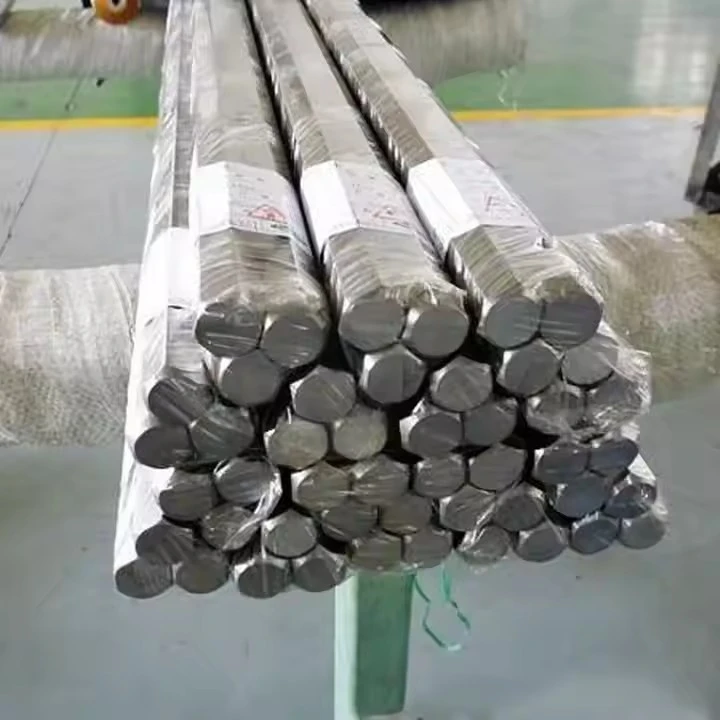
If you are interested in exploring the use of titanium hexagon bars in your automotive projects, I encourage you to reach out to us. We can provide you with high - quality titanium hexagon bars and technical support to help you make the most of this remarkable material. Let's start a conversation and see how we can collaborate to bring your automotive designs to the next level.
References
- ASM Handbook, Volume 2: Properties and Selection: Nonferrous Alloys and Special - Purpose Materials.
- Titanium: A Technical Guide, Second Edition by Don Eylon.
- Automotive Materials and Manufacturing Technologies by David Crolla.


