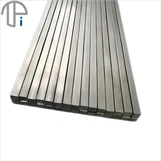
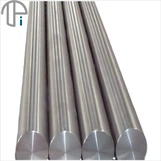
In the world of metal bars, a common question that often surfaces is whether round titanium bars are more expensive than stainless - steel bars. As a seasoned supplier of round titanium bars, I am well - positioned to shed light on this topic.
Understanding the Basics of Titanium and Stainless Steel
Titanium is a remarkable metal. It has a high strength - to - weight ratio, excellent corrosion resistance, and is biocompatible, which makes it a top choice in many high - end and specialized applications. Stainless steel, on the other hand, is an alloy of iron with chromium, nickel, and other elements. It is well - known for its durability, corrosion resistance, and relatively lower cost compared to many other metals.
Cost Factors of Round Titanium Bars
The production of round titanium bars is a complex and costly process. Titanium ore extraction is not as straightforward as that of iron for stainless steel. The extraction of titanium from its ore involves multiple complex chemical processes such as the Kroll process, which is energy - intensive and time - consuming. This process requires high - temperature reactions and the use of expensive reagents, driving up the overall production cost.
Another factor contributing to the high cost of round titanium bars is the machining difficulty. Titanium has a low thermal conductivity, which means that during machining, heat builds up quickly at the cutting edge. This requires special cutting tools and techniques, increasing the manufacturing cost. Additionally, the demand for high - precision round titanium bars in industries like aerospace and medical often means that tight tolerances need to be maintained during production, further adding to the cost.
For example, Titanium Bar for Aerospace must meet extremely strict quality and performance standards. The aerospace industry demands bars with high strength, fatigue resistance, and dimensional accuracy. Producing these bars involves advanced manufacturing processes and strict quality control, all of which contribute to a higher price tag.
Cost Factors of Stainless - Steel Bars
Stainless - steel production is relatively more straightforward. Iron ore, which is abundant, is the primary raw material. The basic oxygen steelmaking process or the electric arc furnace process is commonly used to produce stainless steel. These processes are well - established and have been optimized over the years, resulting in lower production costs.
Stainless steel is also easier to machine compared to titanium. It has better thermal conductivity, allowing for faster cutting speeds and the use of standard cutting tools. This reduces the machining time and cost. Moreover, the wide range of stainless - steel grades available means that there are options for different applications at various price points. For general - purpose applications, lower - grade stainless - steel bars can be used, which are even more cost - effective.
Comparing the Prices
In general, round titanium bars are more expensive than stainless - steel bars. The price difference can vary significantly depending on the grade, size, and application requirements. For small - scale or low - precision applications, the price gap may be less pronounced. However, for large - scale projects or applications with high - performance requirements, the difference can be substantial.
Let's take a look at some real - world price comparisons. For a standard 1 - inch diameter round bar, a stainless - steel bar may cost around $10 - $20 per foot, depending on the grade. In contrast, a round titanium bar of the same diameter can cost anywhere from $50 to $150 per foot or even more, especially if it is a high - grade titanium alloy for specialized applications.
Applications and the Price - Performance Trade - off
The higher cost of round titanium bars is often justified by their superior performance in certain applications. In the aerospace industry, the weight savings provided by titanium can lead to significant fuel savings over the lifetime of an aircraft. The high strength and corrosion resistance of titanium also increase the safety and durability of aerospace components. For instance, Titanium Bar for Aerospace is used in critical parts such as landing gear and engine components.


In the petroleum industry, the corrosion - resistant properties of titanium are invaluable. Titanium bars can withstand harsh environments, including exposure to saltwater, acids, and high - pressure conditions. Titanium Bar for Petroleum is used in oil rigs, pipelines, and other equipment where long - term durability is essential. Although the initial investment is higher, the reduced maintenance and replacement costs over time can make titanium a cost - effective choice in the long run.
In the medical field, the biocompatibility of titanium makes it an ideal material for implants. Polished 348 Titanium Bar can be used to manufacture orthopedic implants and dental fixtures. The high cost of titanium is offset by the benefits of reduced rejection rates and better patient outcomes.
On the other hand, stainless - steel bars are widely used in applications where high strength - to - weight ratio and extreme corrosion resistance are not the primary concerns. They are commonly used in construction, automotive, and household applications. For example, stainless - steel bars are used in building structures, automotive exhaust systems, and kitchen appliances. In these applications, the lower cost of stainless steel makes it a more practical choice.
Market Trends and Future Outlook
The demand for both round titanium bars and stainless - steel bars is influenced by various factors such as economic growth, technological advancements, and environmental regulations. In recent years, the aerospace and medical industries have been driving the demand for high - quality round titanium bars. As these industries continue to grow, the demand for titanium is expected to increase, which may further impact the price.
The stainless - steel market is also evolving. The development of new stainless - steel grades with improved properties is expanding its application range. At the same time, efforts are being made to reduce the environmental impact of stainless - steel production, which may have implications for its cost in the future.
Conclusion
In conclusion, round titanium bars are generally more expensive than stainless - steel bars due to the higher production and machining costs associated with titanium. However, the superior performance of titanium in certain applications often justifies the higher price. When choosing between the two, it is essential to consider the specific requirements of the application, the long - term cost - effectiveness, and the performance - price trade - off.
If you are in the market for round titanium bars and want to discuss your specific needs, I invite you to reach out. Our team of experts can provide you with detailed information on our product range, pricing, and application solutions. We are committed to helping you find the best titanium bar products for your projects.
References
- "Titanium: A Technical Guide" by John C. Williams.
- "Stainless Steel: Properties and Selection" by ASM International.
- Industry reports on the titanium and stainless - steel markets from market research firms.